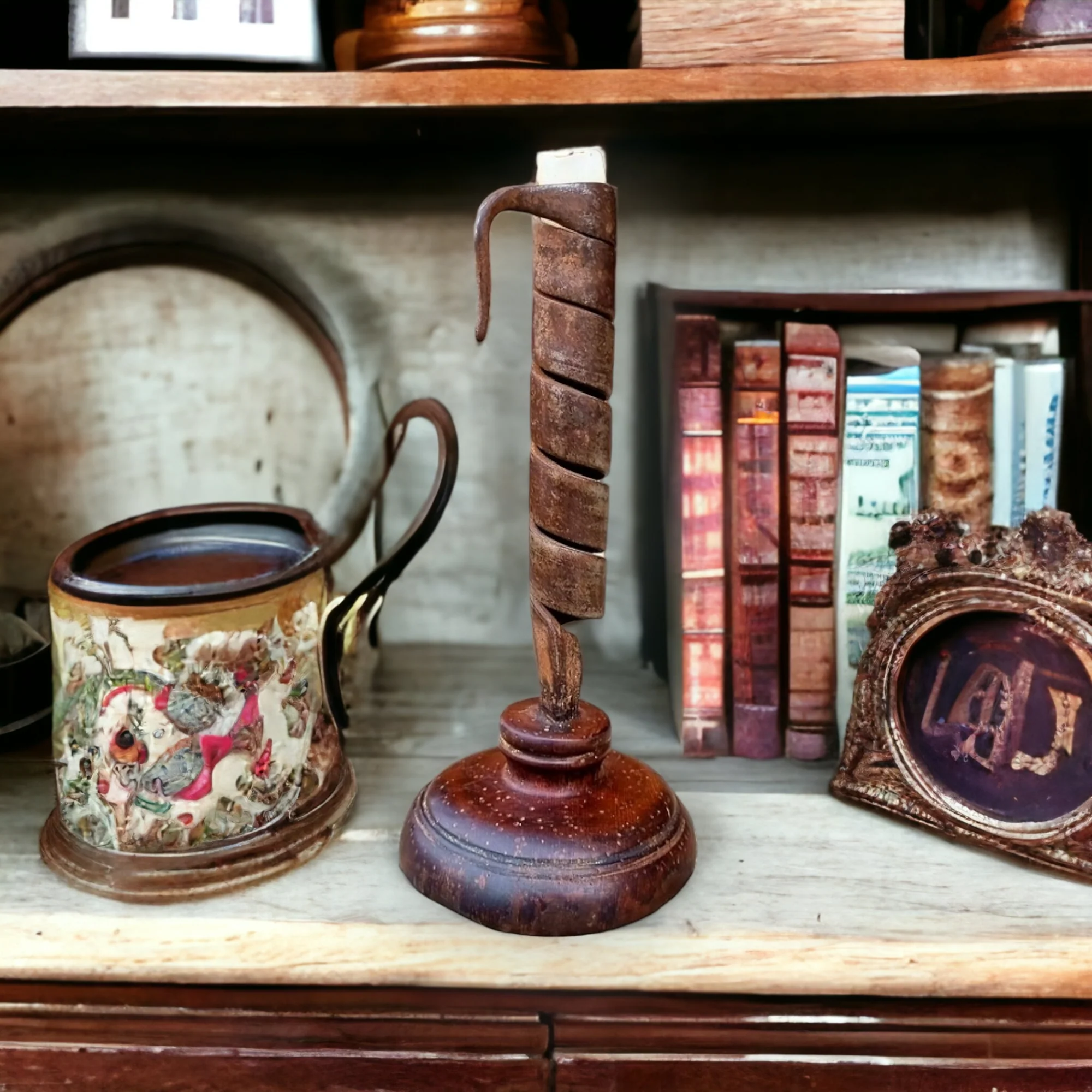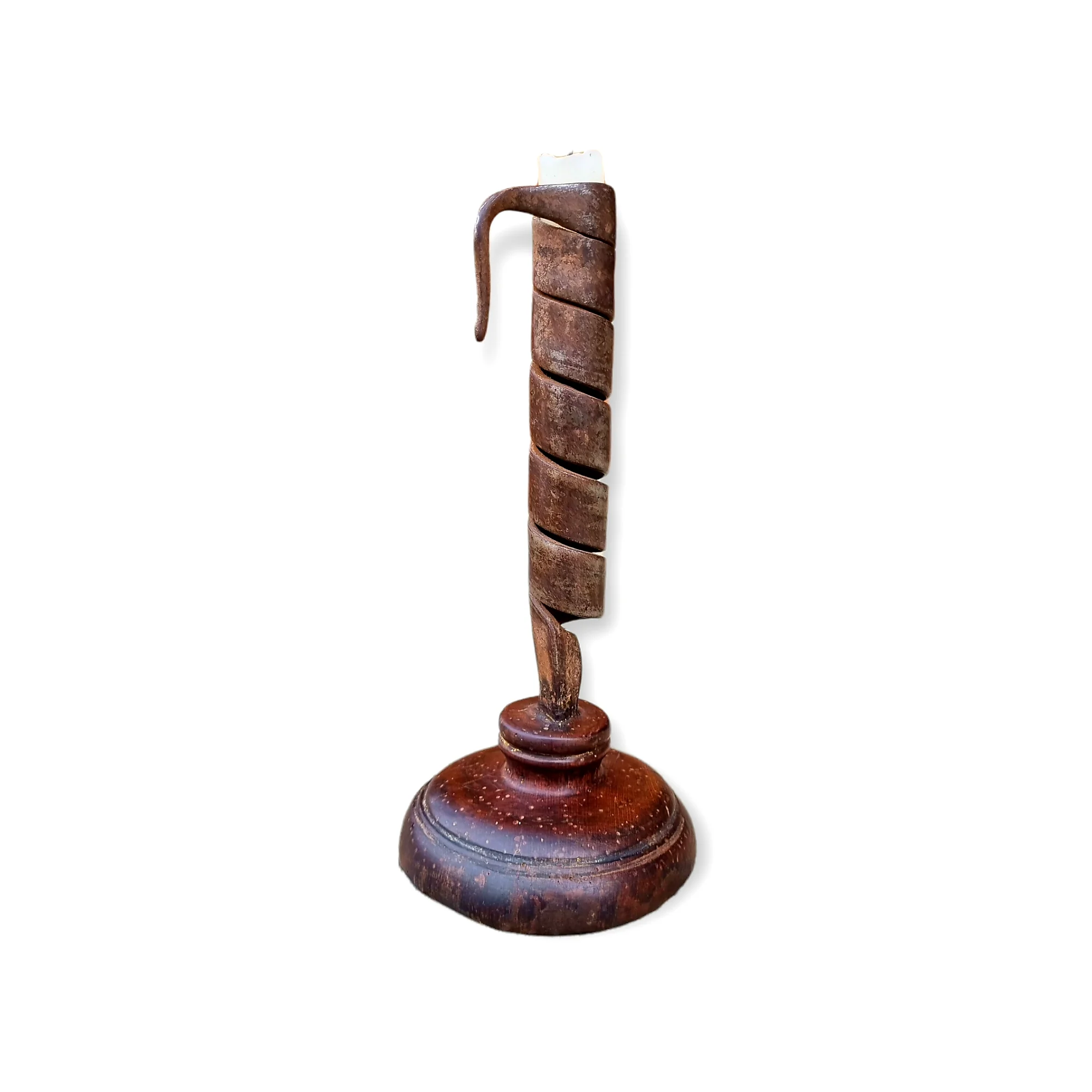
18th Century English Antique Rushlight On Original Blue-Painted Base
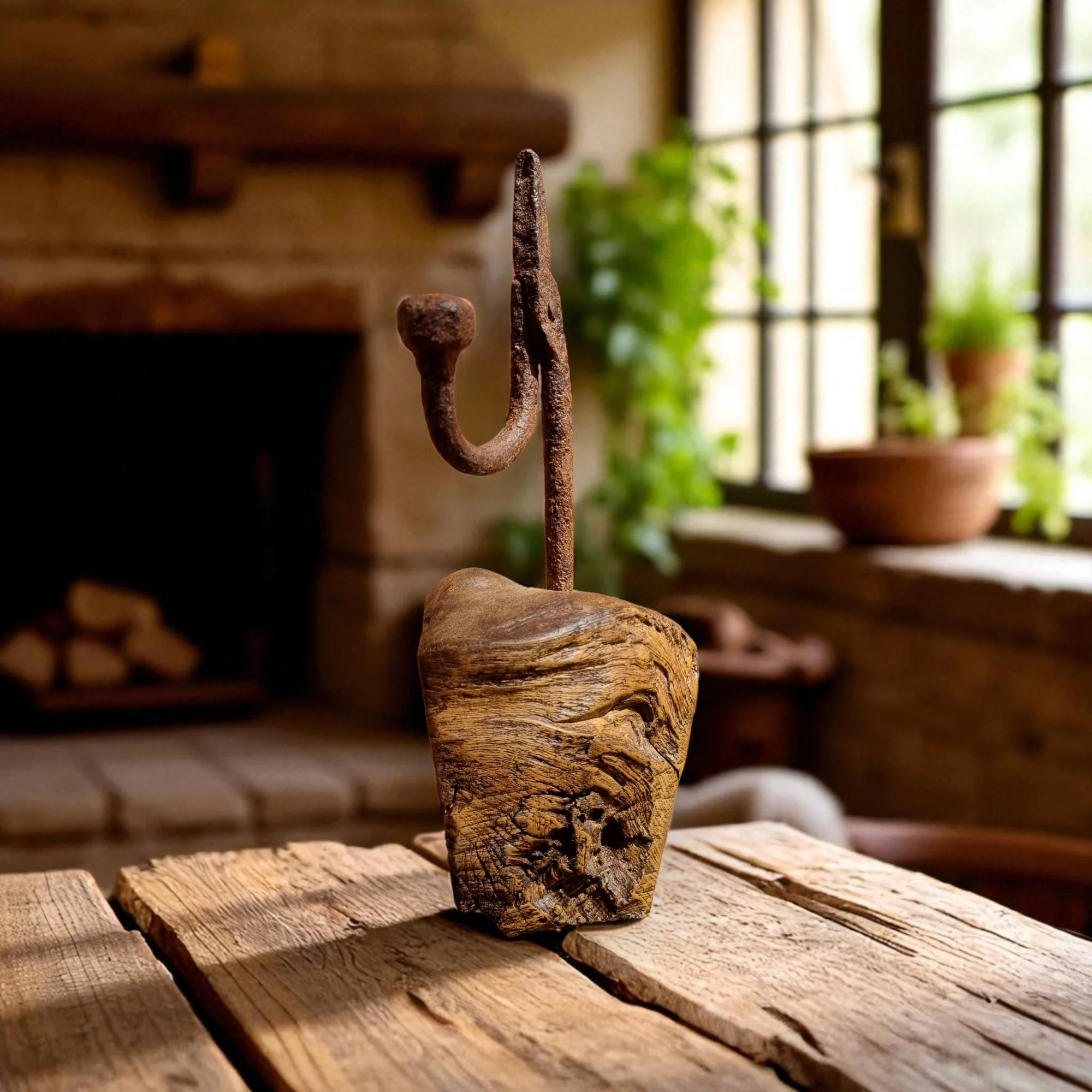
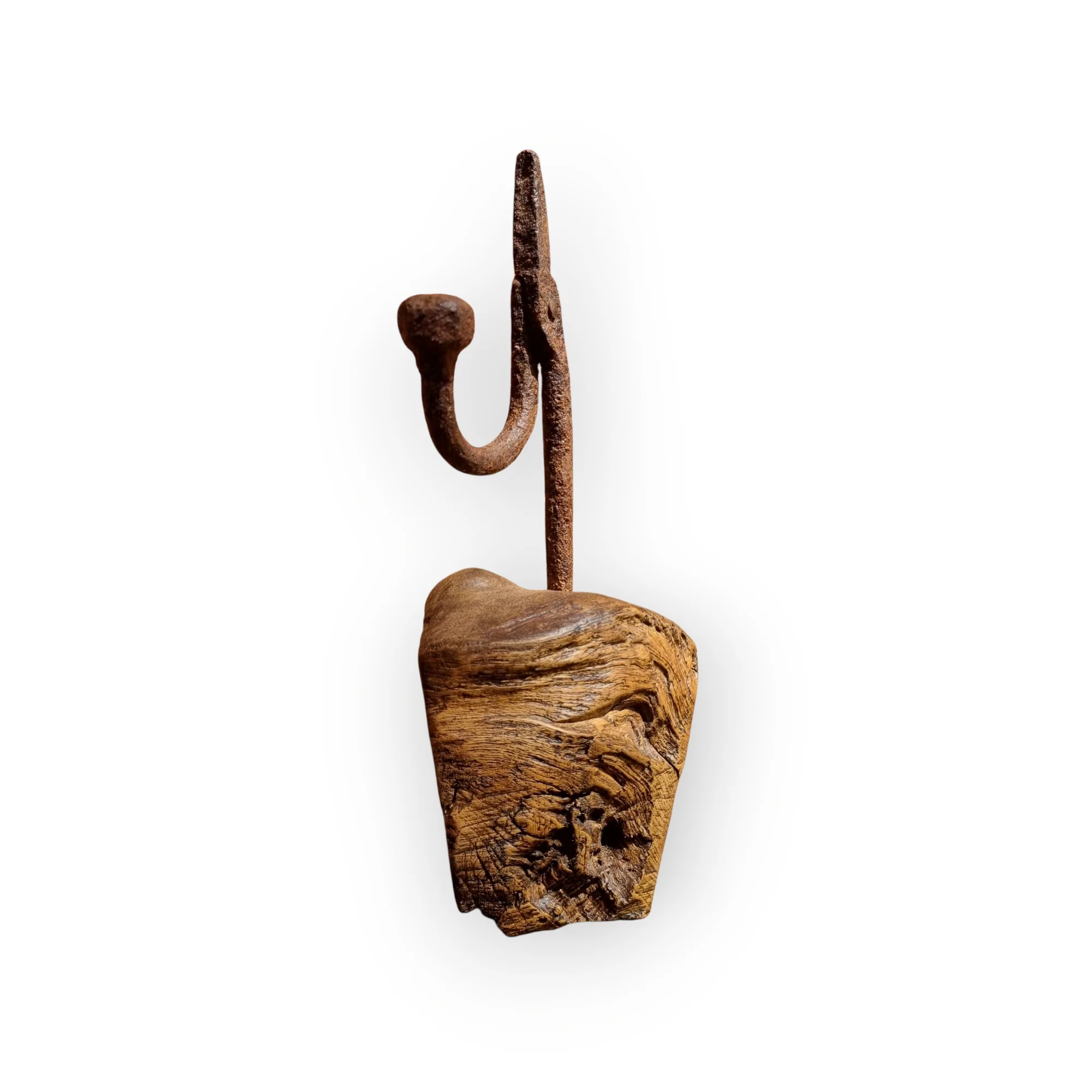
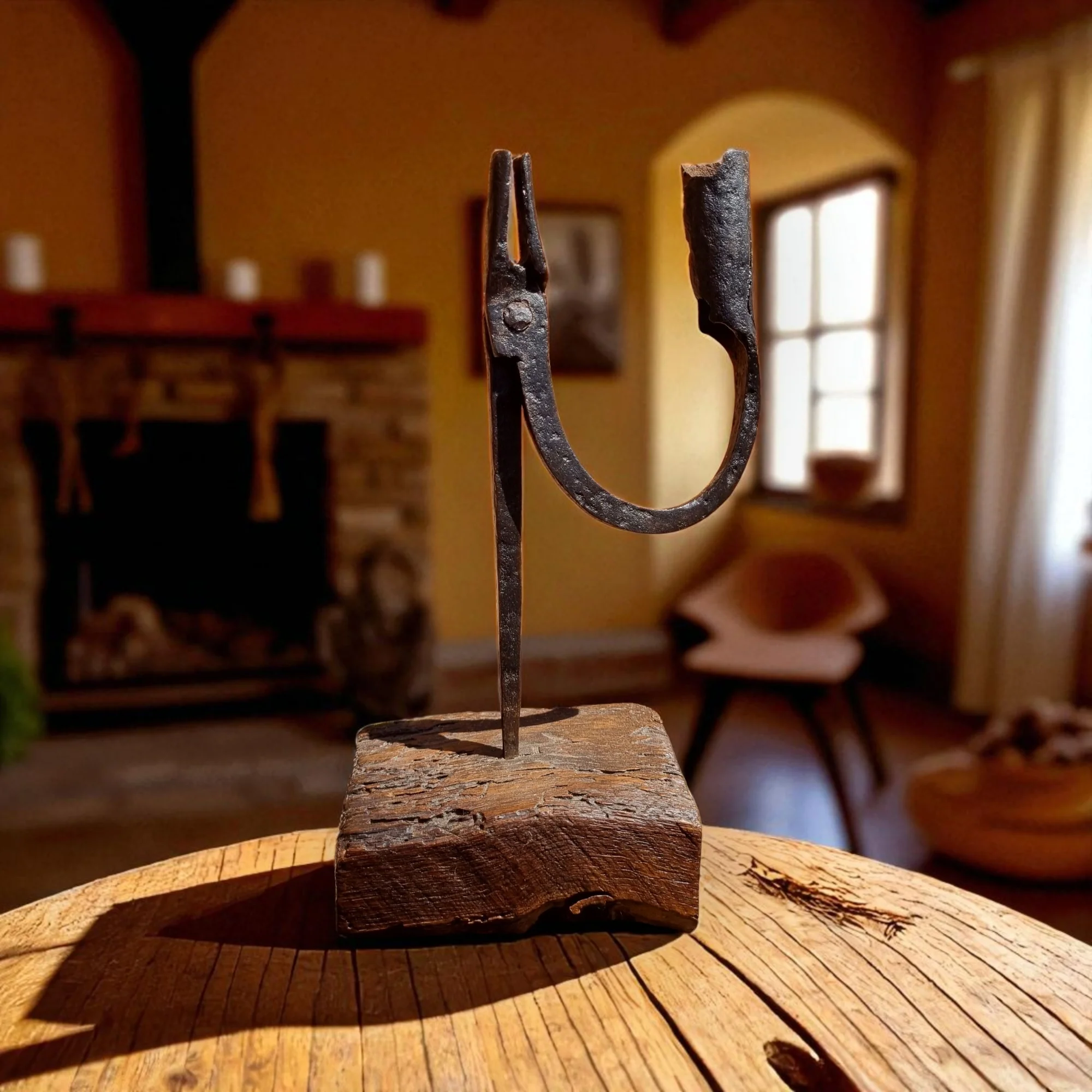
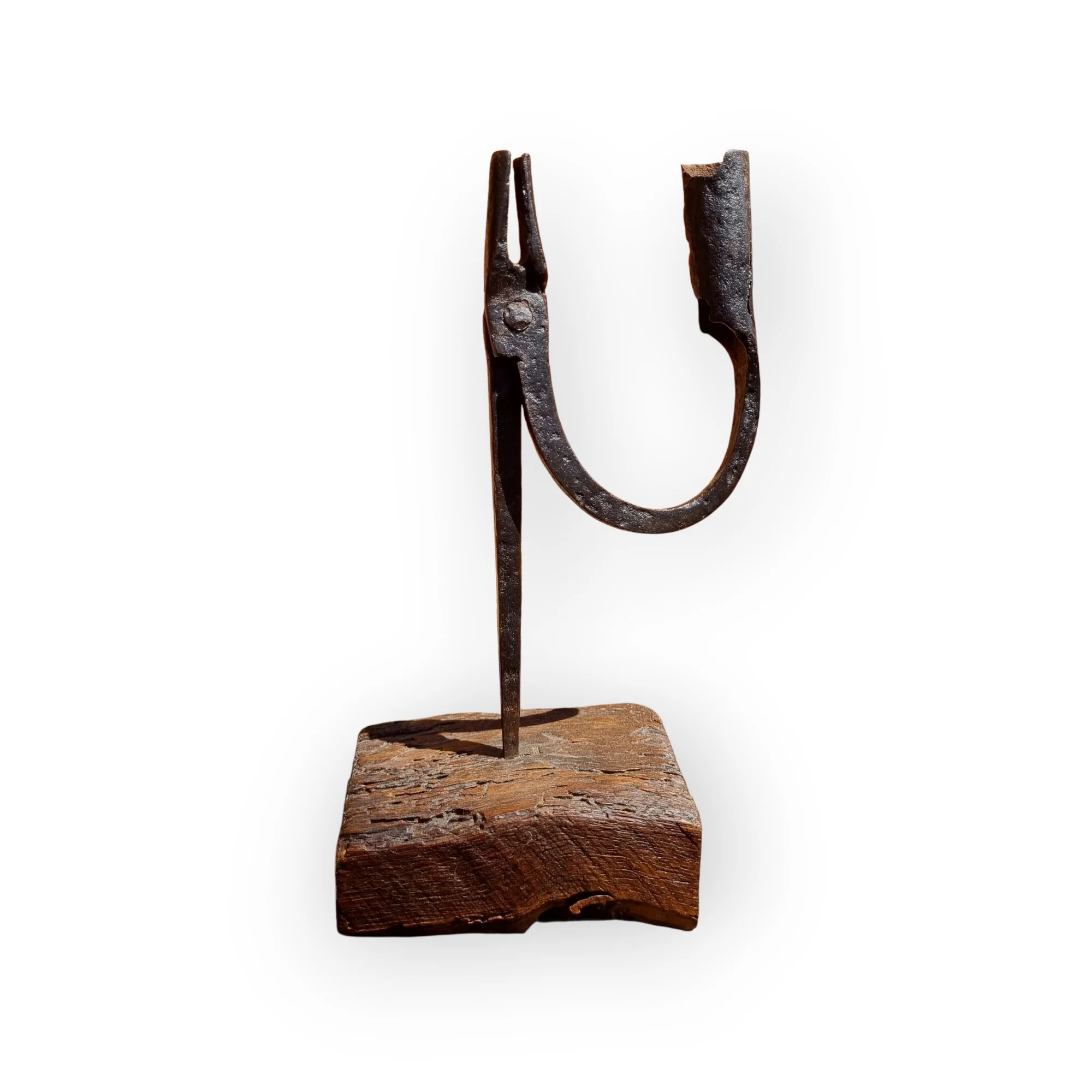
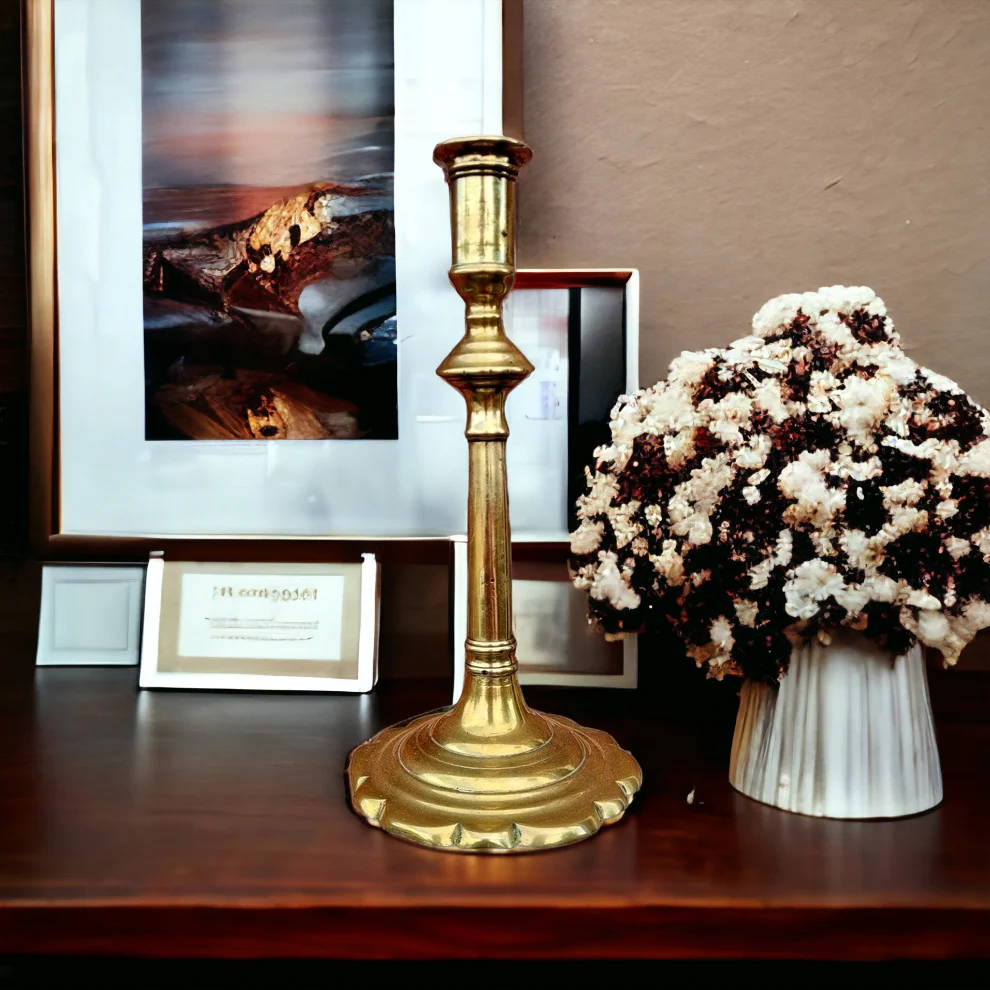
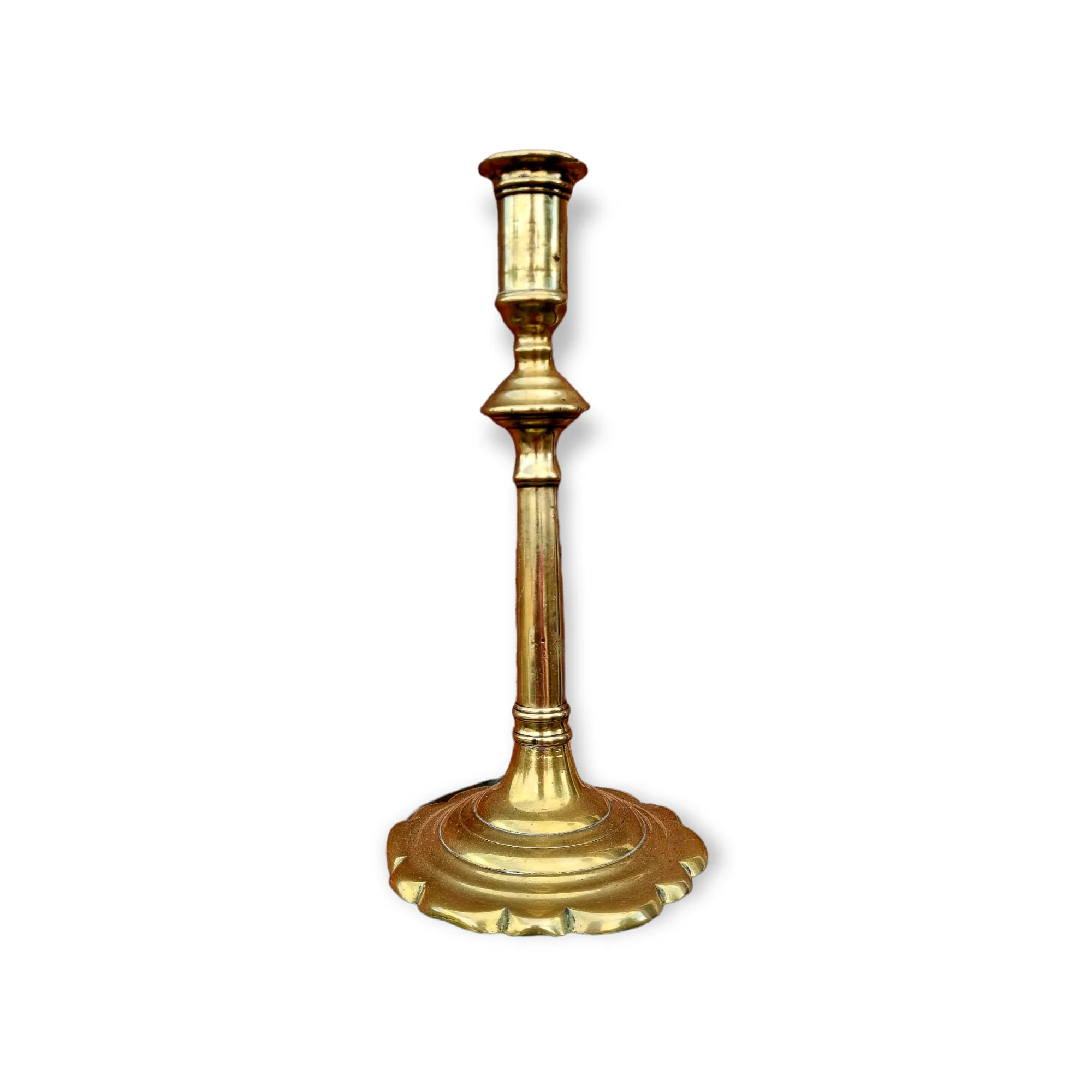
An original 18th-century antique rushlight.
English origin.
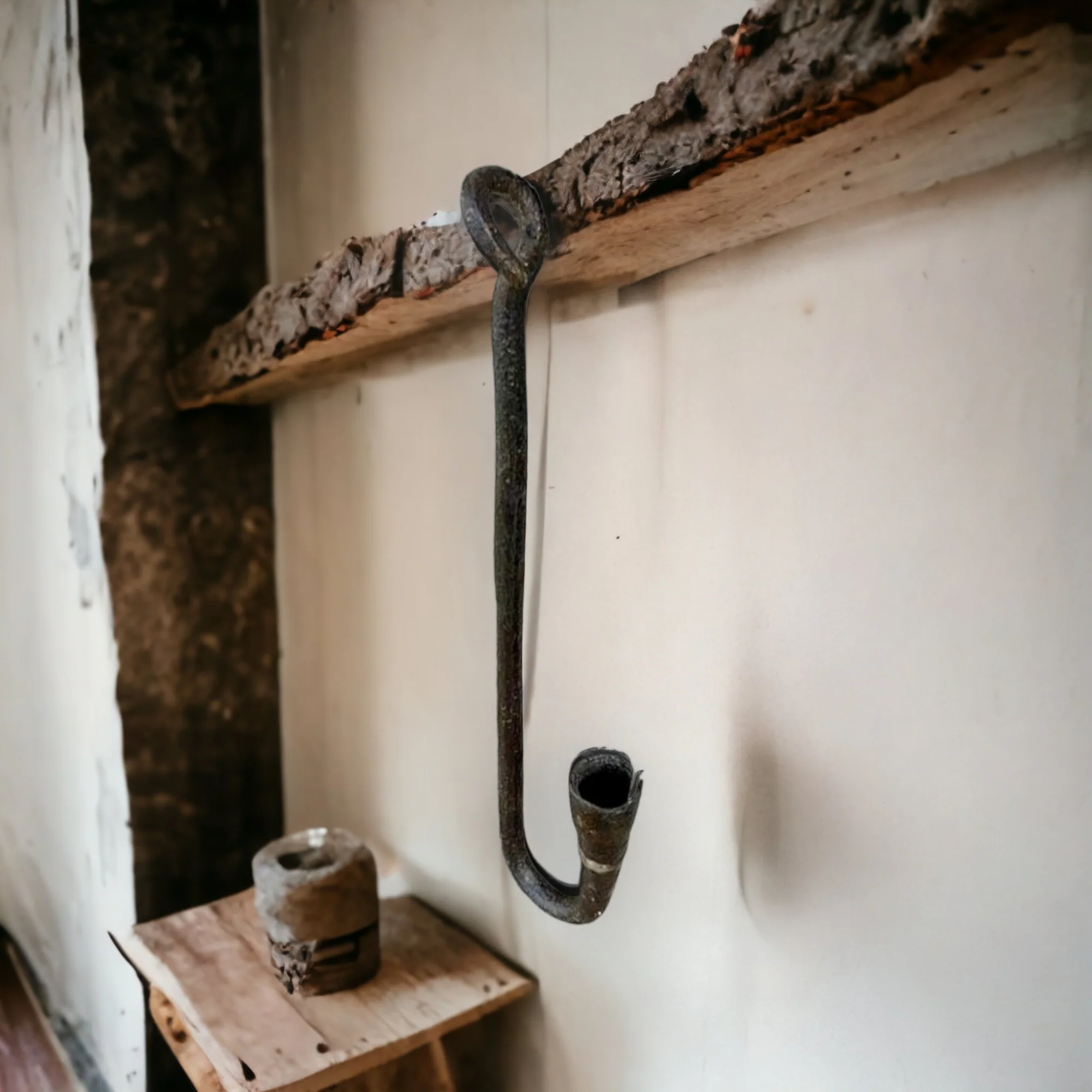
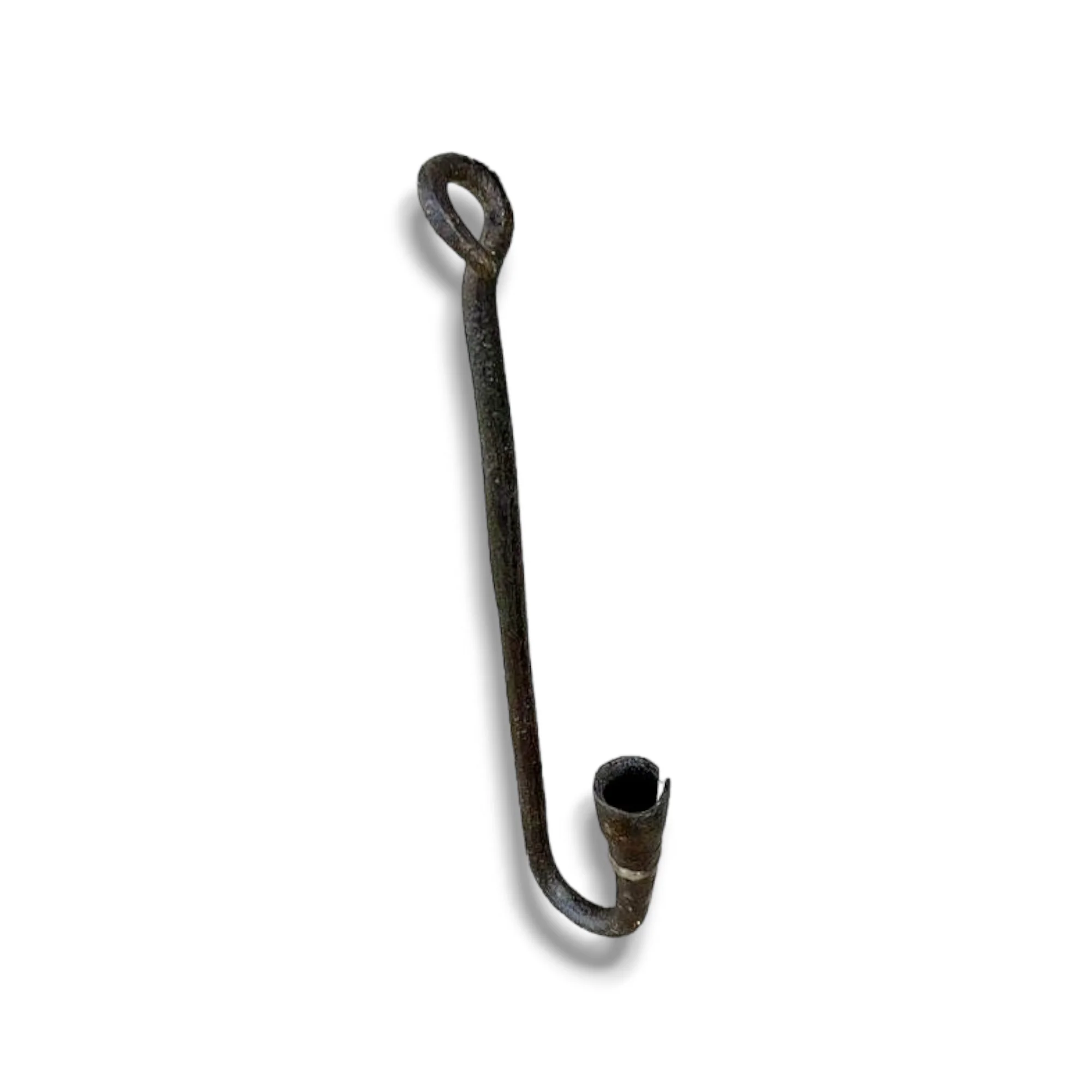
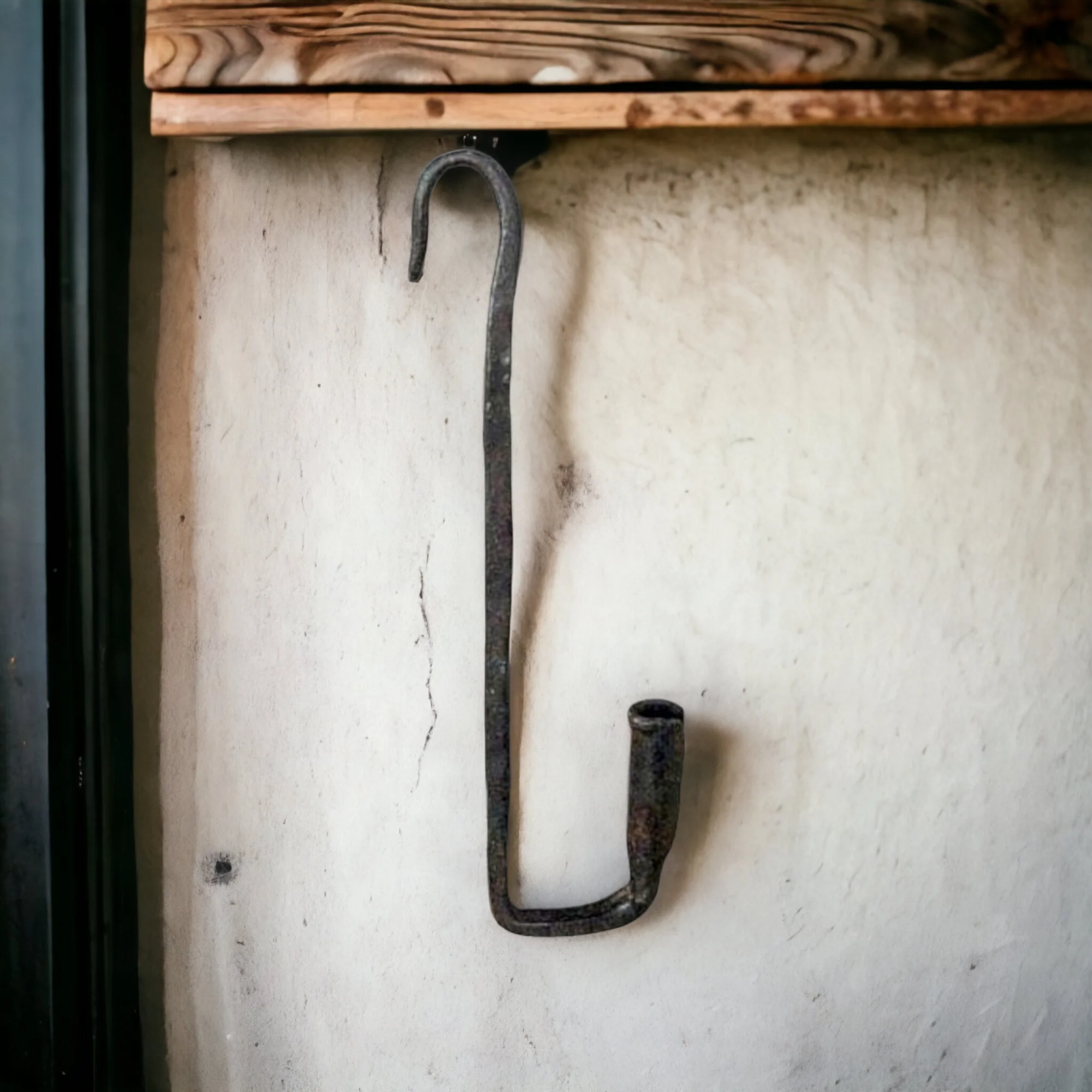
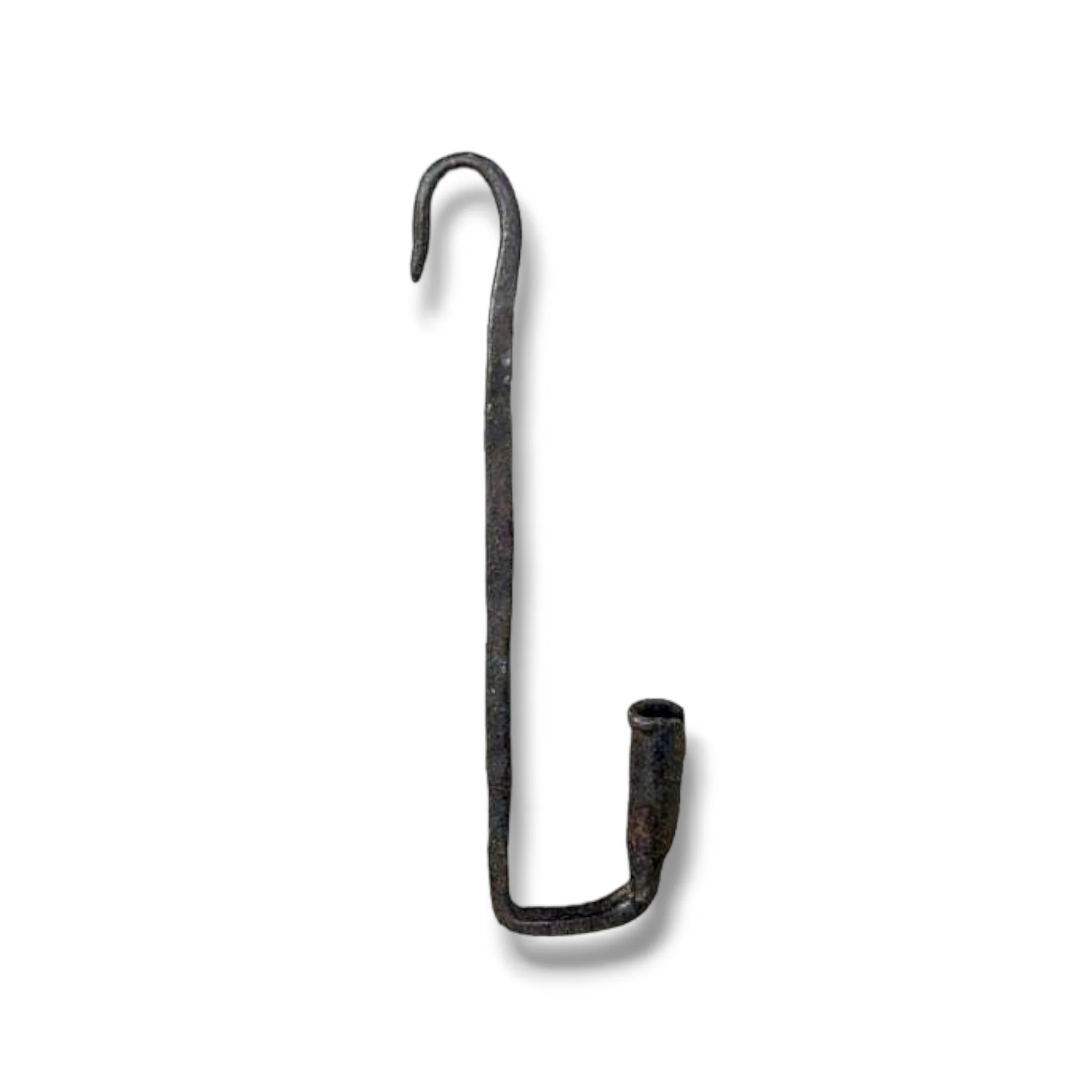
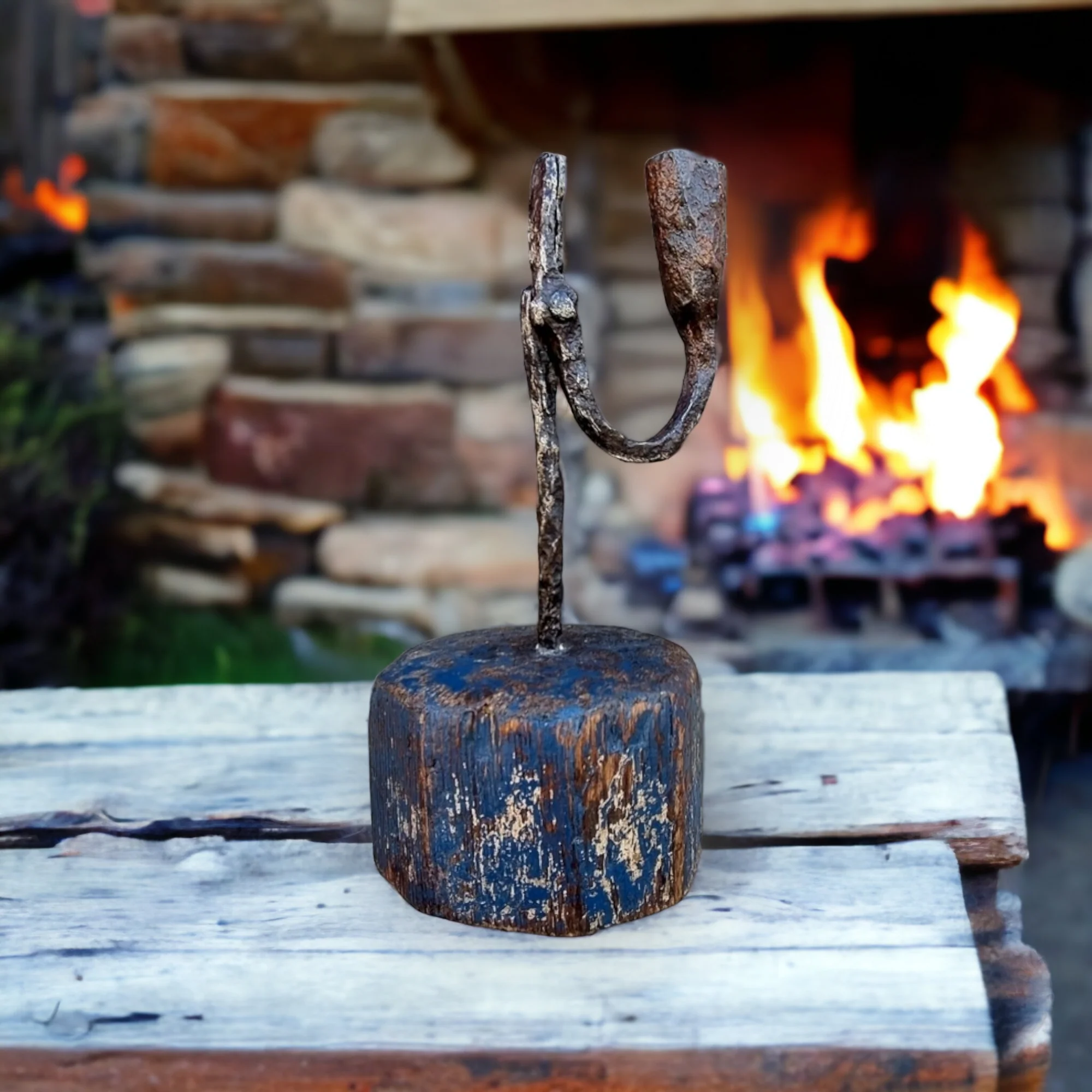
The jaws with a large rivet, twisted stem and an arm of "U" shape with a single-rolled candle socket.
Supported on its original, shaped hardwood base with substantial traces of original blue paint.
Provenance: England. 18th century. Ex-private collection in North Norfolk.
Condition - as per the images. Some surface rust and minor losses to the base are commensurate with age.
Size: Height 22.5 cm (8 3/4")
Historical Background:
Rushlights were a common form of domestic lighting in Britain from the 17th to the early 19th centuries, especially among rural households. They burned thin strips of dried rush dipped in animal fat or tallow — a humble yet ingenious solution before candles became widely affordable.
This example, dating to the 18th century, features a twisted wrought iron stem, a U-shaped arm with a rolled candle socket, and a rare original base in blue paint — a colour often associated with protection and domestic symbolism in folk tradition. The large riveted jaws would have gripped the rush tightly, allowing for a slow, controlled burn.
Such pieces are increasingly scarce, especially with original painted bases intact. They speak to the resourcefulness of early households and the artistry embedded in everyday objects.
A rare union of function and folk art — this rushlight burns with the quiet dignity of centuries past.
An original 18th-century antique rushlight.
English origin.
The jaws with a large rivet, twisted stem and an arm of "U" shape with a single-rolled candle socket.
Supported on its original, shaped hardwood base with substantial traces of original blue paint.
Provenance: England. 18th century. Ex-private collection in North Norfolk.
Condition - as per the images. Some surface rust and minor losses to the base are commensurate with age.
Size: Height 22.5 cm (8 3/4")
Historical Background:
Rushlights were a common form of domestic lighting in Britain from the 17th to the early 19th centuries, especially among rural households. They burned thin strips of dried rush dipped in animal fat or tallow — a humble yet ingenious solution before candles became widely affordable.
This example, dating to the 18th century, features a twisted wrought iron stem, a U-shaped arm with a rolled candle socket, and a rare original base in blue paint — a colour often associated with protection and domestic symbolism in folk tradition. The large riveted jaws would have gripped the rush tightly, allowing for a slow, controlled burn.
Such pieces are increasingly scarce, especially with original painted bases intact. They speak to the resourcefulness of early households and the artistry embedded in everyday objects.
A rare union of function and folk art — this rushlight burns with the quiet dignity of centuries past.
Original: $1,273.66
-70%$1,273.66
$382.10Description
An original 18th-century antique rushlight.
English origin.
The jaws with a large rivet, twisted stem and an arm of "U" shape with a single-rolled candle socket.
Supported on its original, shaped hardwood base with substantial traces of original blue paint.
Provenance: England. 18th century. Ex-private collection in North Norfolk.
Condition - as per the images. Some surface rust and minor losses to the base are commensurate with age.
Size: Height 22.5 cm (8 3/4")
Historical Background:
Rushlights were a common form of domestic lighting in Britain from the 17th to the early 19th centuries, especially among rural households. They burned thin strips of dried rush dipped in animal fat or tallow — a humble yet ingenious solution before candles became widely affordable.
This example, dating to the 18th century, features a twisted wrought iron stem, a U-shaped arm with a rolled candle socket, and a rare original base in blue paint — a colour often associated with protection and domestic symbolism in folk tradition. The large riveted jaws would have gripped the rush tightly, allowing for a slow, controlled burn.
Such pieces are increasingly scarce, especially with original painted bases intact. They speak to the resourcefulness of early households and the artistry embedded in everyday objects.
A rare union of function and folk art — this rushlight burns with the quiet dignity of centuries past.