Mid 18thC English Antique Blue & White Delftware Puzzle Jug, Attributed to Liverpool, Circa 1765
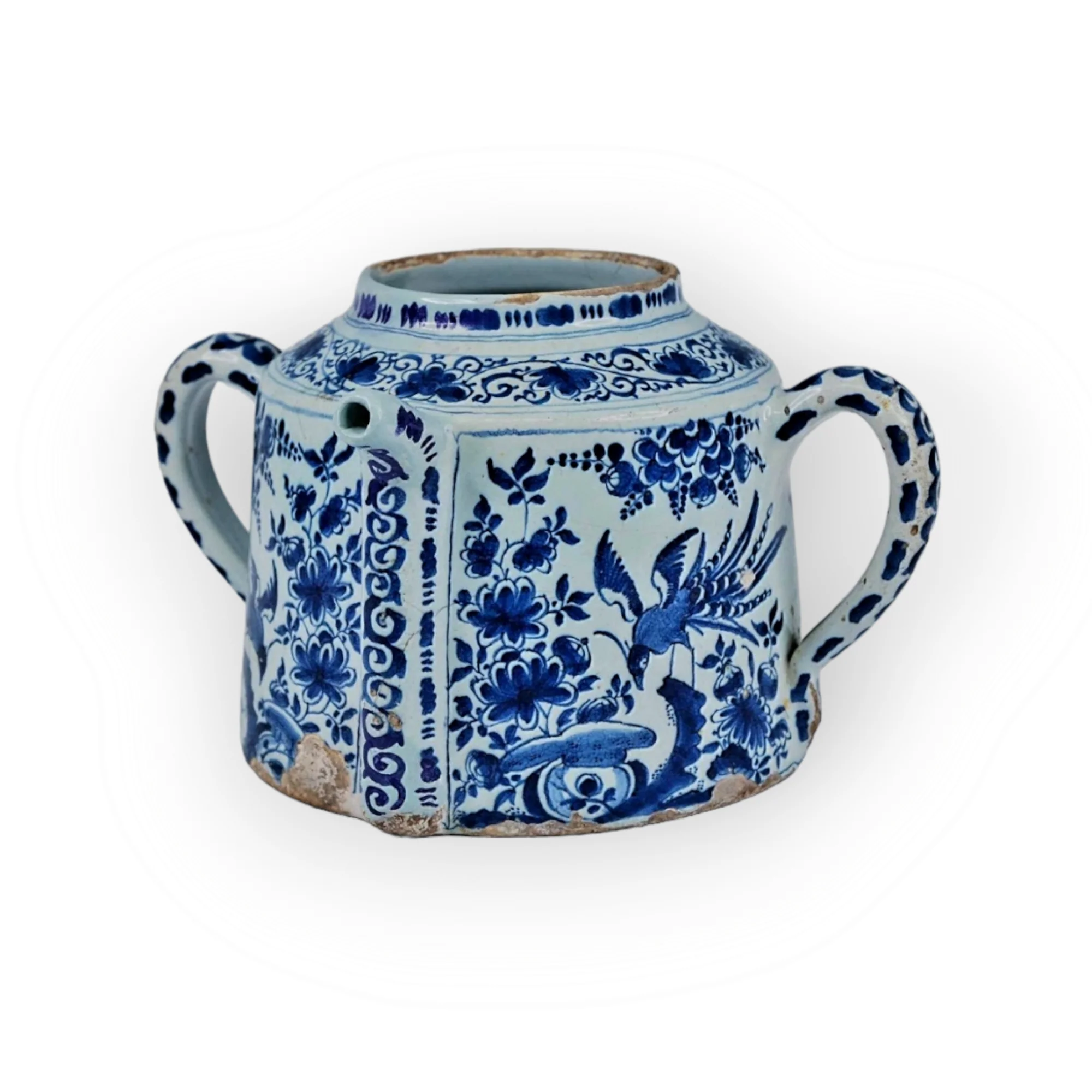
A rare mid-18th-century English delftware puzzle jug, attributed to Liverpool, circa 1765.
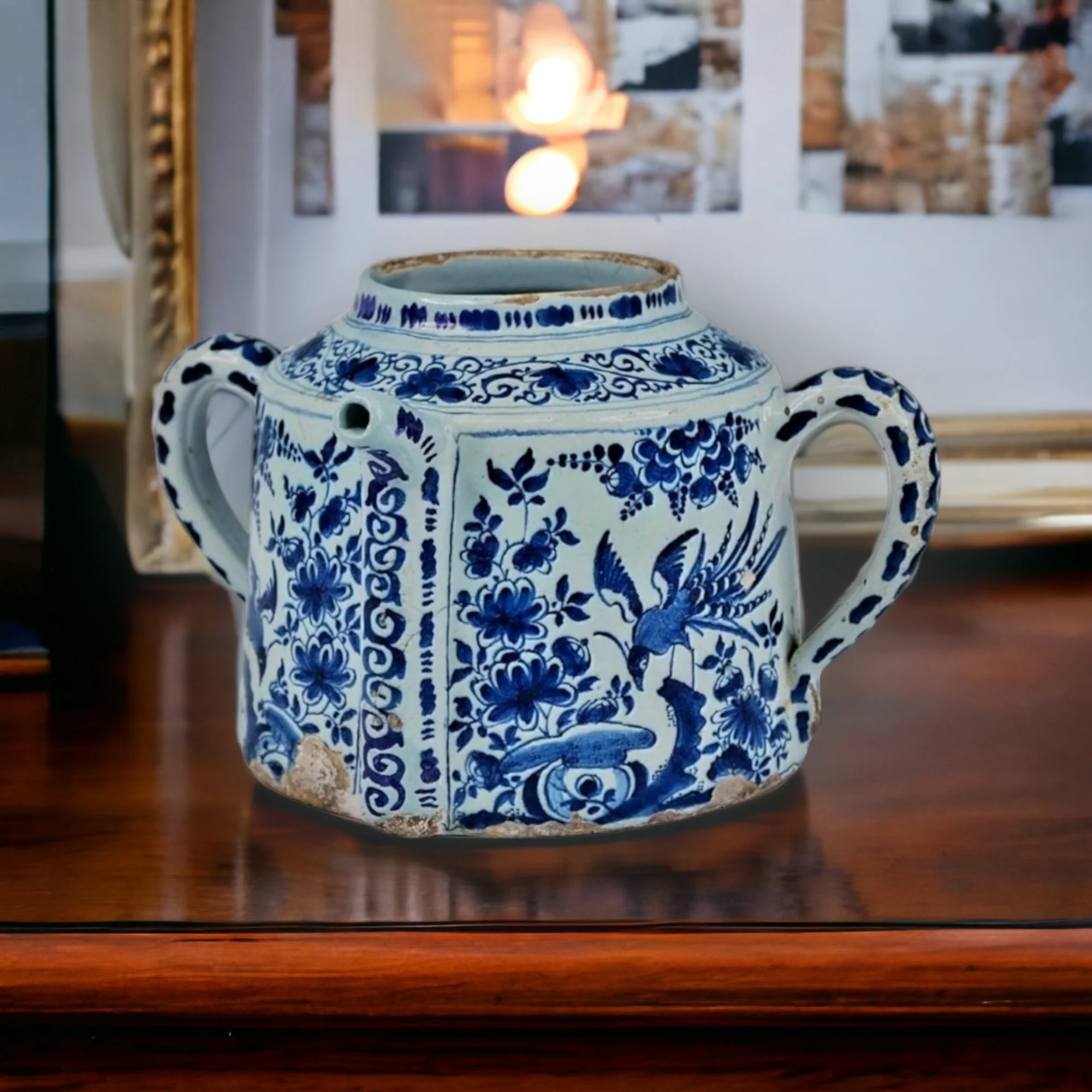
Decorated in underglaze blue. With its pierced neck and three spouts, it embodies the whimsical ingenuity of Georgian ceramics — a drinking vessel designed to entertain and confound. For collectors of Delftware and historic tableware, this jug is a standout piece of functional artistry.
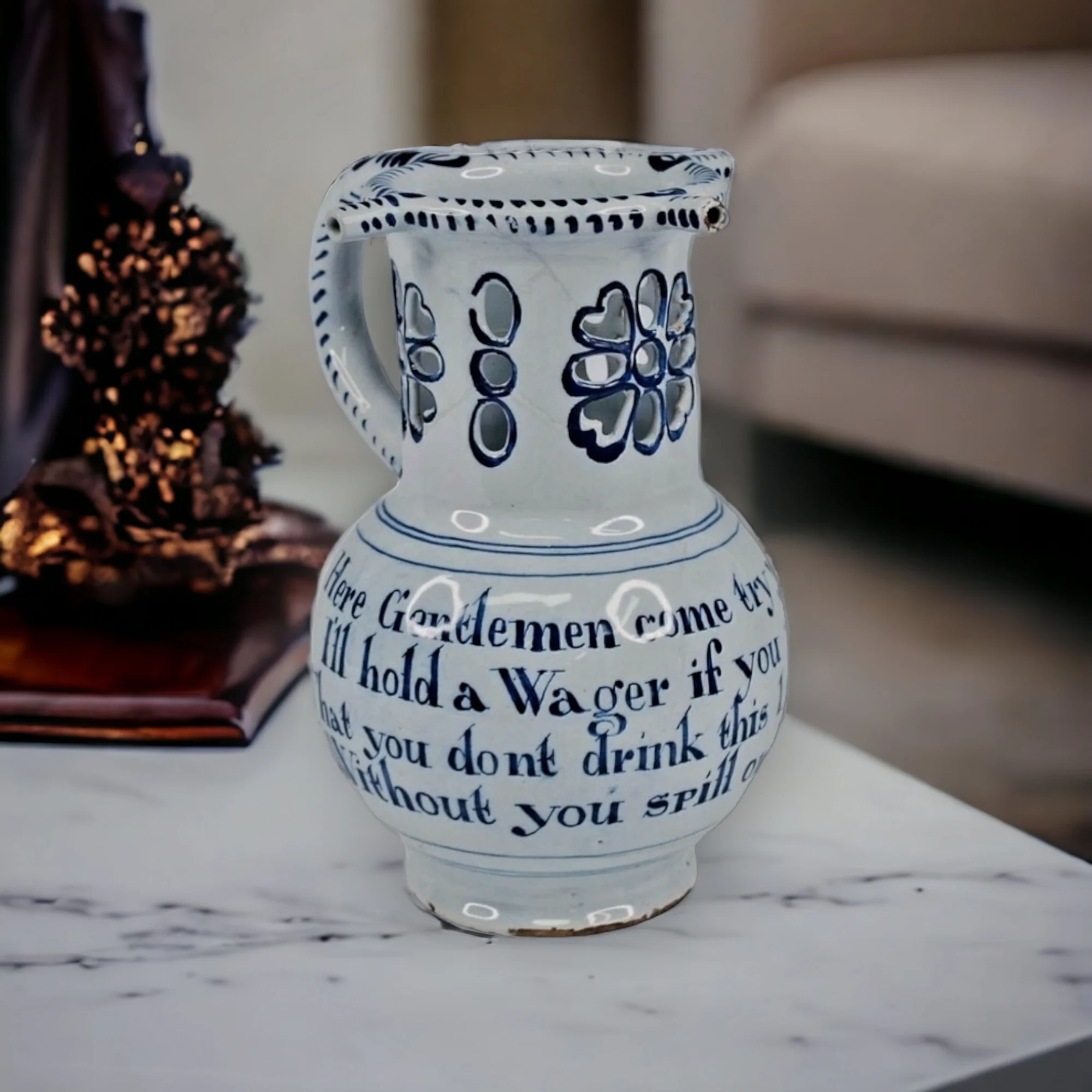
With three spouts and pierced neck above a globular body inscribed with the poem entitled 'Here gentleman come try your skill'. Reference: Archer M (1997), Delftware, fig. D.6, P.259.
Provenance: England. 18th century.
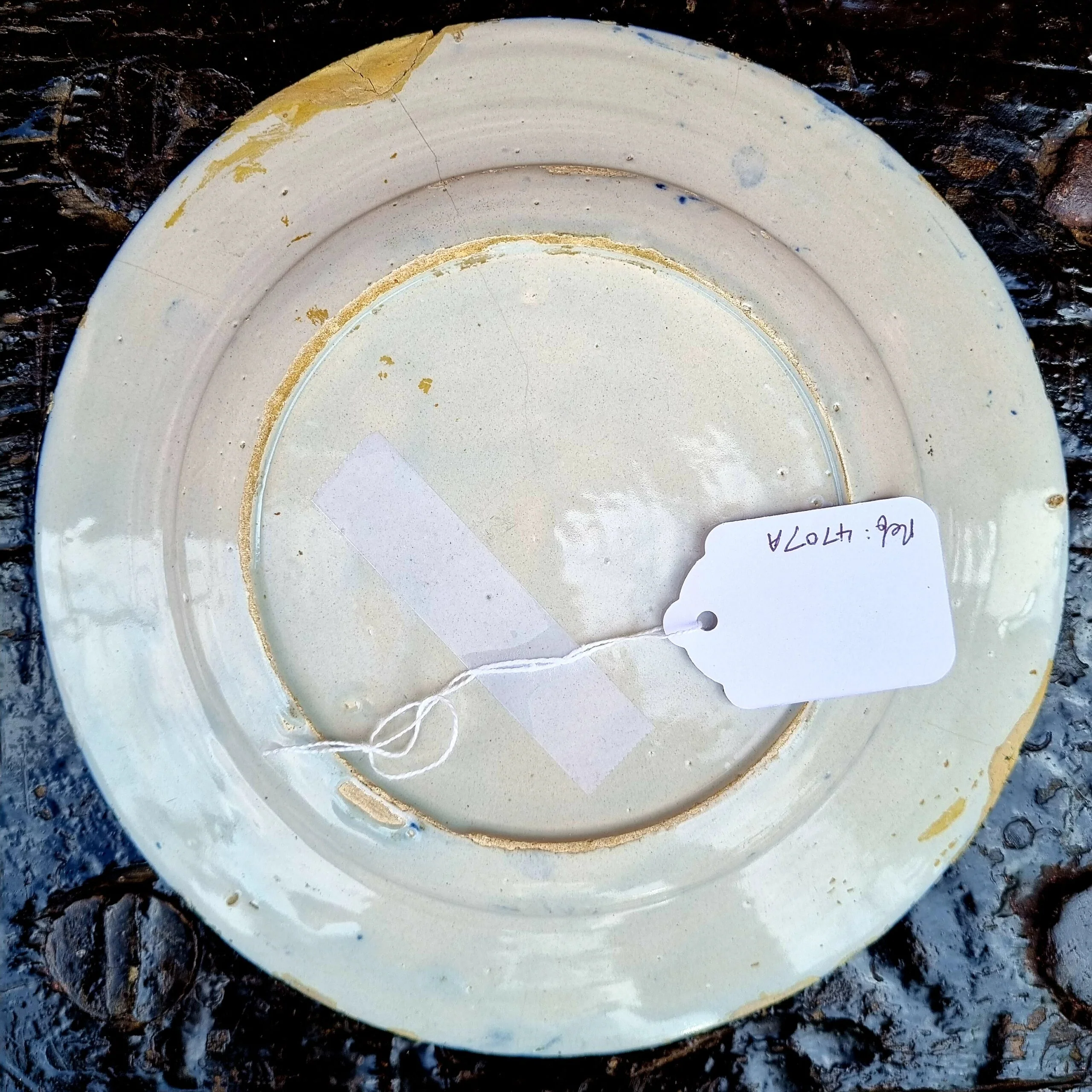
Condition - In good condition and displays well. Please refer to the images. A further detailed condition report is available upon request.
Dimensions: Height 21.5 cm (8 1/2")
Historical Background:
Puzzle jugs were popular novelty items in the 18th century, designed to amuse and challenge drinkers with their hidden mechanics. Typically featuring a pierced neck and multiple spouts, they required the user to discover the correct way to drink without spilling — often involving concealed channels within the handle or rim.
This example, attributed to Liverpool circa 1765, showcases the region’s mastery of tin-glazed earthenware and its flair for playful design. The blue and white decoration reflects both Dutch influence and English taste, while the pierced neck and triple spouts mark it as a classic puzzle jug — part drinking vessel, part party trick, and wholly collectible.
Surviving examples in such condition are rare, especially with crisp glaze and intact piercing. They offer insight into Georgian social customs and the lighter side of ceramic artistry.
Simply put, this is a jug of mystery and mirth — where Georgian craftsmanship meets playful invention in glazed perfection.
A rare mid-18th-century English delftware puzzle jug, attributed to Liverpool, circa 1765.
Decorated in underglaze blue. With its pierced neck and three spouts, it embodies the whimsical ingenuity of Georgian ceramics — a drinking vessel designed to entertain and confound. For collectors of Delftware and historic tableware, this jug is a standout piece of functional artistry.
With three spouts and pierced neck above a globular body inscribed with the poem entitled 'Here gentleman come try your skill'. Reference: Archer M (1997), Delftware, fig. D.6, P.259.
Provenance: England. 18th century.
Condition - In good condition and displays well. Please refer to the images. A further detailed condition report is available upon request.
Dimensions: Height 21.5 cm (8 1/2")
Historical Background:
Puzzle jugs were popular novelty items in the 18th century, designed to amuse and challenge drinkers with their hidden mechanics. Typically featuring a pierced neck and multiple spouts, they required the user to discover the correct way to drink without spilling — often involving concealed channels within the handle or rim.
This example, attributed to Liverpool circa 1765, showcases the region’s mastery of tin-glazed earthenware and its flair for playful design. The blue and white decoration reflects both Dutch influence and English taste, while the pierced neck and triple spouts mark it as a classic puzzle jug — part drinking vessel, part party trick, and wholly collectible.
Surviving examples in such condition are rare, especially with crisp glaze and intact piercing. They offer insight into Georgian social customs and the lighter side of ceramic artistry.
Simply put, this is a jug of mystery and mirth — where Georgian craftsmanship meets playful invention in glazed perfection.
Original: $1,822.19
-70%$1,822.19
$546.66Description
A rare mid-18th-century English delftware puzzle jug, attributed to Liverpool, circa 1765.
Decorated in underglaze blue. With its pierced neck and three spouts, it embodies the whimsical ingenuity of Georgian ceramics — a drinking vessel designed to entertain and confound. For collectors of Delftware and historic tableware, this jug is a standout piece of functional artistry.
With three spouts and pierced neck above a globular body inscribed with the poem entitled 'Here gentleman come try your skill'. Reference: Archer M (1997), Delftware, fig. D.6, P.259.
Provenance: England. 18th century.
Condition - In good condition and displays well. Please refer to the images. A further detailed condition report is available upon request.
Dimensions: Height 21.5 cm (8 1/2")
Historical Background:
Puzzle jugs were popular novelty items in the 18th century, designed to amuse and challenge drinkers with their hidden mechanics. Typically featuring a pierced neck and multiple spouts, they required the user to discover the correct way to drink without spilling — often involving concealed channels within the handle or rim.
This example, attributed to Liverpool circa 1765, showcases the region’s mastery of tin-glazed earthenware and its flair for playful design. The blue and white decoration reflects both Dutch influence and English taste, while the pierced neck and triple spouts mark it as a classic puzzle jug — part drinking vessel, part party trick, and wholly collectible.
Surviving examples in such condition are rare, especially with crisp glaze and intact piercing. They offer insight into Georgian social customs and the lighter side of ceramic artistry.
Simply put, this is a jug of mystery and mirth — where Georgian craftsmanship meets playful invention in glazed perfection.