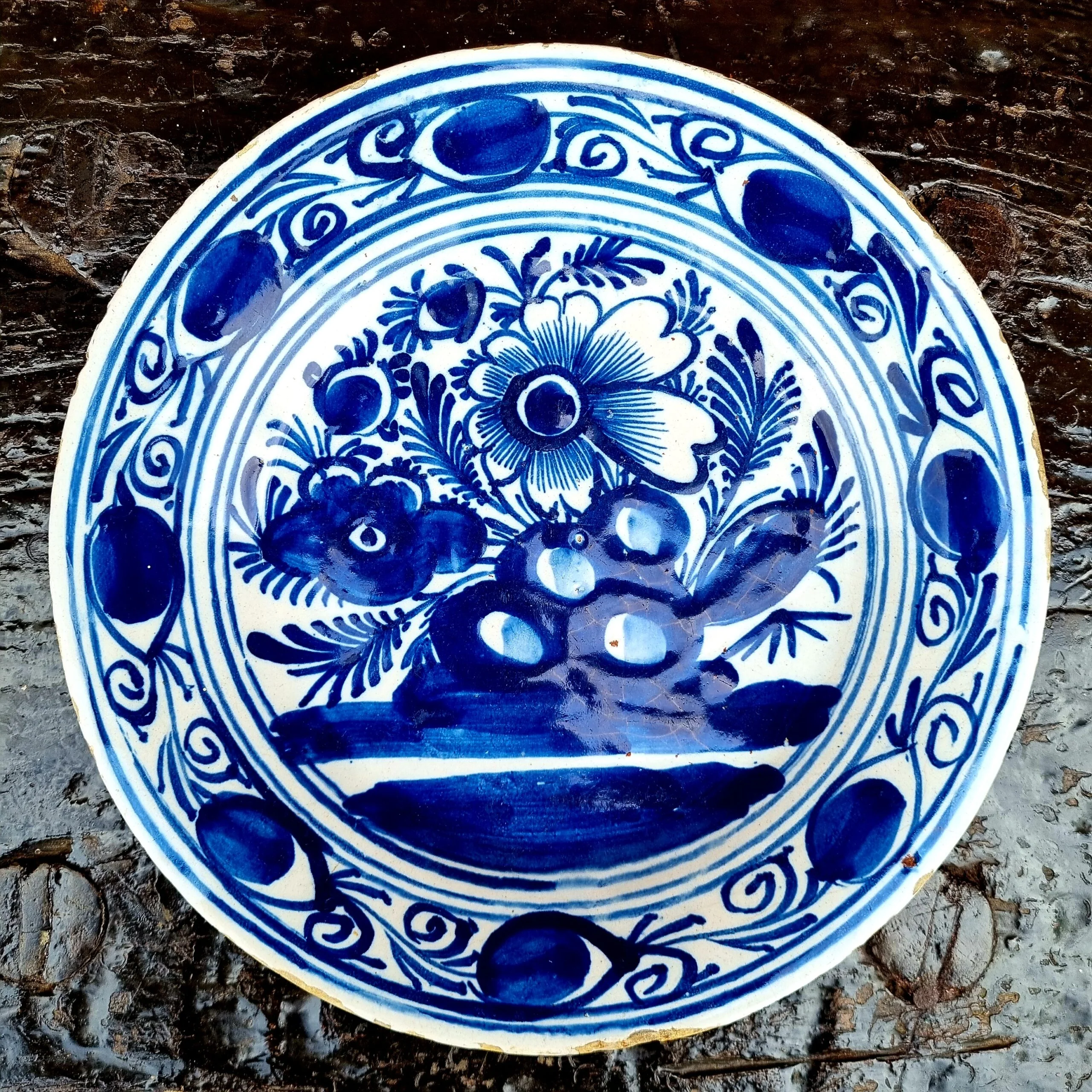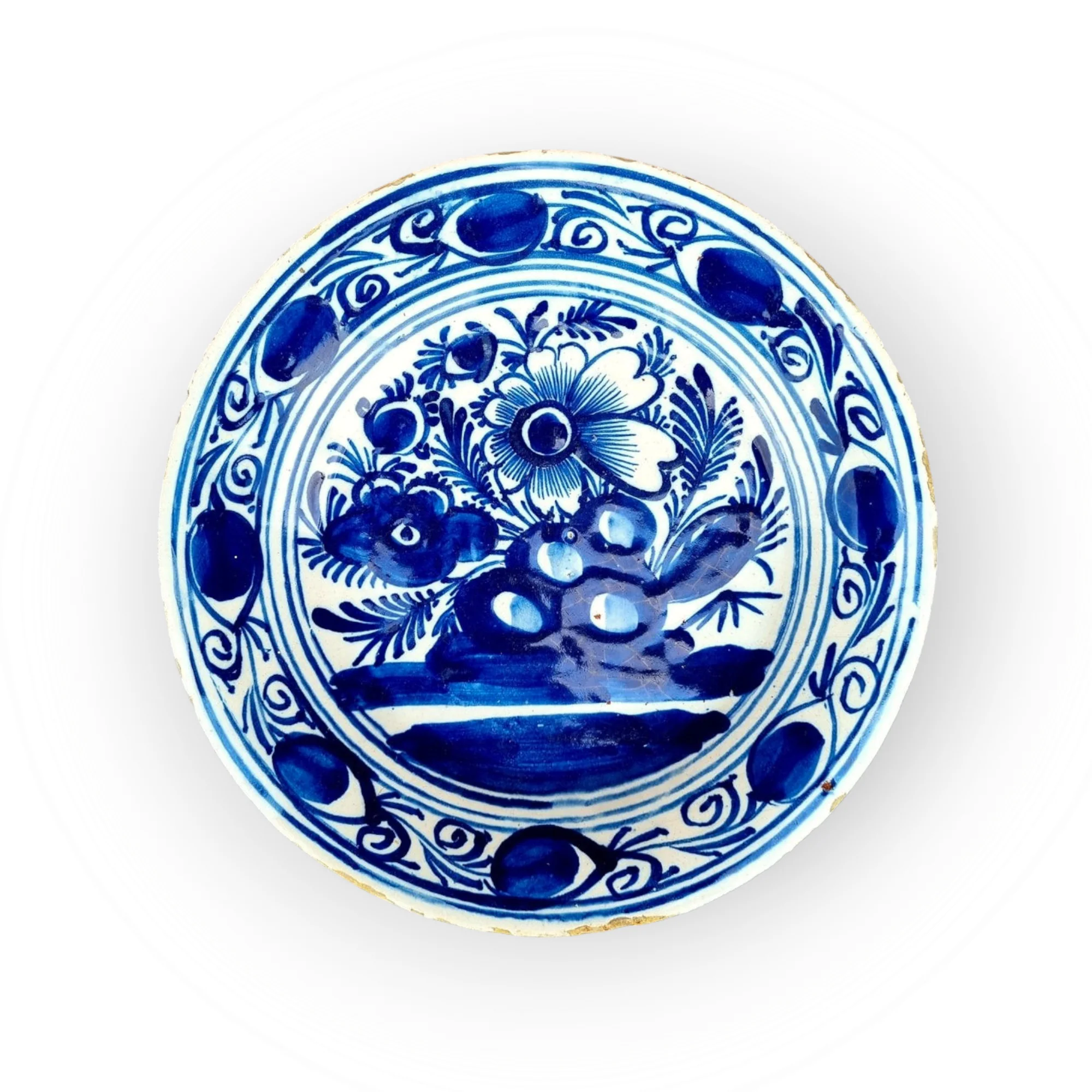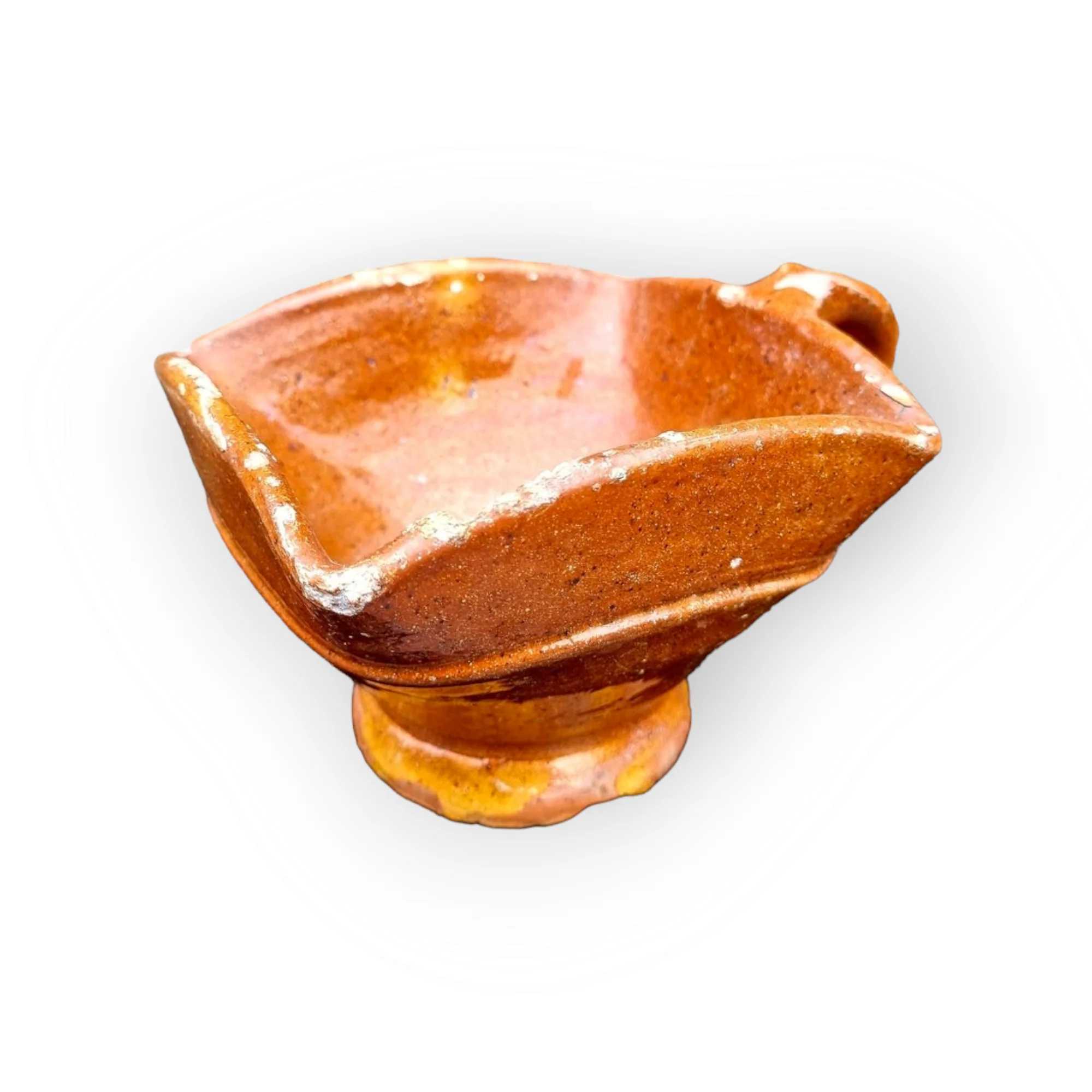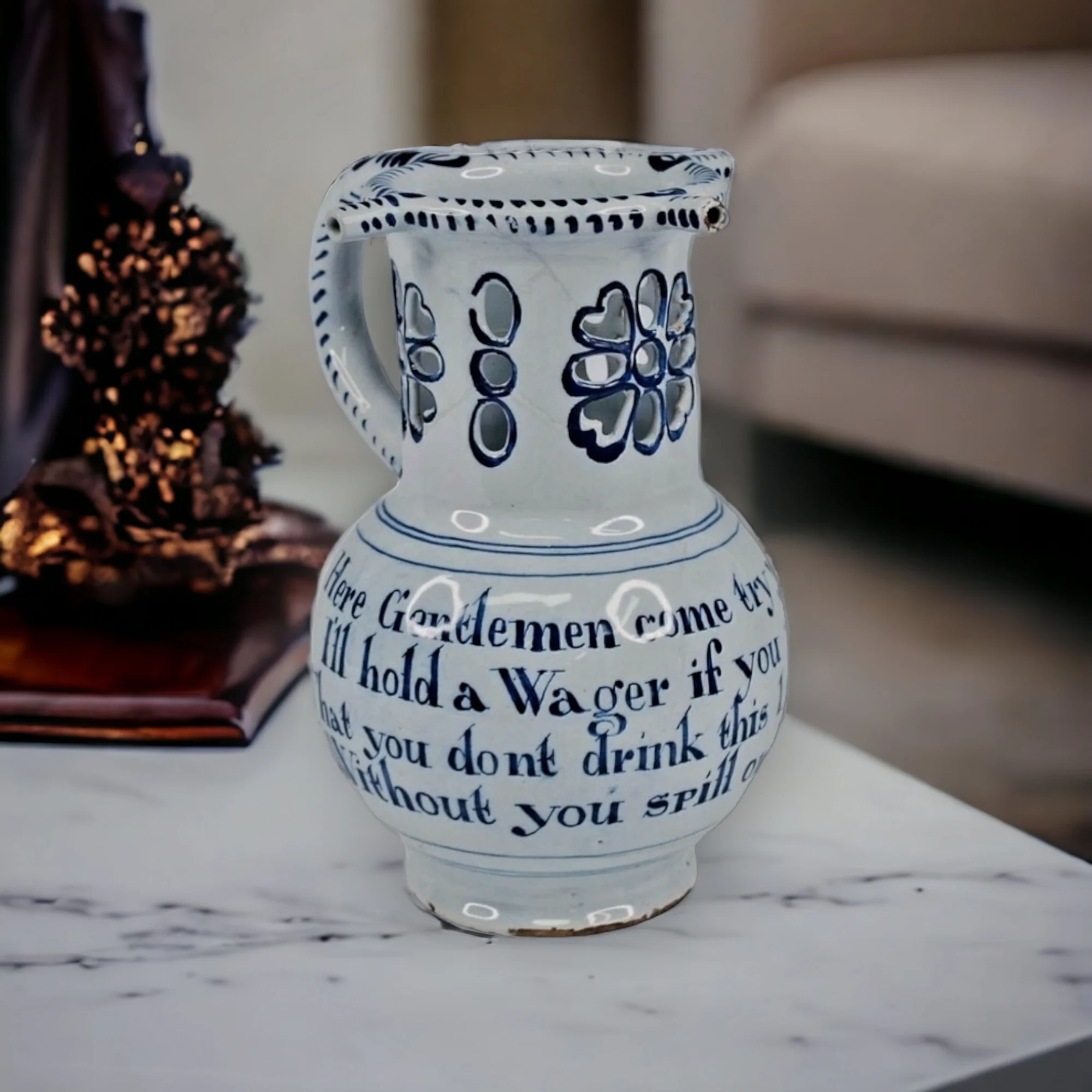
Early 18thC English Antique Blue & White Delftware Posset Pot, Attributed to Lambeth, London, Circa 1720
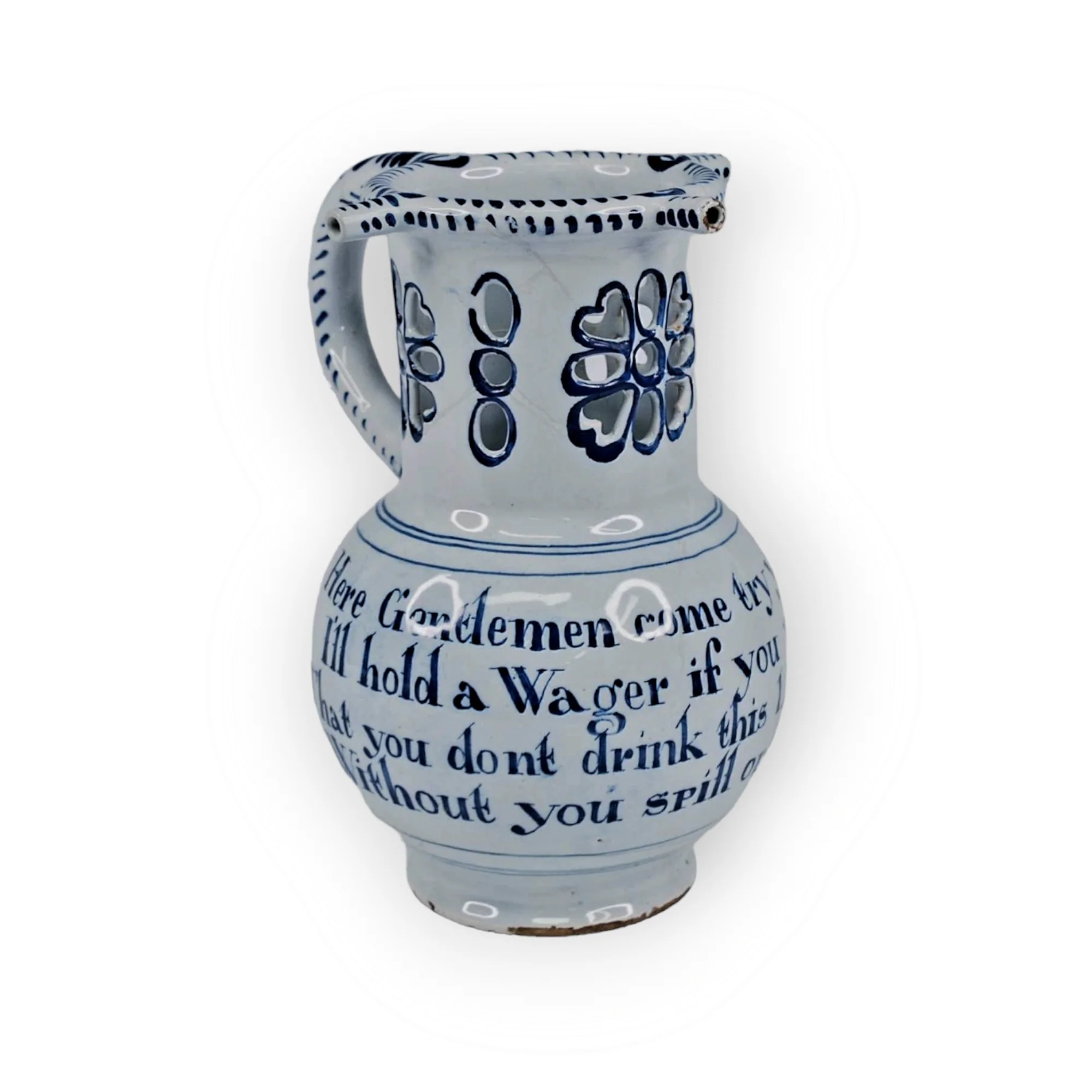
An early 18th-century English antique blue and white Delftware posset pot, probably Lambeth, London, circa 1720.
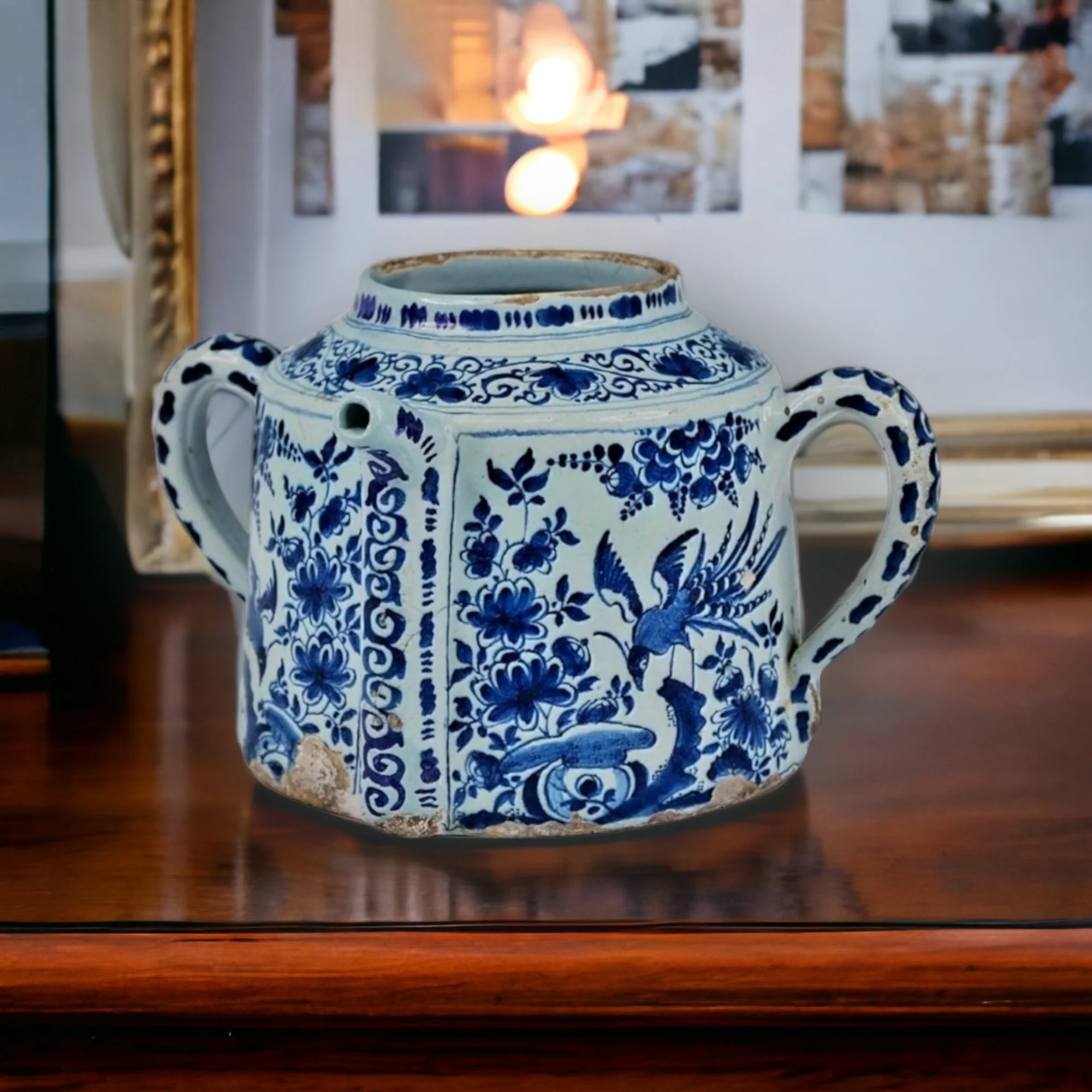
Decorated in underglaze blue with floral motifs. Of cylindrical form, the spout is flanked by twin handles, decorated with birds amongst flowers.
Provenance: England. Early 18th century.
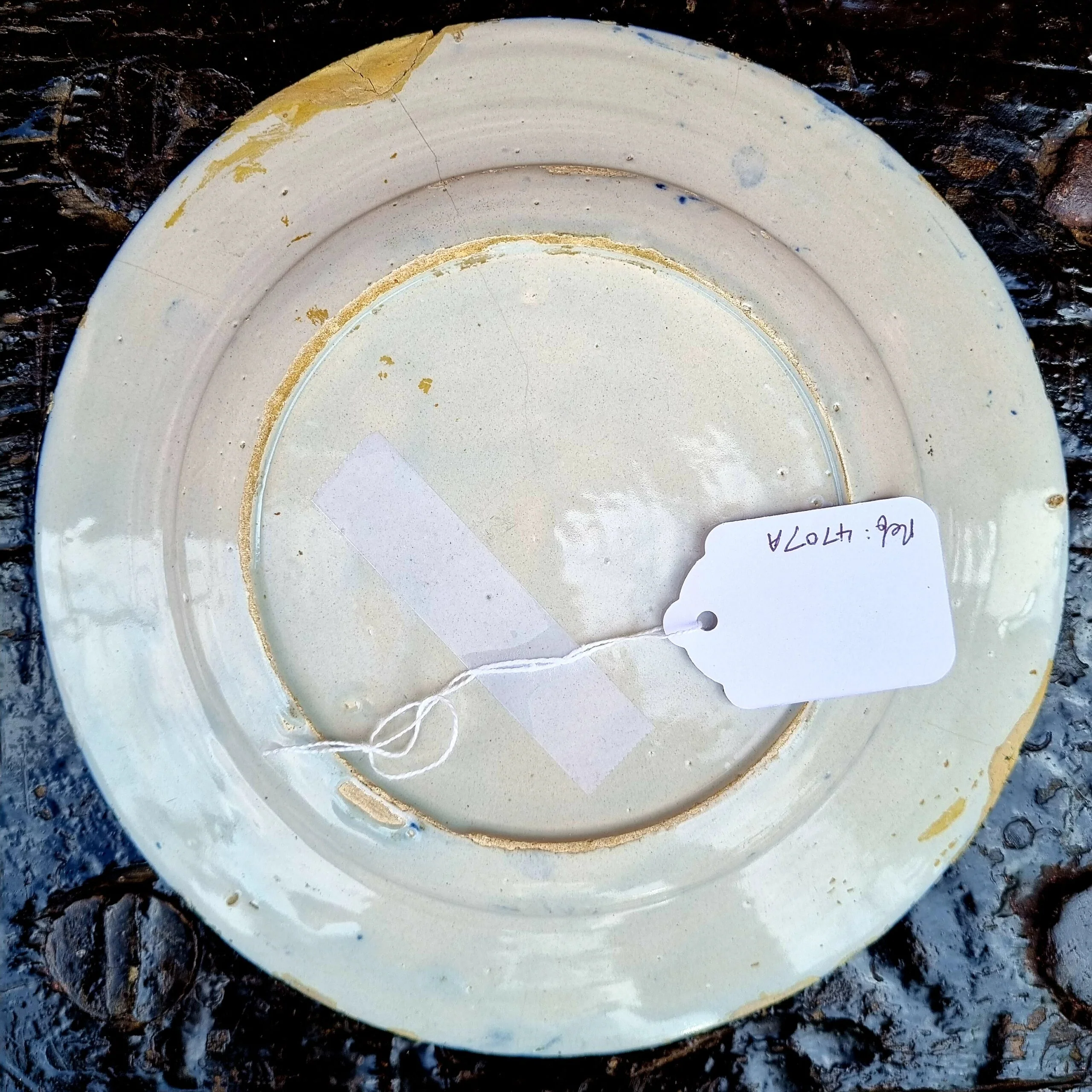
Condition - The glaze has some minor fritting. The spout has been restored as have the handles. The pot displays well. Please refer to the images. A further detailed condition report is available upon request.
Size: Height 16.5 cm (7")
Historical Background:
Posset pots were used to serve “posset,” a popular British drink made from hot milk curdled with ale or wine, often spiced and sweetened. It was consumed both as a delicacy and a remedy, particularly during the 17th and 18th centuries.
This example, attributed to Lambeth circa 1720, is crafted in tin-glazed earthenware and decorated in underglaze blue with floral motifs. Lambeth was a major centre for delftware production, known for its bold designs and domestic wares. The pot’s twin handles and wide spout reflect its intended use for sharing and sipping — often in social or medicinal contexts.
Surviving posset pots are rare, especially with intact glaze and crisp decoration. They offer collectors a glimpse into the rituals of Georgian hospitality and the artistry of London’s ceramic tradition.
To close - this pot was a vessel of comfort and ceremony — where Lambeth’s glaze met Georgian grace in every shared sip.
An early 18th-century English antique blue and white Delftware posset pot, probably Lambeth, London, circa 1720.
Decorated in underglaze blue with floral motifs. Of cylindrical form, the spout is flanked by twin handles, decorated with birds amongst flowers.
Provenance: England. Early 18th century.
Condition - The glaze has some minor fritting. The spout has been restored as have the handles. The pot displays well. Please refer to the images. A further detailed condition report is available upon request.
Size: Height 16.5 cm (7")
Historical Background:
Posset pots were used to serve “posset,” a popular British drink made from hot milk curdled with ale or wine, often spiced and sweetened. It was consumed both as a delicacy and a remedy, particularly during the 17th and 18th centuries.
This example, attributed to Lambeth circa 1720, is crafted in tin-glazed earthenware and decorated in underglaze blue with floral motifs. Lambeth was a major centre for delftware production, known for its bold designs and domestic wares. The pot’s twin handles and wide spout reflect its intended use for sharing and sipping — often in social or medicinal contexts.
Surviving posset pots are rare, especially with intact glaze and crisp decoration. They offer collectors a glimpse into the rituals of Georgian hospitality and the artistry of London’s ceramic tradition.
To close - this pot was a vessel of comfort and ceremony — where Lambeth’s glaze met Georgian grace in every shared sip.
Original: $3,204.21
-70%$3,204.21
$961.26Description
An early 18th-century English antique blue and white Delftware posset pot, probably Lambeth, London, circa 1720.
Decorated in underglaze blue with floral motifs. Of cylindrical form, the spout is flanked by twin handles, decorated with birds amongst flowers.
Provenance: England. Early 18th century.
Condition - The glaze has some minor fritting. The spout has been restored as have the handles. The pot displays well. Please refer to the images. A further detailed condition report is available upon request.
Size: Height 16.5 cm (7")
Historical Background:
Posset pots were used to serve “posset,” a popular British drink made from hot milk curdled with ale or wine, often spiced and sweetened. It was consumed both as a delicacy and a remedy, particularly during the 17th and 18th centuries.
This example, attributed to Lambeth circa 1720, is crafted in tin-glazed earthenware and decorated in underglaze blue with floral motifs. Lambeth was a major centre for delftware production, known for its bold designs and domestic wares. The pot’s twin handles and wide spout reflect its intended use for sharing and sipping — often in social or medicinal contexts.
Surviving posset pots are rare, especially with intact glaze and crisp decoration. They offer collectors a glimpse into the rituals of Georgian hospitality and the artistry of London’s ceramic tradition.
To close - this pot was a vessel of comfort and ceremony — where Lambeth’s glaze met Georgian grace in every shared sip.