Late 16th Century Welsh Antique Oak Chest / Coffer, Circa 1580
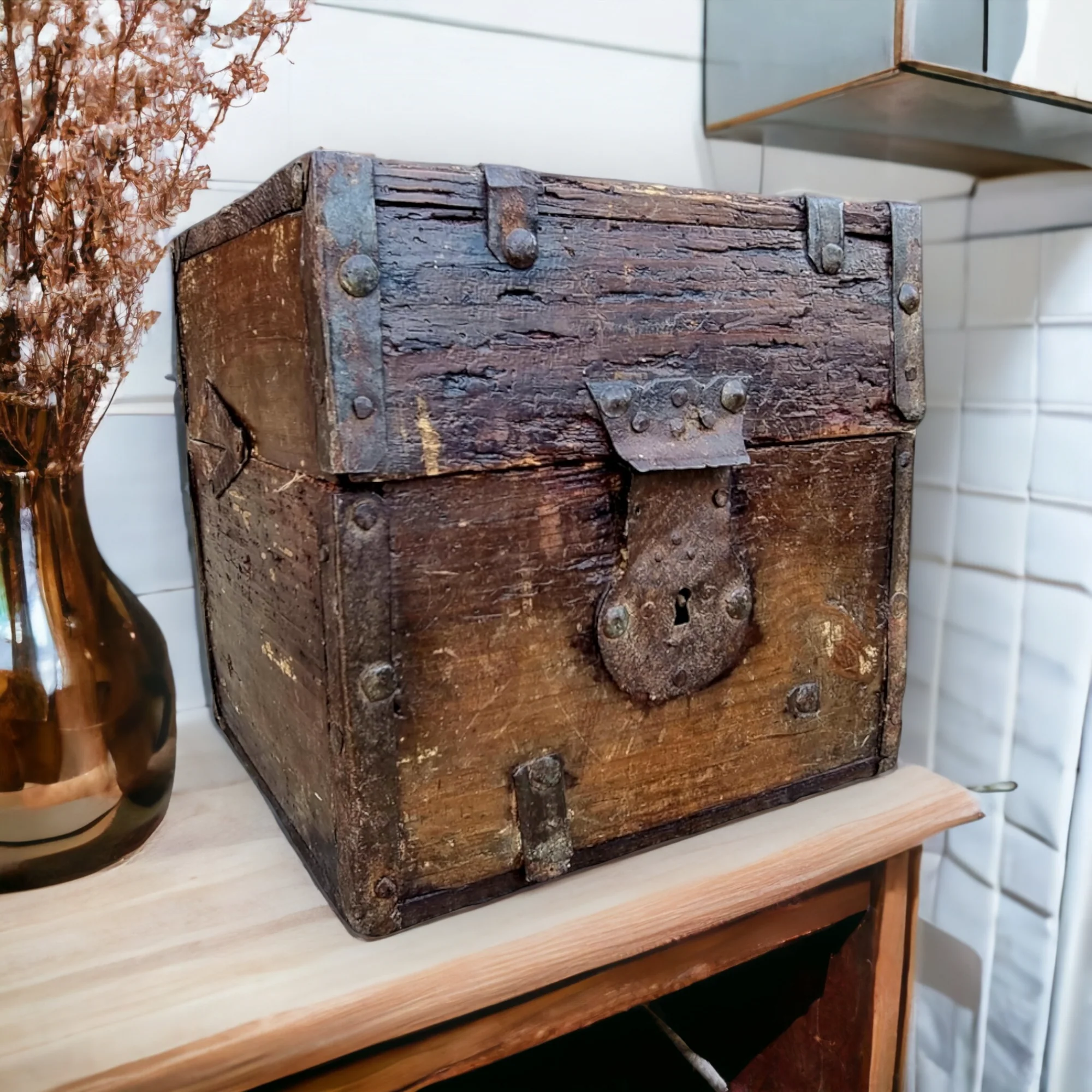
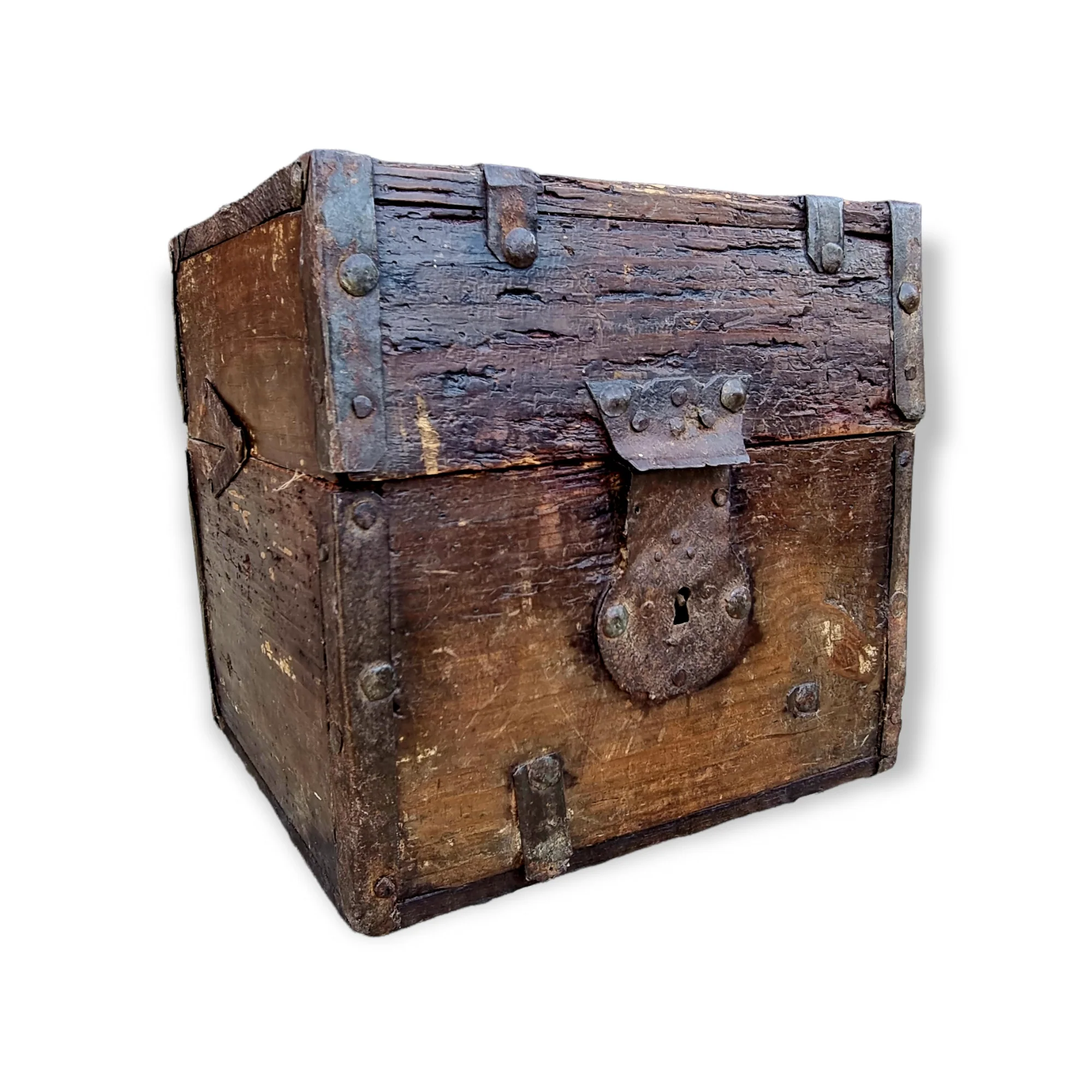
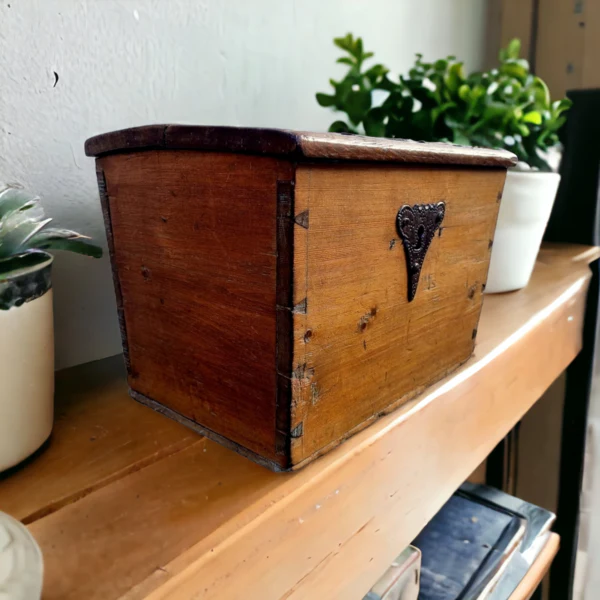
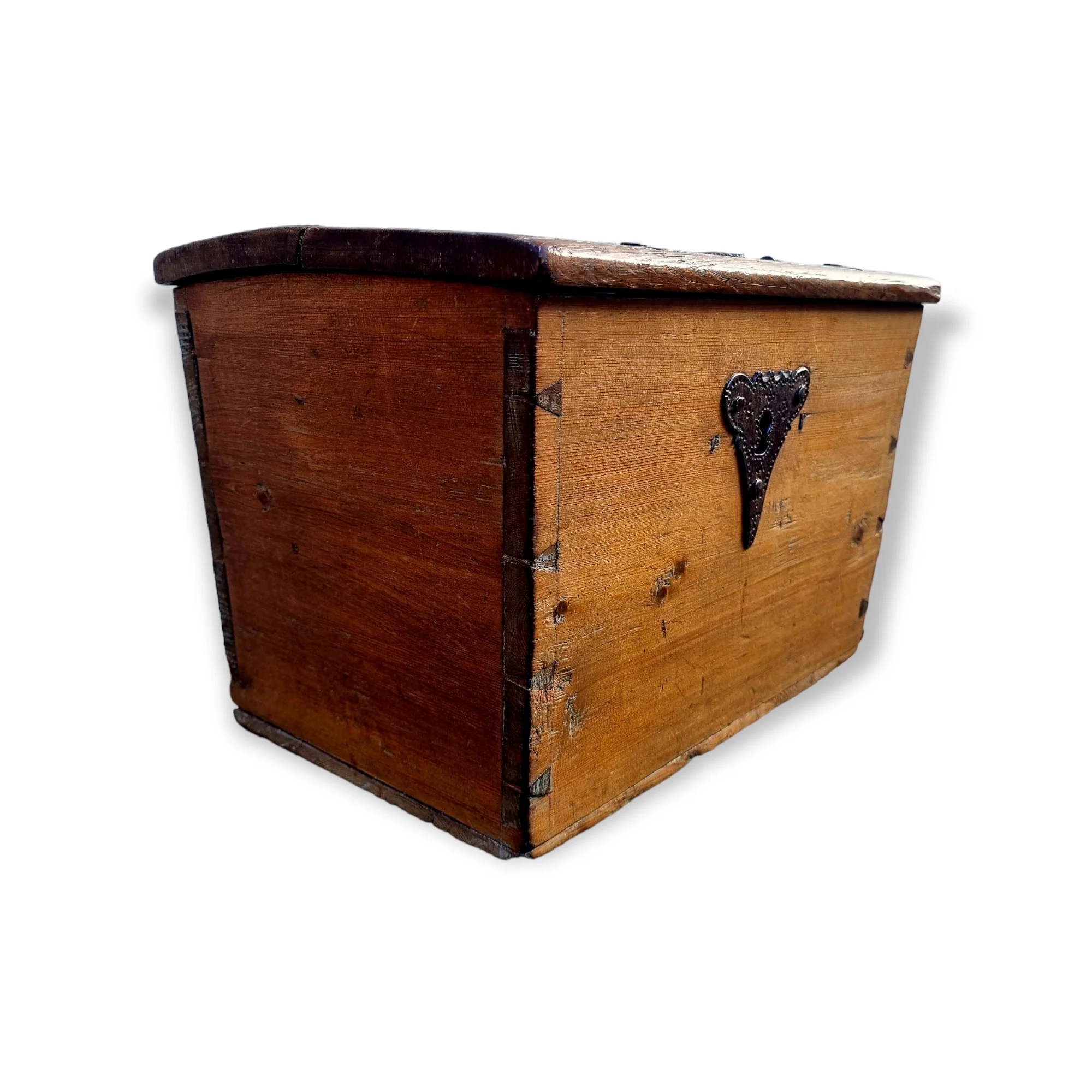
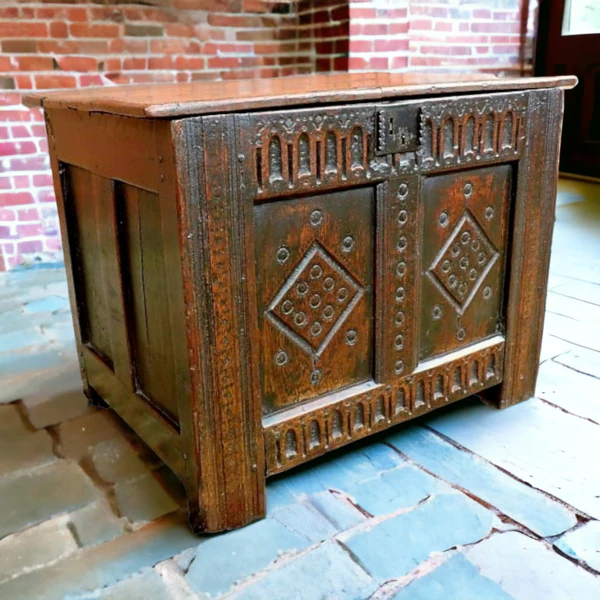
This rare Welsh oak chest, dating to the late 16th century, is a superb survival of Tudor furniture from Wales. Constructed in joined oak with pegged joints, it features a nulled apron and incised geometric panels, all retaining their original patina.
Such coffers were central to domestic life in Tudor households, used for storing textiles, valuables, and everyday goods. The regional craftsmanship, decorative carving, and warm surface make this chest a significant piece for collectors of Welsh antiques, Tudor furniture, and period oak. This example, with its incised detail and nulled apron, is typical of North and West Wales, where such chests were prized for both utility and display.
Provenance: Late 16th Century (c.1580). Wales.
Material: Oak, joined construction with pegged joints
Features: Nulled apron, incised geometric panels, original patina
Dimensions: With 86.75 cm x Height 65.5 cm x Depth 56.5 cm (34.17 inches x 25.79 inches 22.24 inches)
Condition: Missing hasp. There is a minor timber fillet to the lid where the hasp would have originally been, and the lid has an elongated timber fillet; however, these additions do not detract from this chest, which still displays very well. The hinges have been replaced historically. Two additional batons have been added to the underside of the lid to give it further support.
This chest embodies the fusion of utility and artistry that defines Tudor oak furniture, offering both historical depth and decorative appeal.
This rare Welsh oak chest, dating to the late 16th century, is a superb survival of Tudor furniture from Wales. Constructed in joined oak with pegged joints, it features a nulled apron and incised geometric panels, all retaining their original patina.
Such coffers were central to domestic life in Tudor households, used for storing textiles, valuables, and everyday goods. The regional craftsmanship, decorative carving, and warm surface make this chest a significant piece for collectors of Welsh antiques, Tudor furniture, and period oak. This example, with its incised detail and nulled apron, is typical of North and West Wales, where such chests were prized for both utility and display.
Provenance: Late 16th Century (c.1580). Wales.
Material: Oak, joined construction with pegged joints
Features: Nulled apron, incised geometric panels, original patina
Dimensions: With 86.75 cm x Height 65.5 cm x Depth 56.5 cm (34.17 inches x 25.79 inches 22.24 inches)
Condition: Missing hasp. There is a minor timber fillet to the lid where the hasp would have originally been, and the lid has an elongated timber fillet; however, these additions do not detract from this chest, which still displays very well. The hinges have been replaced historically. Two additional batons have been added to the underside of the lid to give it further support.
This chest embodies the fusion of utility and artistry that defines Tudor oak furniture, offering both historical depth and decorative appeal.
Original: $3,570.79
-70%$3,570.79
$1,071.24Description
This rare Welsh oak chest, dating to the late 16th century, is a superb survival of Tudor furniture from Wales. Constructed in joined oak with pegged joints, it features a nulled apron and incised geometric panels, all retaining their original patina.
Such coffers were central to domestic life in Tudor households, used for storing textiles, valuables, and everyday goods. The regional craftsmanship, decorative carving, and warm surface make this chest a significant piece for collectors of Welsh antiques, Tudor furniture, and period oak. This example, with its incised detail and nulled apron, is typical of North and West Wales, where such chests were prized for both utility and display.
Provenance: Late 16th Century (c.1580). Wales.
Material: Oak, joined construction with pegged joints
Features: Nulled apron, incised geometric panels, original patina
Dimensions: With 86.75 cm x Height 65.5 cm x Depth 56.5 cm (34.17 inches x 25.79 inches 22.24 inches)
Condition: Missing hasp. There is a minor timber fillet to the lid where the hasp would have originally been, and the lid has an elongated timber fillet; however, these additions do not detract from this chest, which still displays very well. The hinges have been replaced historically. Two additional batons have been added to the underside of the lid to give it further support.
This chest embodies the fusion of utility and artistry that defines Tudor oak furniture, offering both historical depth and decorative appeal.