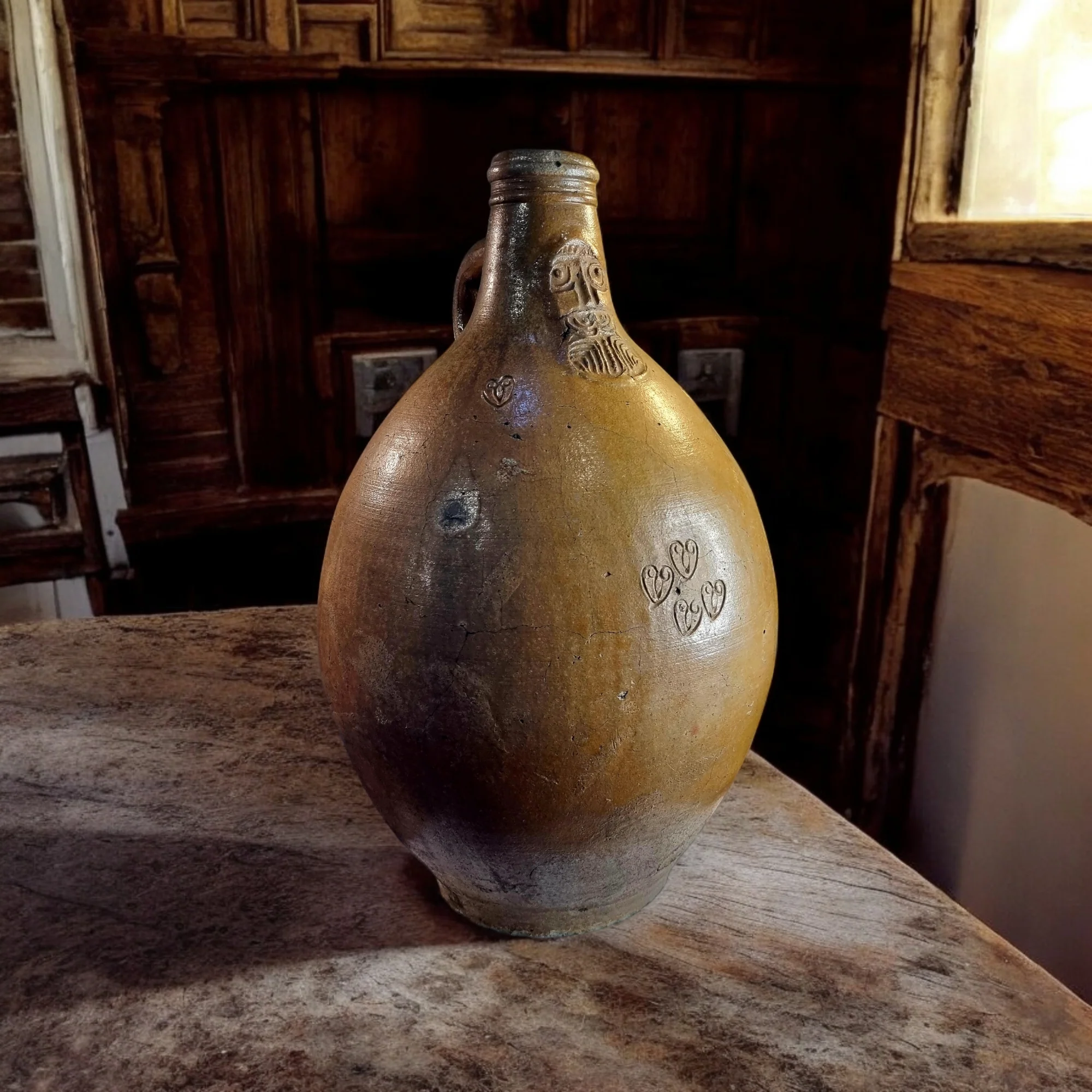
A Large Late 17th‑Century / Early 18th‑Century German Bellarmine Jug / Bartmannkrug With Good Provenance
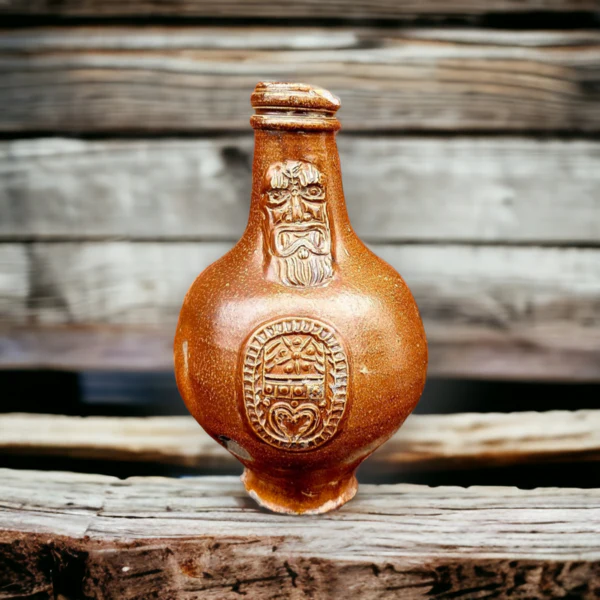
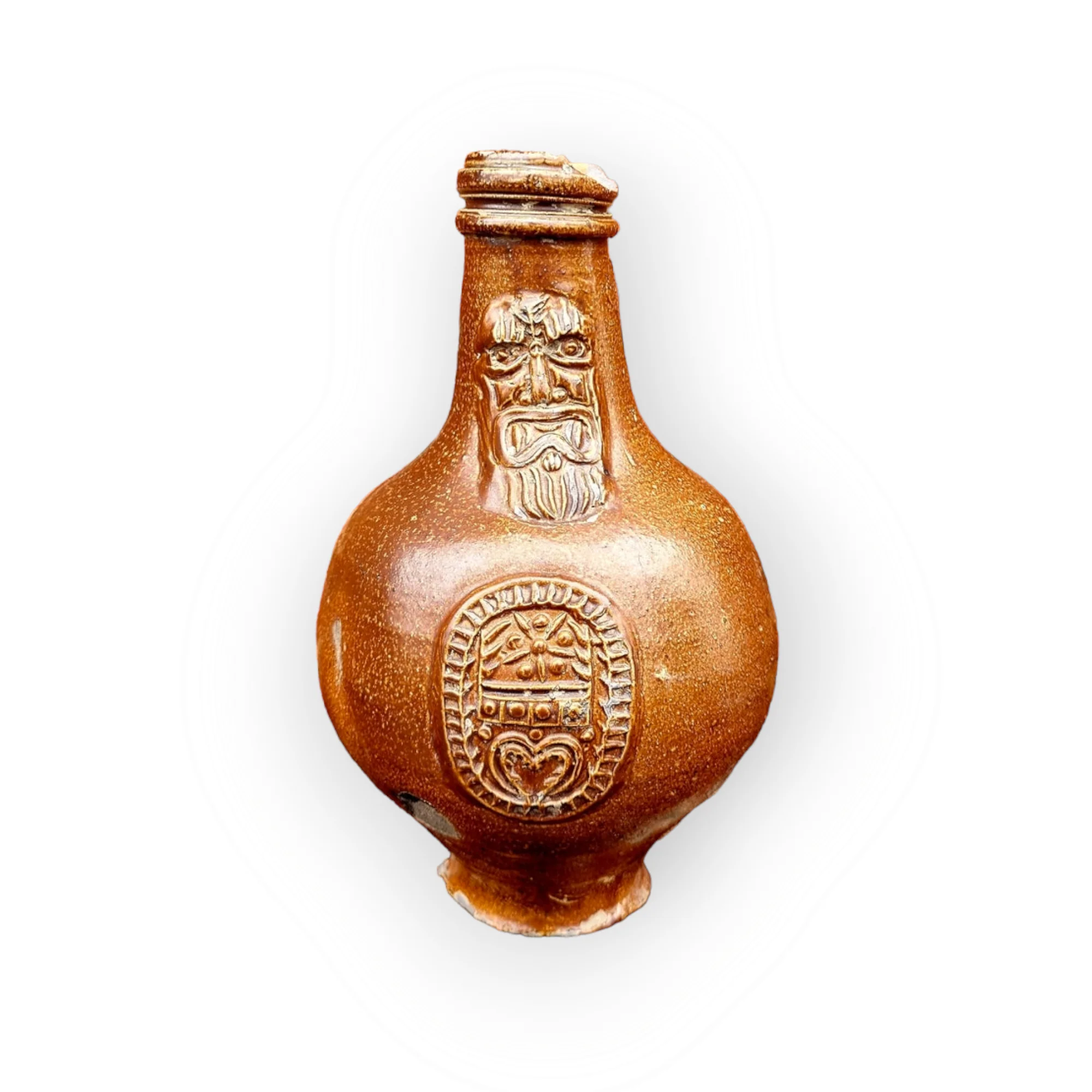
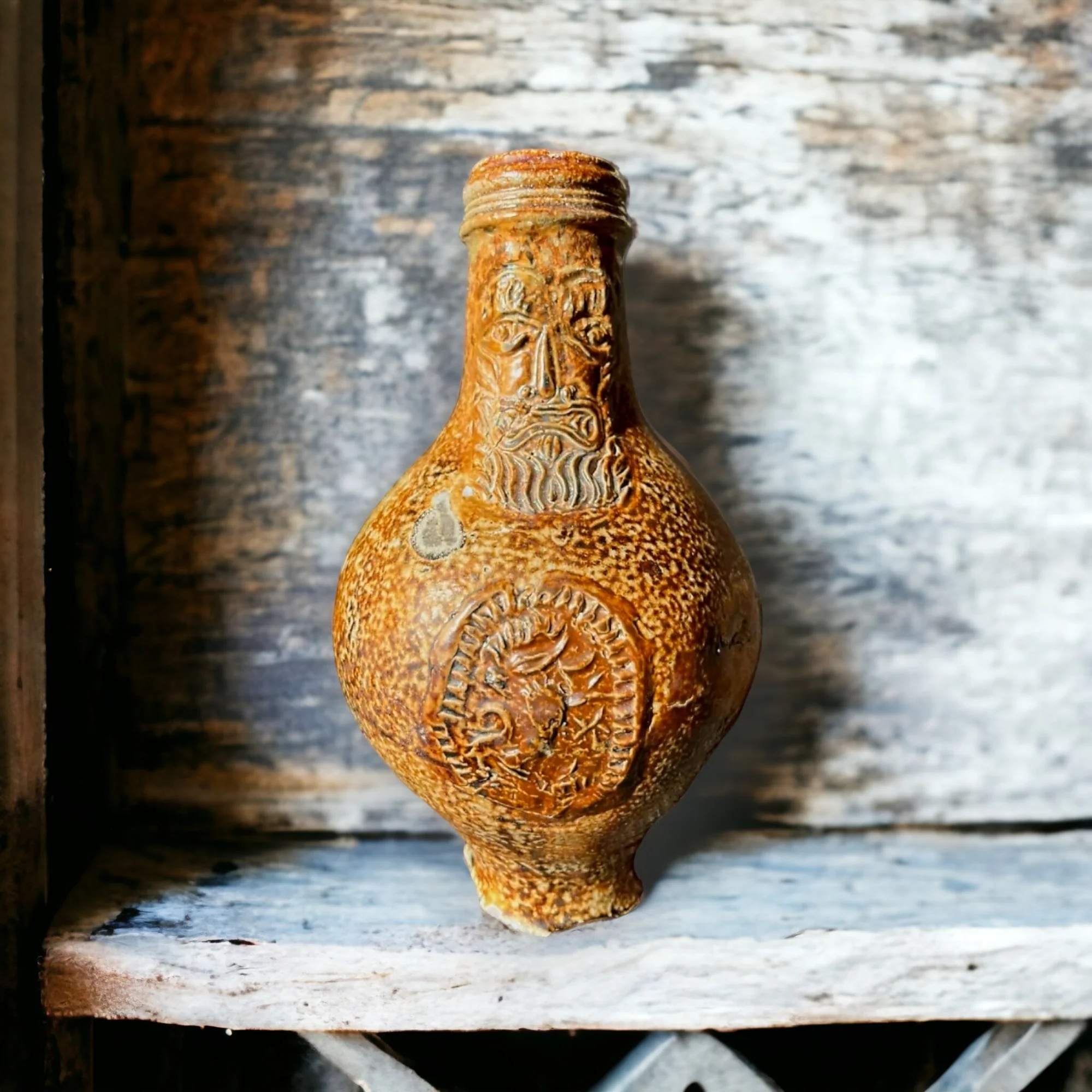
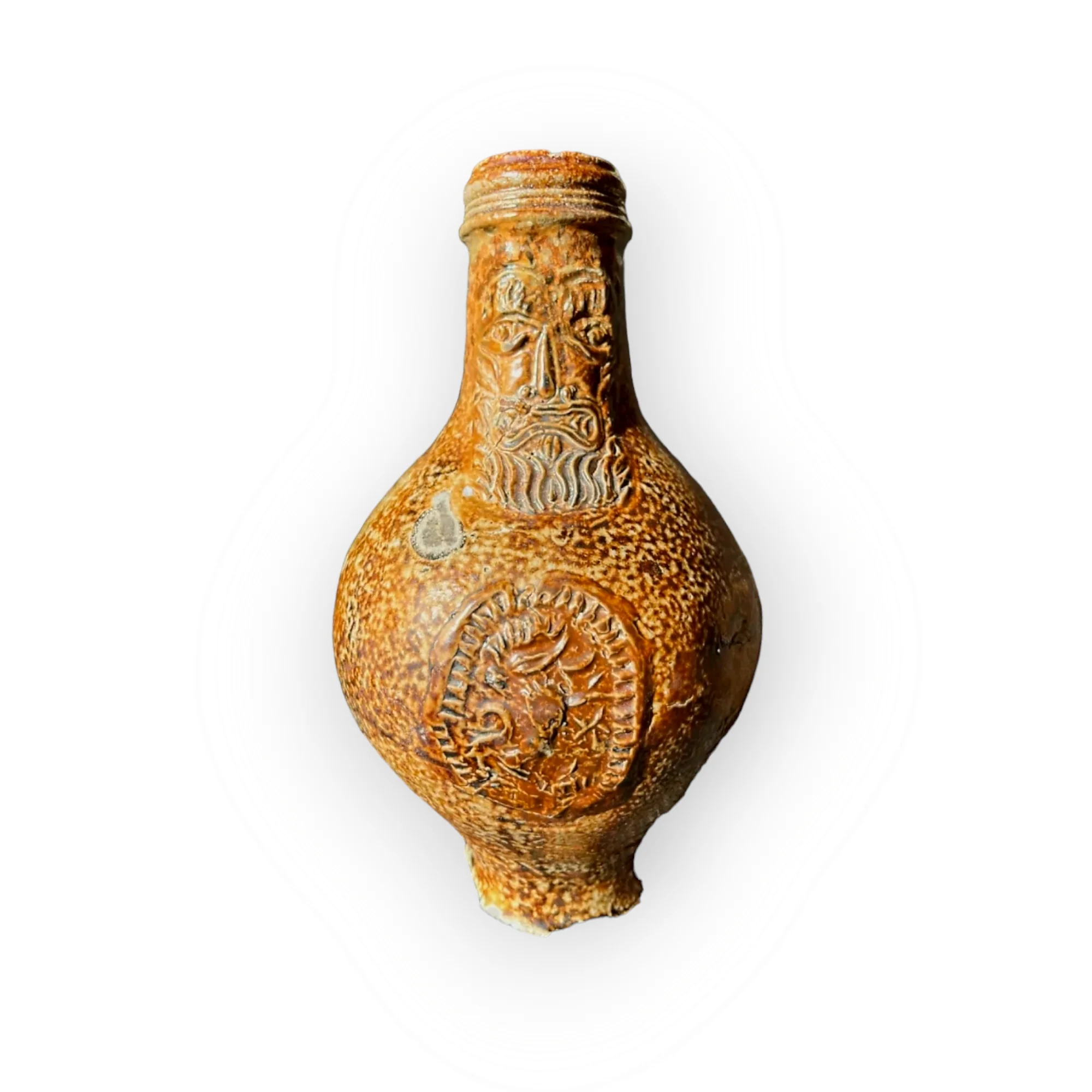
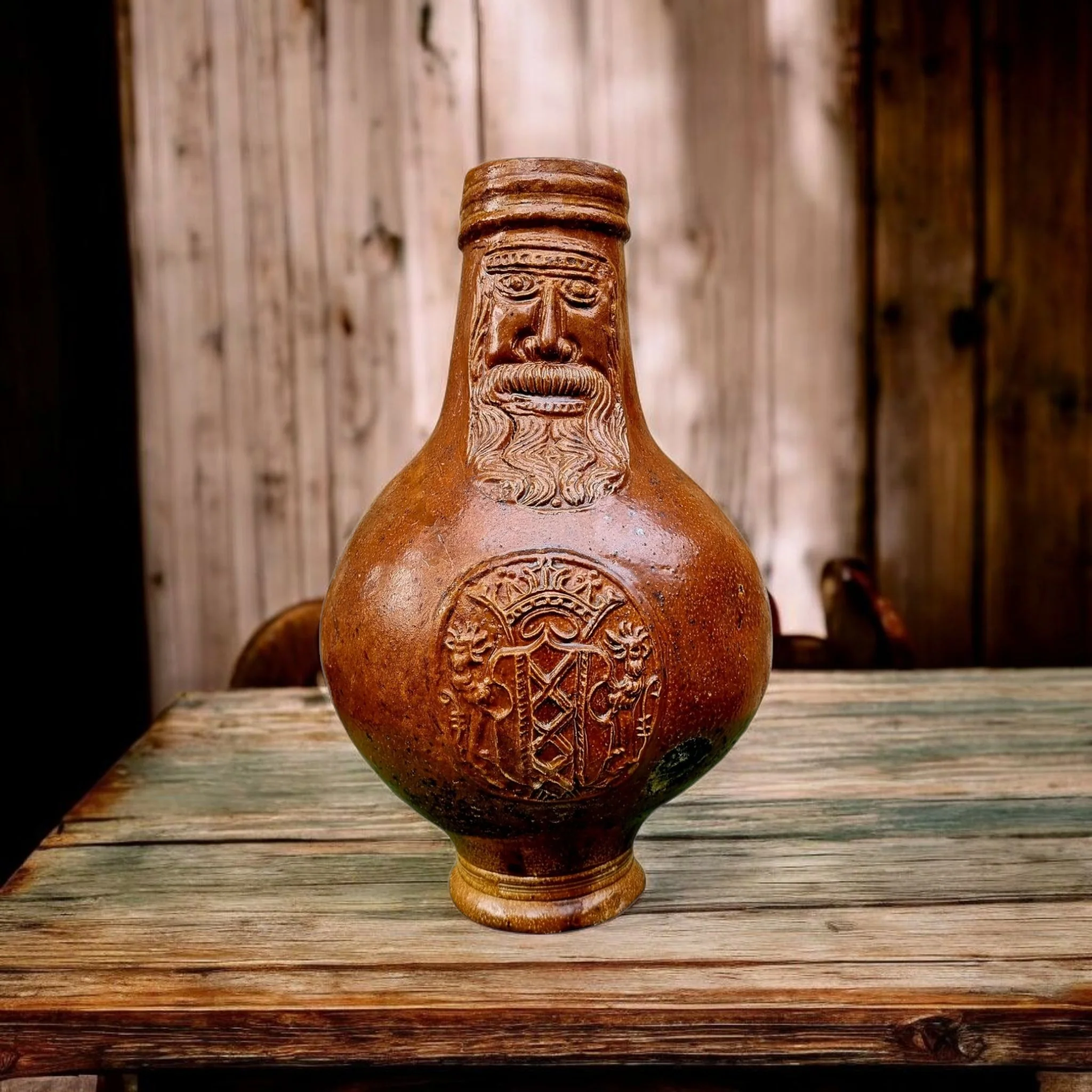
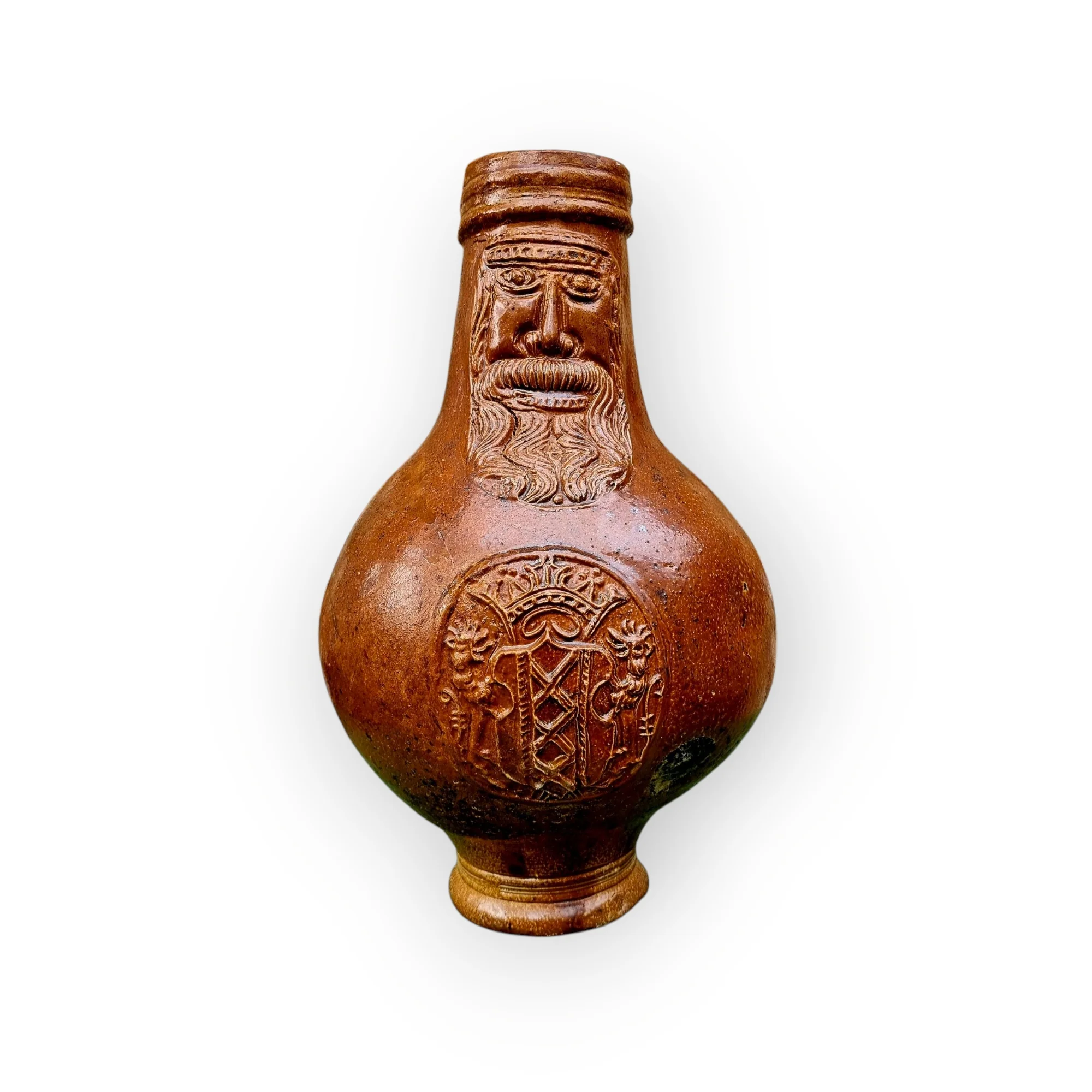
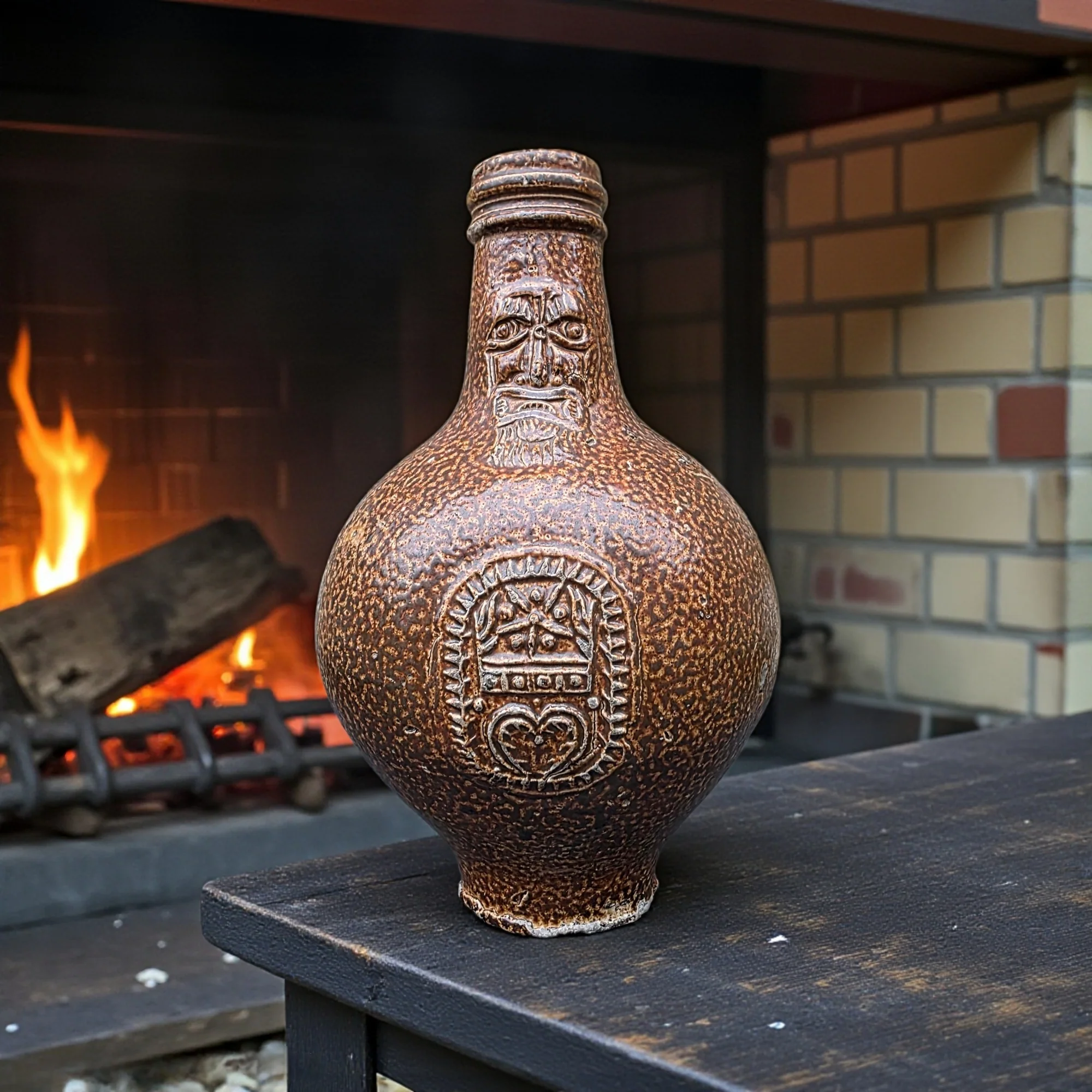
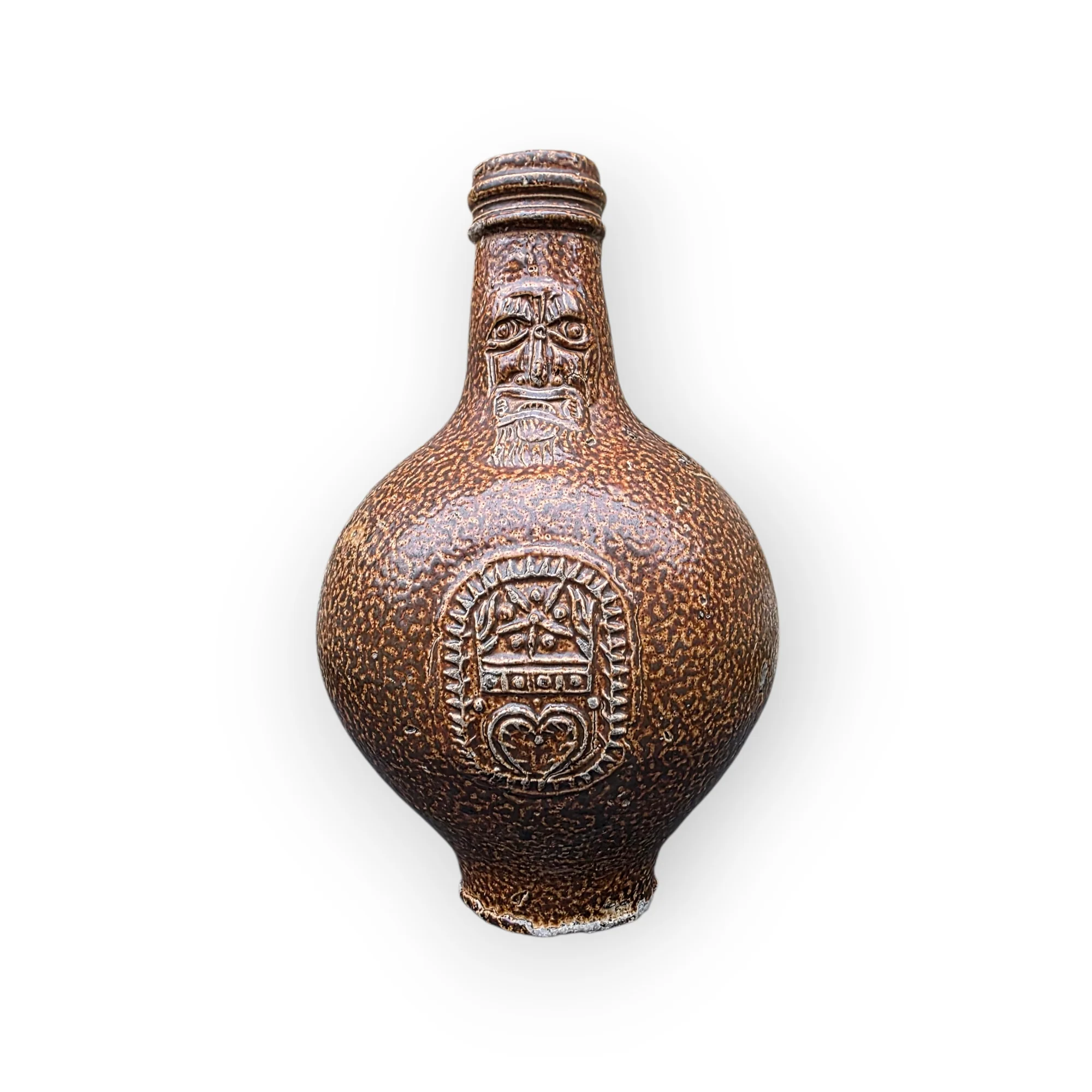
This impressive German antique stoneware Bellarmine jug, dating to circa 1700, embodies the enduring craftsmanship of the Rhineland potteries. The jug is decorated with a rich salt‑glaze surface, featuring the iconic bearded mask (Bartmann) at the neck and impressed medallions to the body—hallmarks of the period’s distinctive style.
Bellarmine jugs, also known as Bartmannkrüge, were widely exported across Europe and prized for their durability and striking design. This example boasts excellent provenance, adding scholarly and collector value. Its large scale and well‑preserved glaze make it a standout piece for display in both private collections and museum contexts.
Provenance: Late 17th / Early 18th Century (c.1700). Germany, Rhineland. Deaccessioned from the now closed Bellarmine Museum, Norfolk. Also featured in Volume III of Alex Wright's reference book "The Bellarmine and other German Stoneware", No.37.
Material: Stoneware with salt‑glaze.
Features: Bearded mask at neck, impressed decoration with love hearts, strong form.
Condition: Good as per the images. A further detailed condition report is available upon request.
Dimensions: Height 39.5 cm (15 1/2")
This jug is not only a decorative antique but also a tangible link to the social and cultural history of early modern Europe, where such vessels were used for storage, trade, and symbolism.
This impressive German antique stoneware Bellarmine jug, dating to circa 1700, embodies the enduring craftsmanship of the Rhineland potteries. The jug is decorated with a rich salt‑glaze surface, featuring the iconic bearded mask (Bartmann) at the neck and impressed medallions to the body—hallmarks of the period’s distinctive style.
Bellarmine jugs, also known as Bartmannkrüge, were widely exported across Europe and prized for their durability and striking design. This example boasts excellent provenance, adding scholarly and collector value. Its large scale and well‑preserved glaze make it a standout piece for display in both private collections and museum contexts.
Provenance: Late 17th / Early 18th Century (c.1700). Germany, Rhineland. Deaccessioned from the now closed Bellarmine Museum, Norfolk. Also featured in Volume III of Alex Wright's reference book "The Bellarmine and other German Stoneware", No.37.
Material: Stoneware with salt‑glaze.
Features: Bearded mask at neck, impressed decoration with love hearts, strong form.
Condition: Good as per the images. A further detailed condition report is available upon request.
Dimensions: Height 39.5 cm (15 1/2")
This jug is not only a decorative antique but also a tangible link to the social and cultural history of early modern Europe, where such vessels were used for storage, trade, and symbolism.
Original: $1,455.61
-70%$1,455.61
$436.68Description
This impressive German antique stoneware Bellarmine jug, dating to circa 1700, embodies the enduring craftsmanship of the Rhineland potteries. The jug is decorated with a rich salt‑glaze surface, featuring the iconic bearded mask (Bartmann) at the neck and impressed medallions to the body—hallmarks of the period’s distinctive style.
Bellarmine jugs, also known as Bartmannkrüge, were widely exported across Europe and prized for their durability and striking design. This example boasts excellent provenance, adding scholarly and collector value. Its large scale and well‑preserved glaze make it a standout piece for display in both private collections and museum contexts.
Provenance: Late 17th / Early 18th Century (c.1700). Germany, Rhineland. Deaccessioned from the now closed Bellarmine Museum, Norfolk. Also featured in Volume III of Alex Wright's reference book "The Bellarmine and other German Stoneware", No.37.
Material: Stoneware with salt‑glaze.
Features: Bearded mask at neck, impressed decoration with love hearts, strong form.
Condition: Good as per the images. A further detailed condition report is available upon request.
Dimensions: Height 39.5 cm (15 1/2")
This jug is not only a decorative antique but also a tangible link to the social and cultural history of early modern Europe, where such vessels were used for storage, trade, and symbolism.