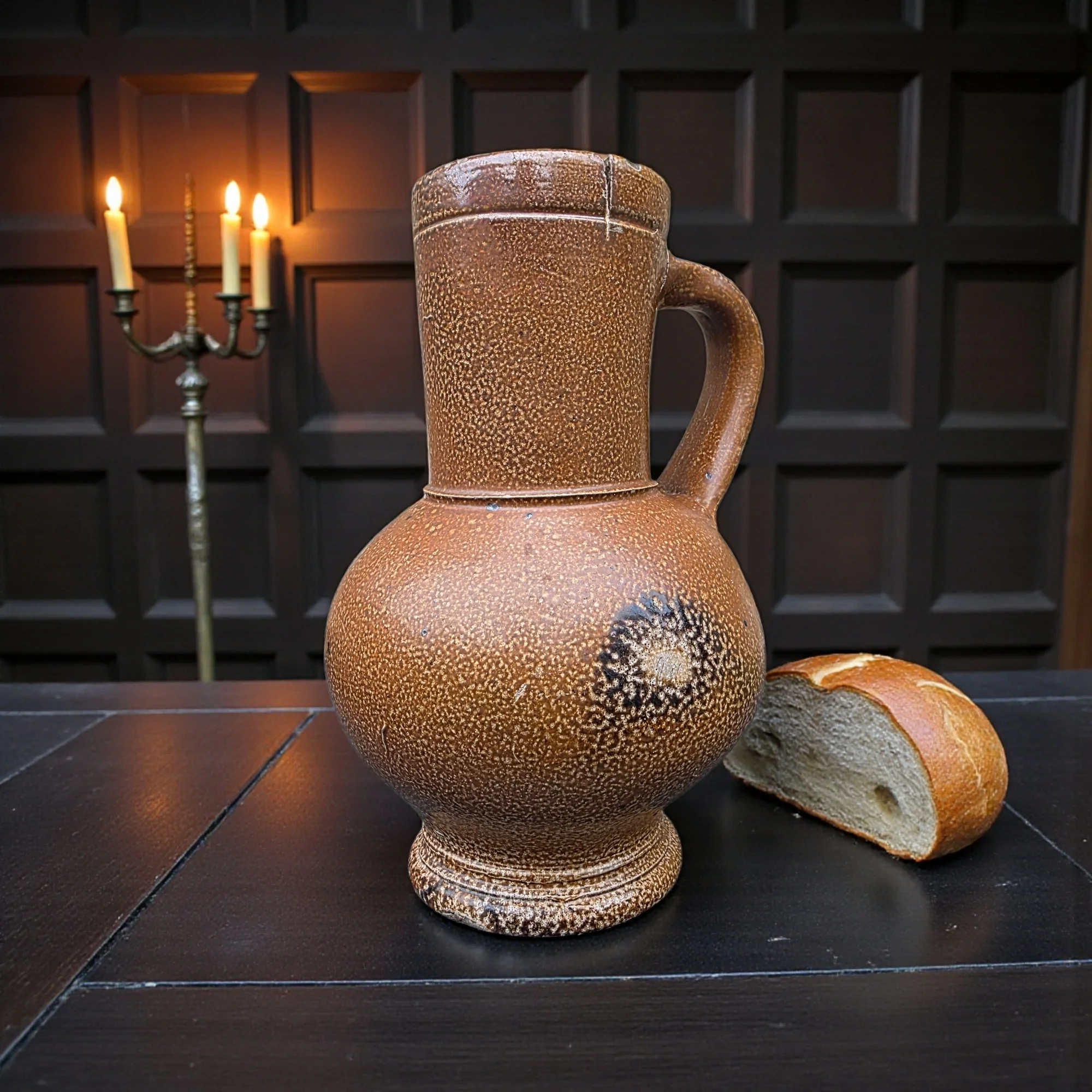
16th-Century English Antique Salt-Glazed Stoneware Flagon, Circa 1540-1580
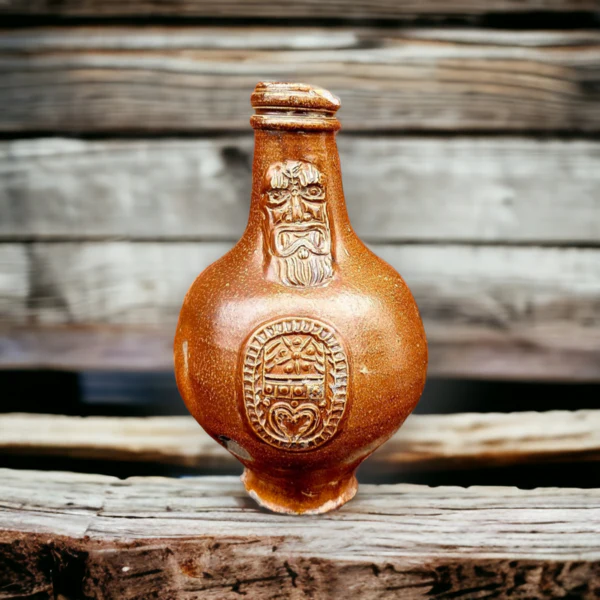
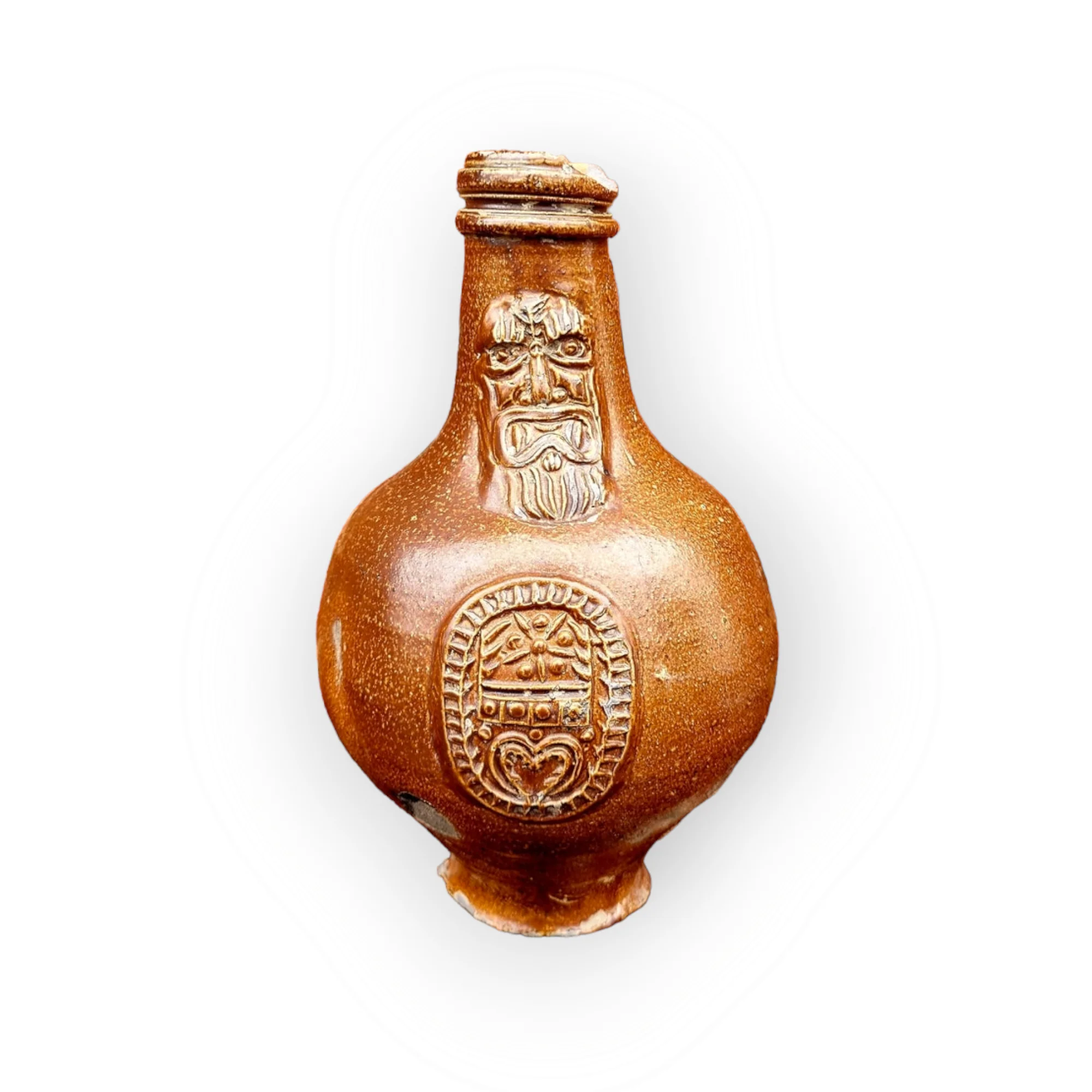
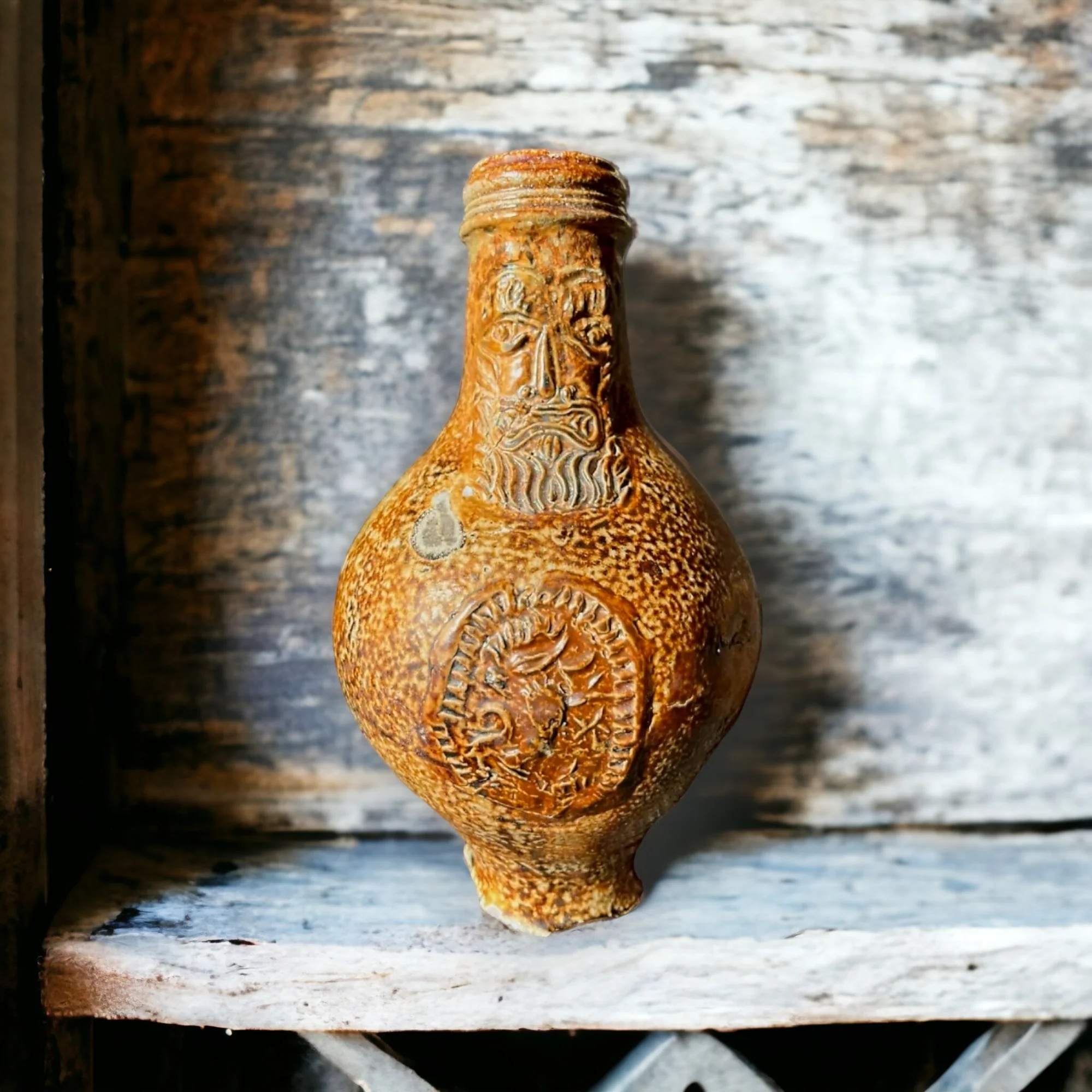
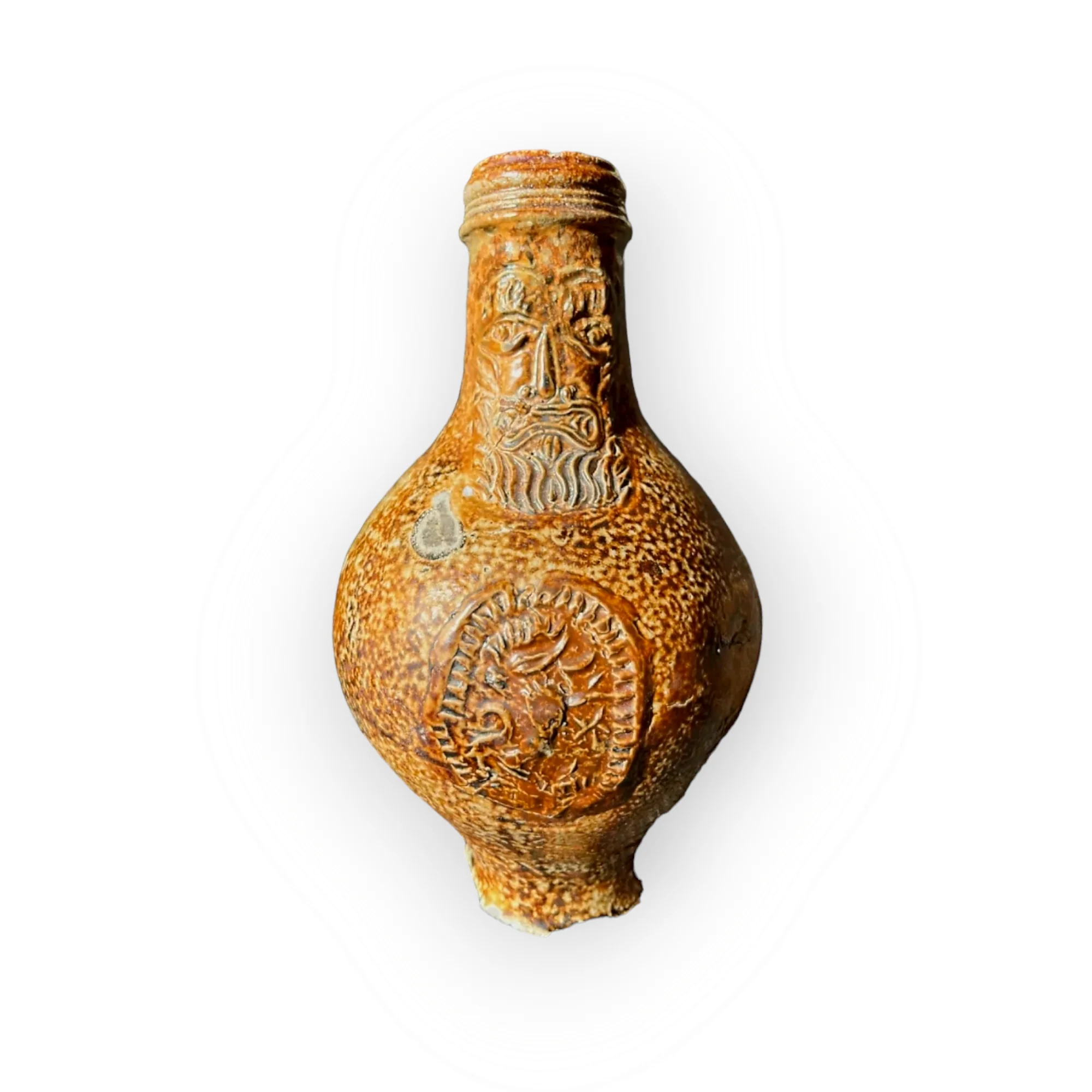
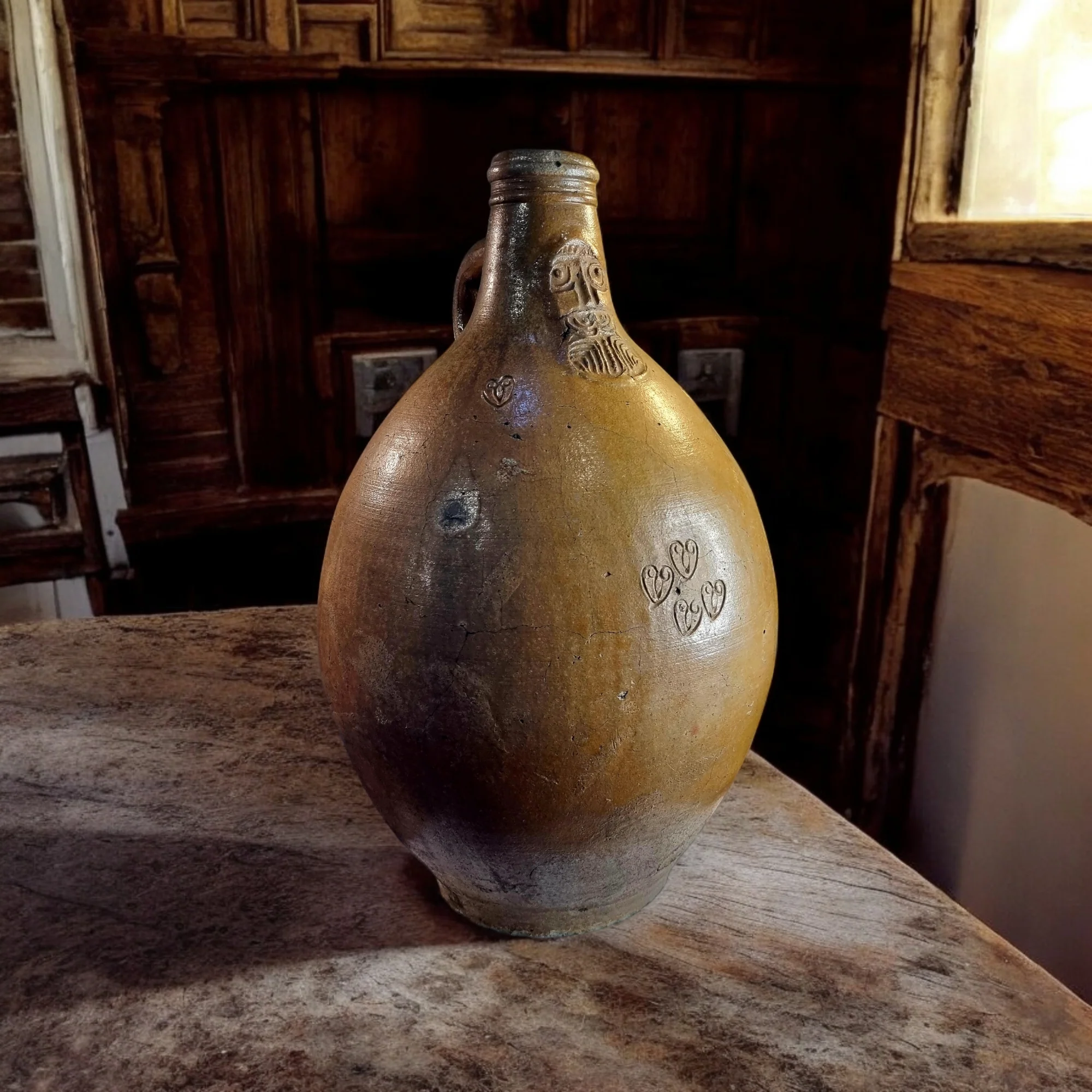
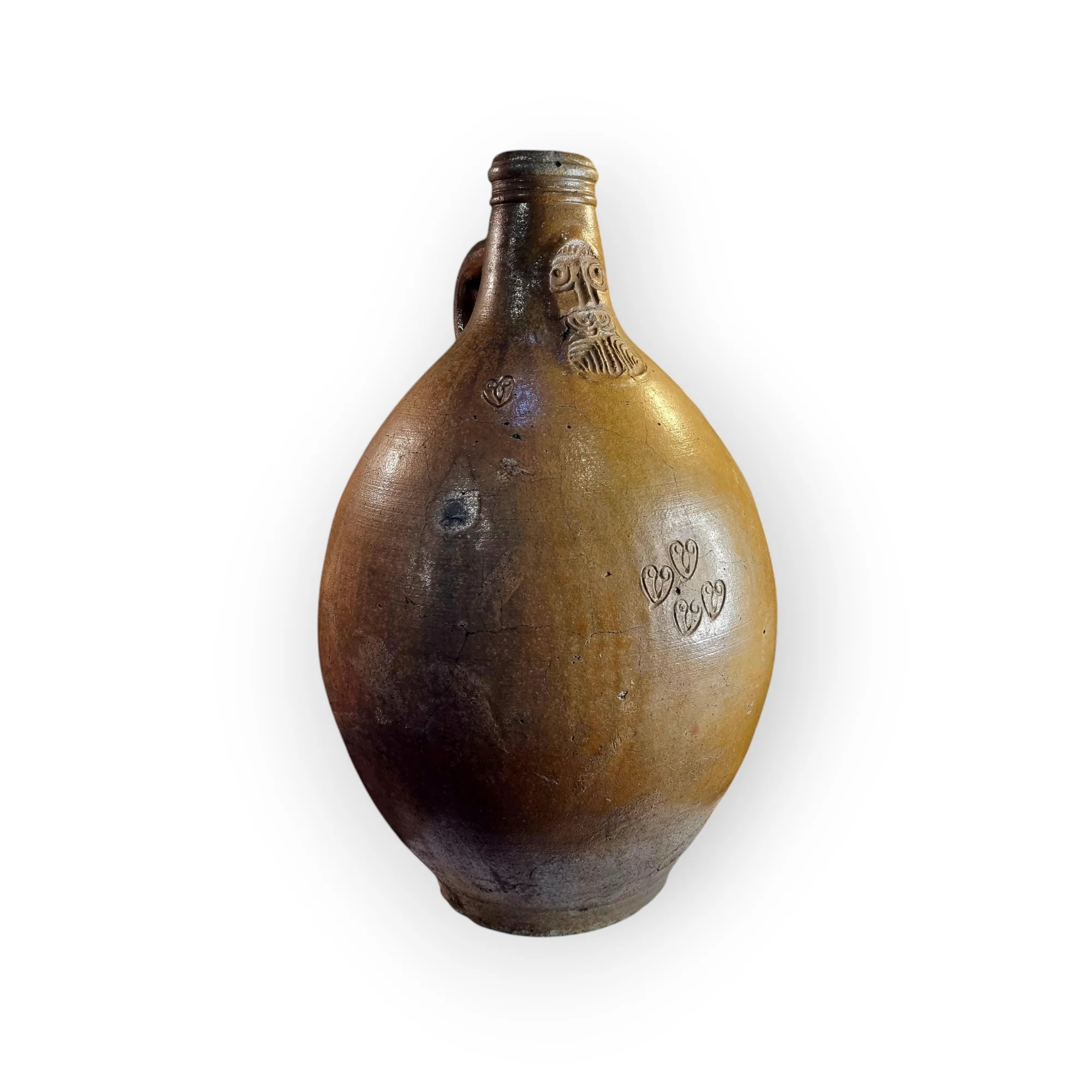
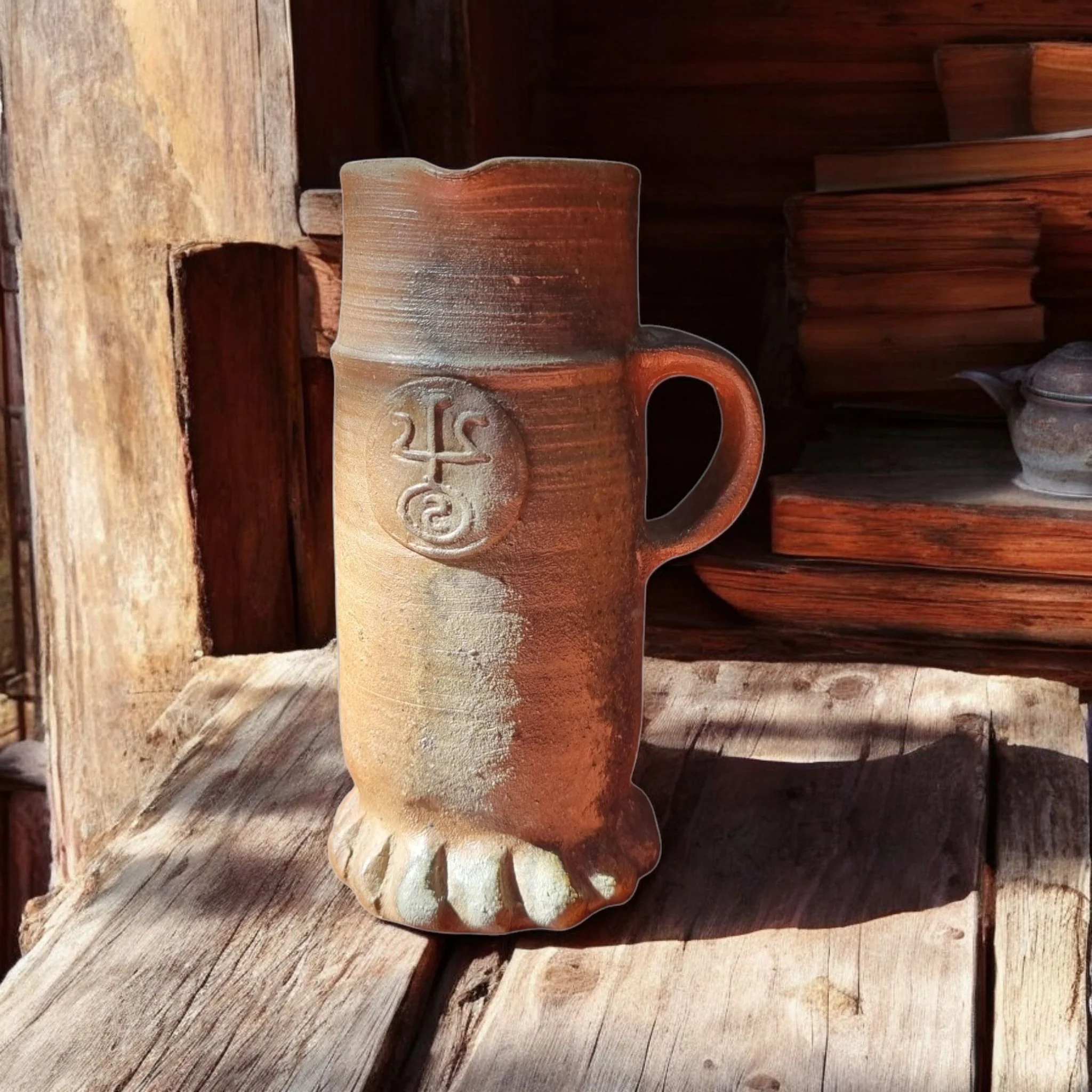
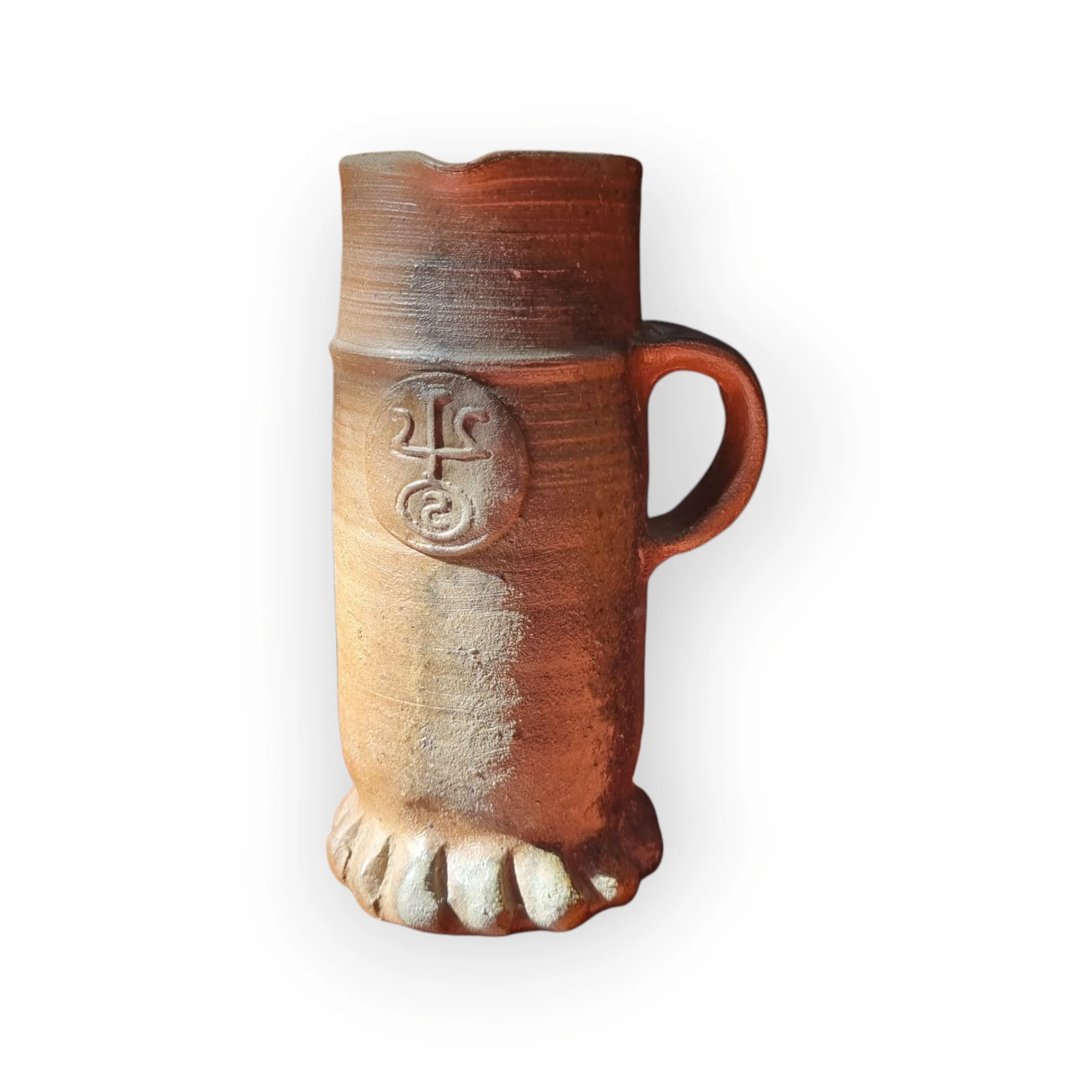
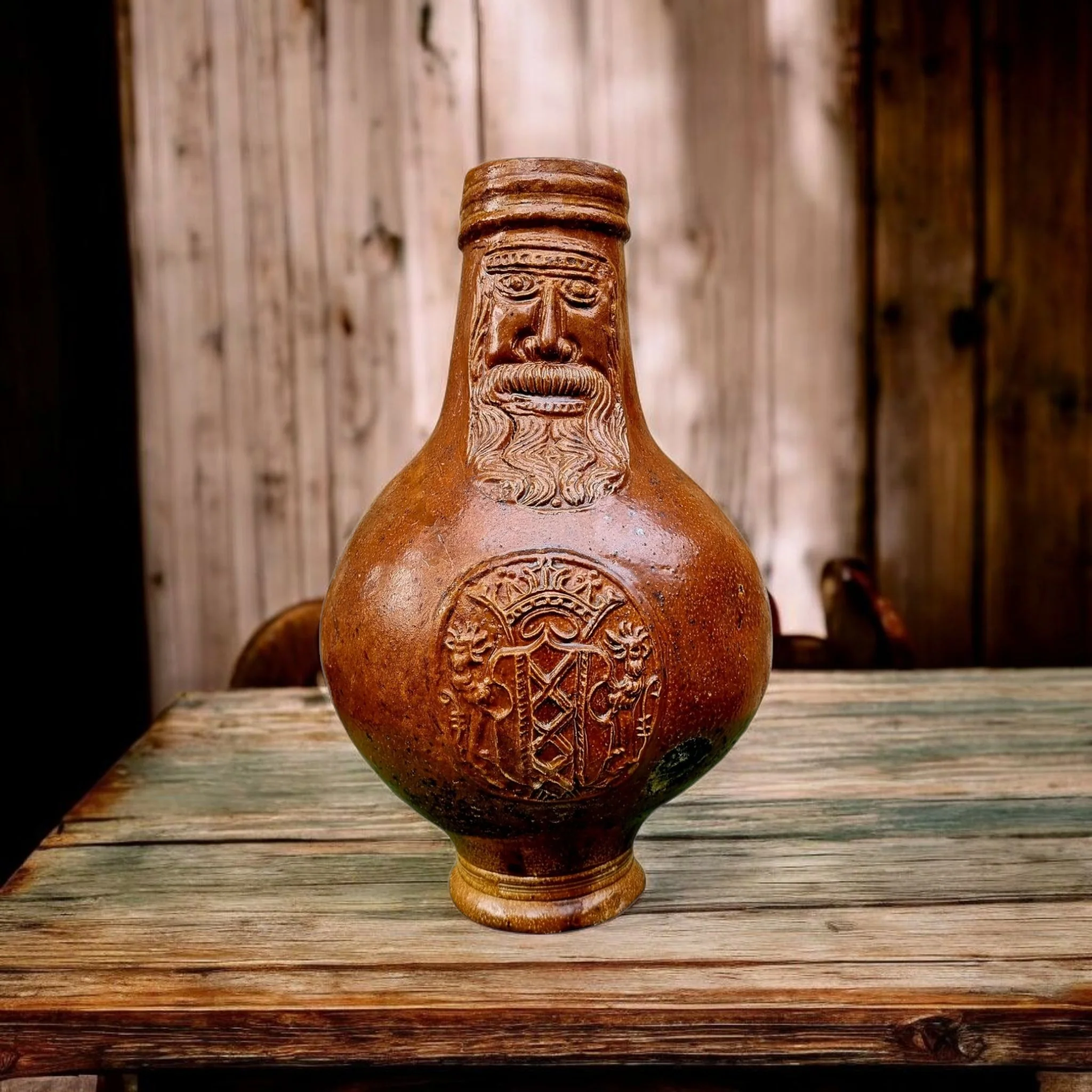
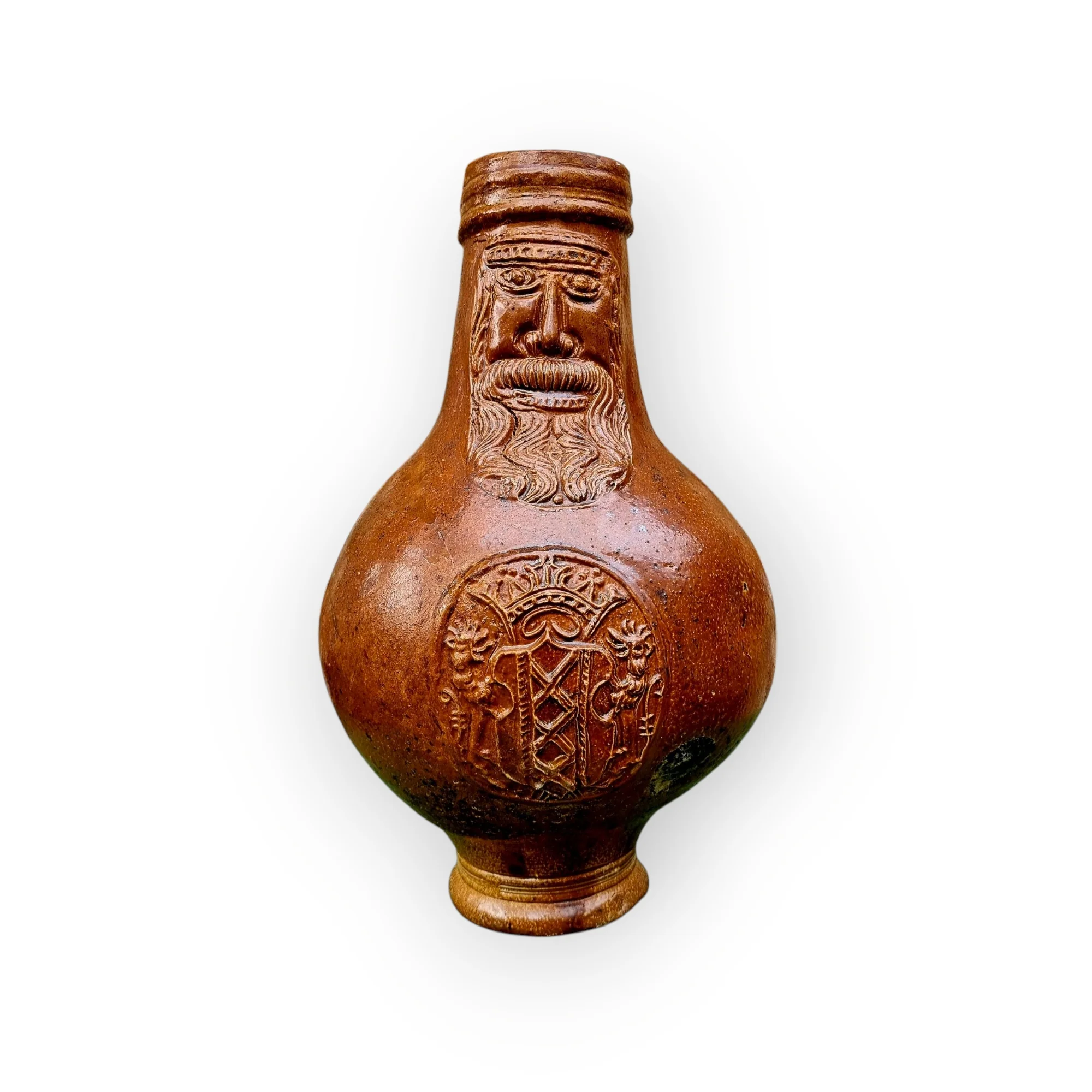
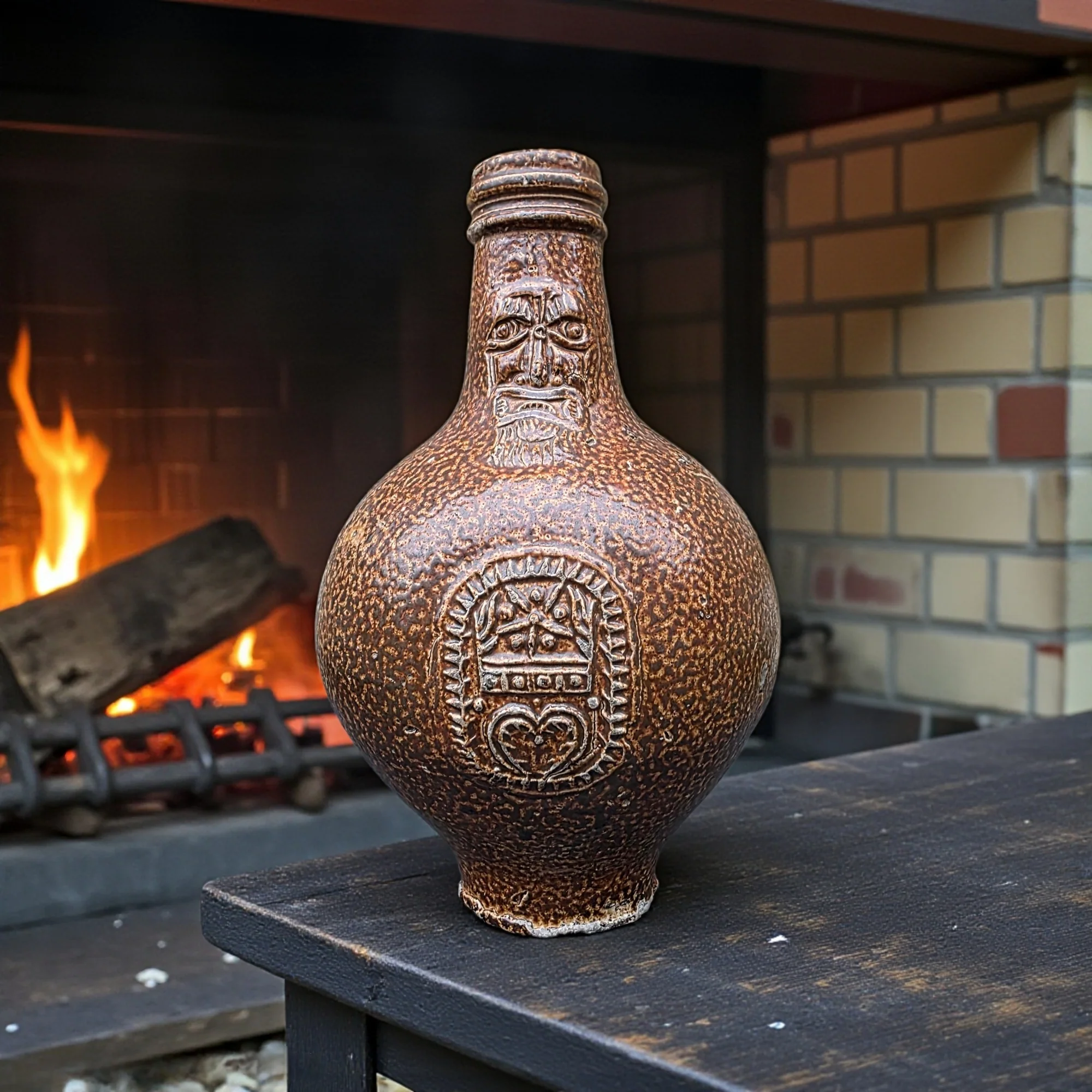
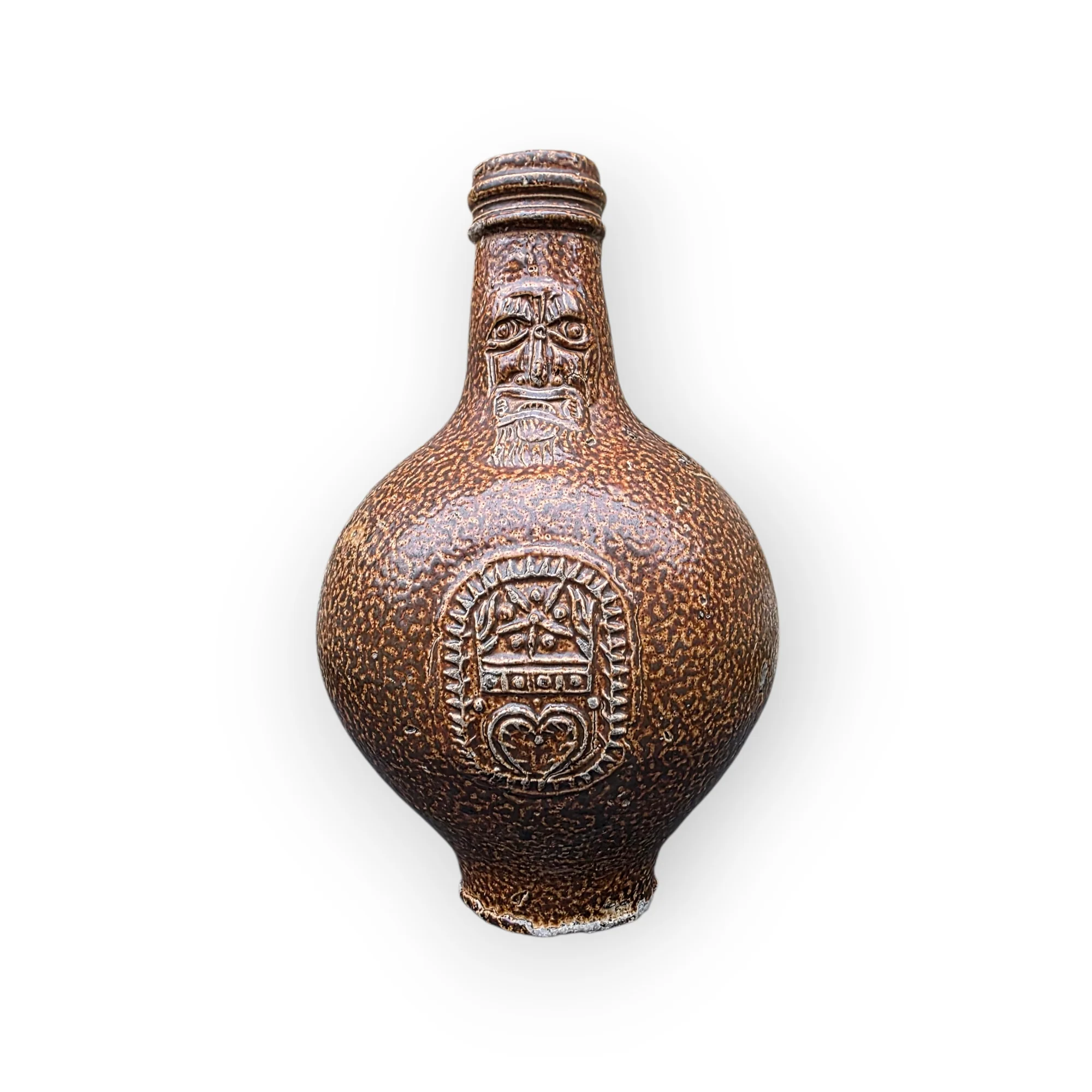
A robust and tactile Tudor salt‑glazed stoneware flagon, dating to the mid‑16th century, with classic bulbous form, cylindrical neck, and strap handle. The surface is finished in a rich, mottled salt glaze — a hallmark of early English stoneware, influenced by earlier examples made in Germany — and the body retains an original firing fault to the upper rim, a rare and desirable survival that speaks directly to the pot’s 16th‑century kiln history.
This type of flagon was used for ale, cider, or small beer, and would have served in both domestic and tavern settings. The form is practical and grounded, with a wide belly for stability and a narrow neck for pouring. The firing fault, likely caused by uneven glaze adhesion or kiln temperature variation, is stable and historic — not damage, but part of the pot’s original birth.
The surface shows excellent glaze survival, with areas of treacly pooling and natural mottling. A superb early drinking vessel with real presence and character.
Provenance: England. 16th century, circa 1540-1580. Why English? German flagons (especially Frechen and Raeren types) from the 16th century tend to have taller necks, more defined shoulders, and often decorative medallions or bearded masks. This example has a shorter neck, broader belly, and a more grounded, utilitarian silhouette — typical of English domestic ware.
Material: Salt-glazed stoneware.
Condition: Strap handle, bulbous body, cylindrical neck. Original firing fault tothe upper rim (stable). Age‑related wear, surface marks, and glaze variation. Structurally sound. No traces of restoration. Photos show the actual item.
Dimensions: Height 20 cm (7.87 inches)
A robust and tactile Tudor salt‑glazed stoneware flagon, dating to the mid‑16th century, with classic bulbous form, cylindrical neck, and strap handle. The surface is finished in a rich, mottled salt glaze — a hallmark of early English stoneware, influenced by earlier examples made in Germany — and the body retains an original firing fault to the upper rim, a rare and desirable survival that speaks directly to the pot’s 16th‑century kiln history.
This type of flagon was used for ale, cider, or small beer, and would have served in both domestic and tavern settings. The form is practical and grounded, with a wide belly for stability and a narrow neck for pouring. The firing fault, likely caused by uneven glaze adhesion or kiln temperature variation, is stable and historic — not damage, but part of the pot’s original birth.
The surface shows excellent glaze survival, with areas of treacly pooling and natural mottling. A superb early drinking vessel with real presence and character.
Provenance: England. 16th century, circa 1540-1580. Why English? German flagons (especially Frechen and Raeren types) from the 16th century tend to have taller necks, more defined shoulders, and often decorative medallions or bearded masks. This example has a shorter neck, broader belly, and a more grounded, utilitarian silhouette — typical of English domestic ware.
Material: Salt-glazed stoneware.
Condition: Strap handle, bulbous body, cylindrical neck. Original firing fault tothe upper rim (stable). Age‑related wear, surface marks, and glaze variation. Structurally sound. No traces of restoration. Photos show the actual item.
Dimensions: Height 20 cm (7.87 inches)
Description
A robust and tactile Tudor salt‑glazed stoneware flagon, dating to the mid‑16th century, with classic bulbous form, cylindrical neck, and strap handle. The surface is finished in a rich, mottled salt glaze — a hallmark of early English stoneware, influenced by earlier examples made in Germany — and the body retains an original firing fault to the upper rim, a rare and desirable survival that speaks directly to the pot’s 16th‑century kiln history.
This type of flagon was used for ale, cider, or small beer, and would have served in both domestic and tavern settings. The form is practical and grounded, with a wide belly for stability and a narrow neck for pouring. The firing fault, likely caused by uneven glaze adhesion or kiln temperature variation, is stable and historic — not damage, but part of the pot’s original birth.
The surface shows excellent glaze survival, with areas of treacly pooling and natural mottling. A superb early drinking vessel with real presence and character.
Provenance: England. 16th century, circa 1540-1580. Why English? German flagons (especially Frechen and Raeren types) from the 16th century tend to have taller necks, more defined shoulders, and often decorative medallions or bearded masks. This example has a shorter neck, broader belly, and a more grounded, utilitarian silhouette — typical of English domestic ware.
Material: Salt-glazed stoneware.
Condition: Strap handle, bulbous body, cylindrical neck. Original firing fault tothe upper rim (stable). Age‑related wear, surface marks, and glaze variation. Structurally sound. No traces of restoration. Photos show the actual item.
Dimensions: Height 20 cm (7.87 inches)