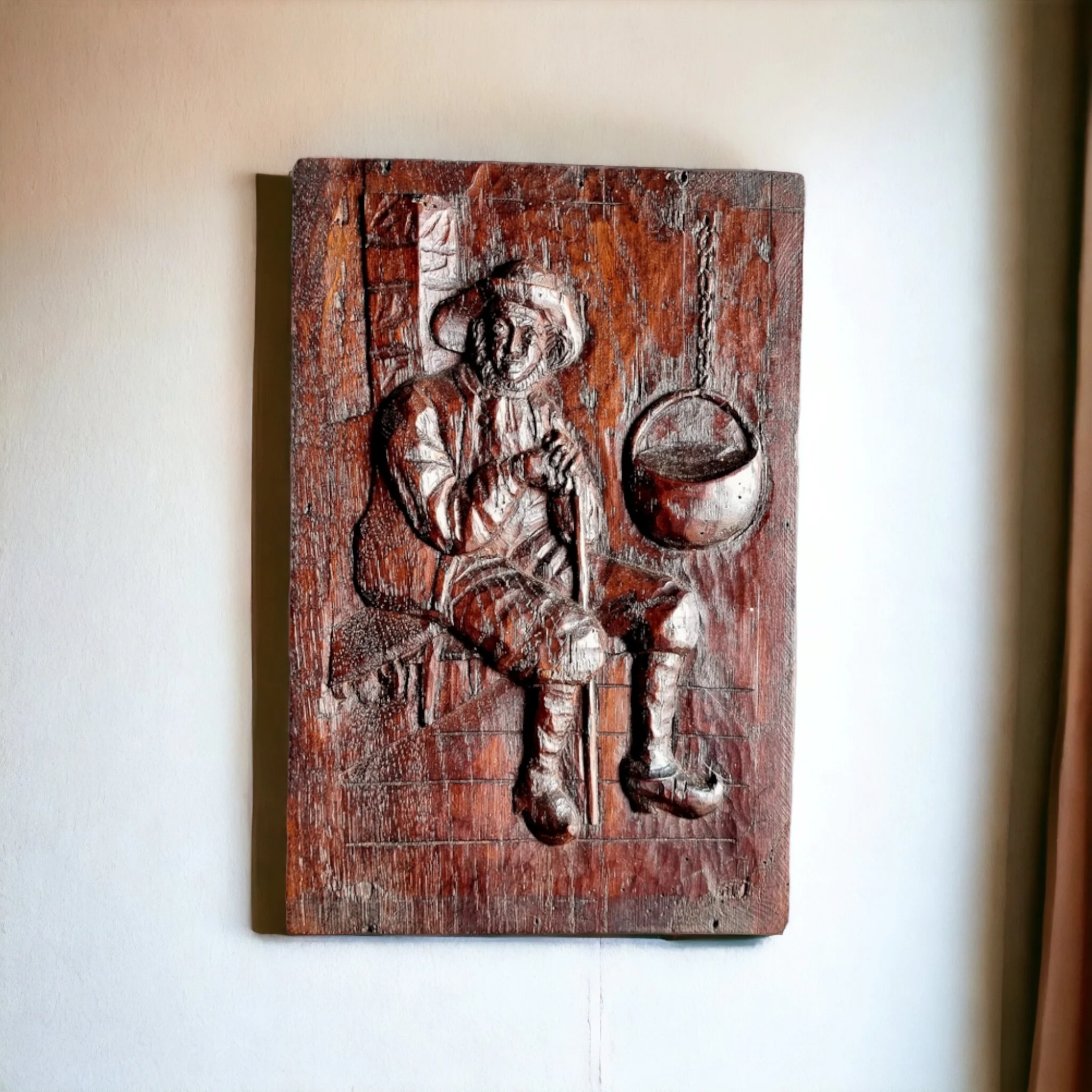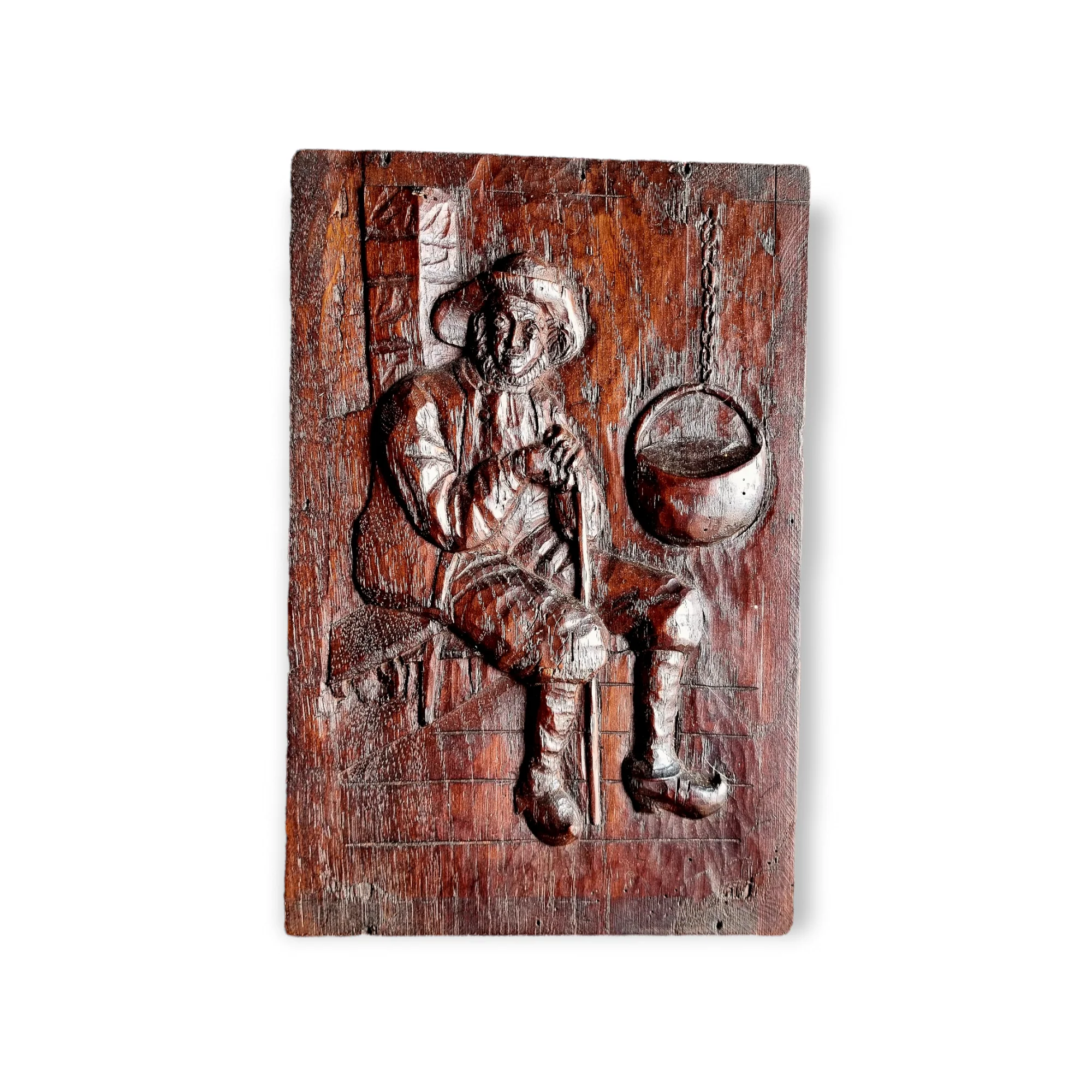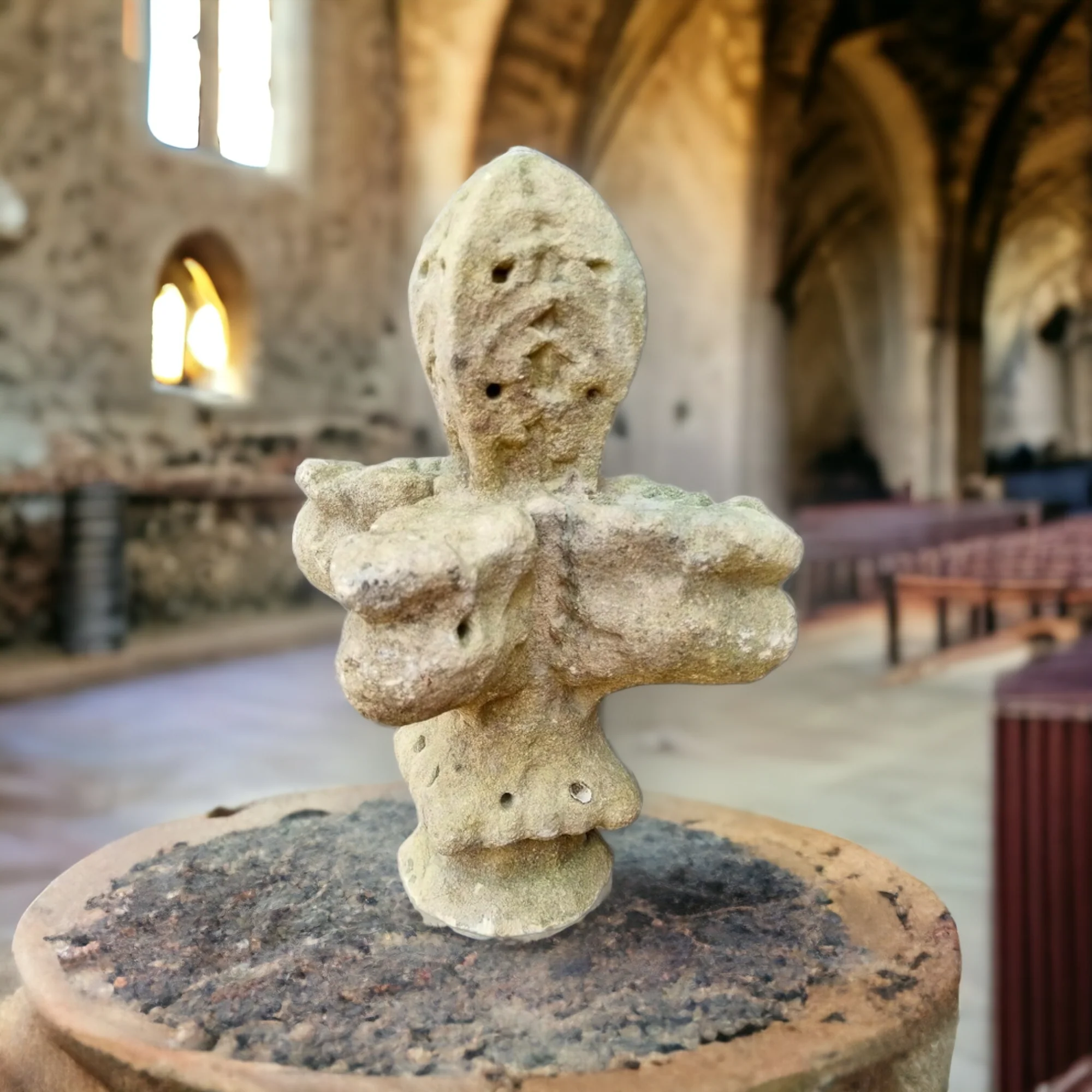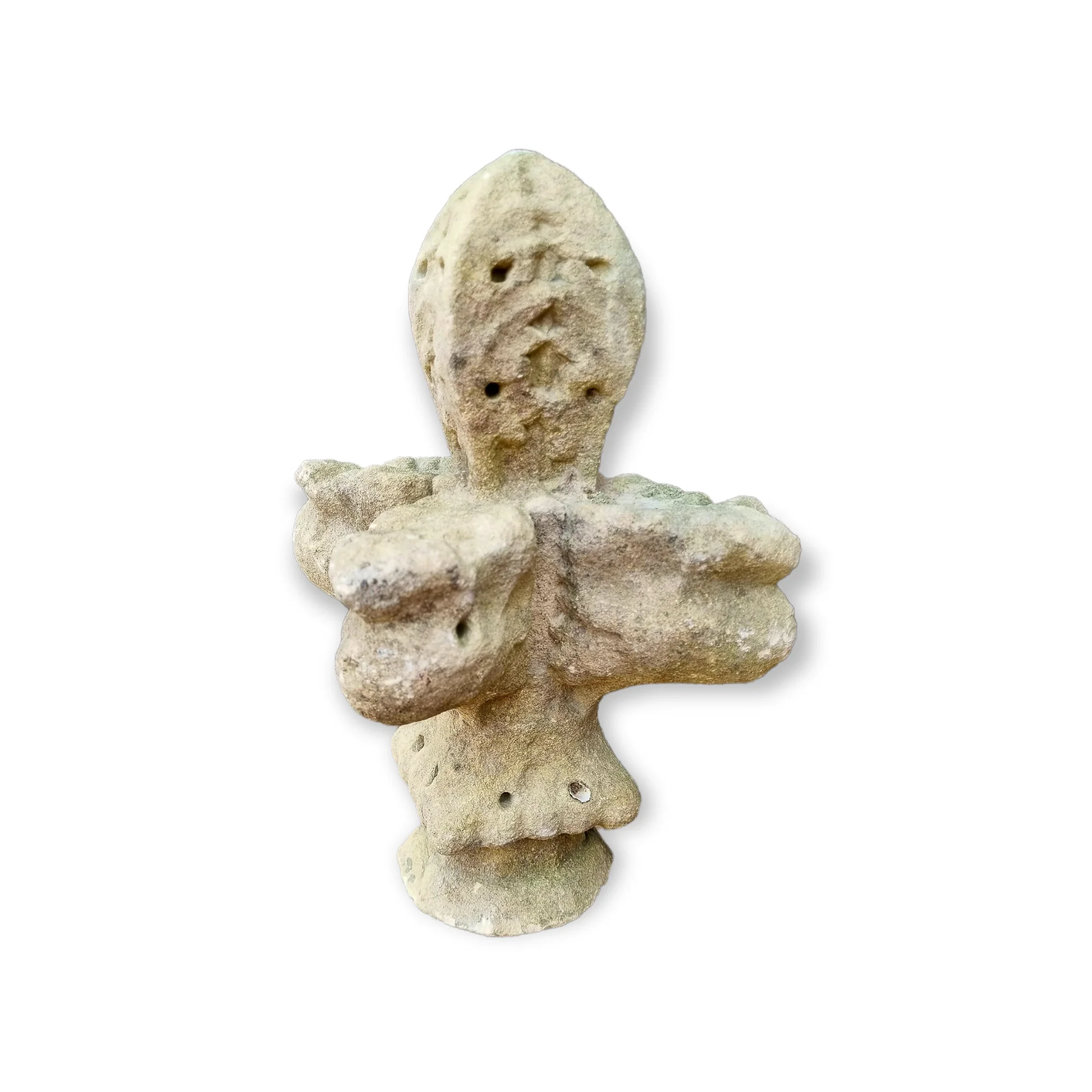
Rare Pair of Late 15thC English Antique Medieval Period Carved Oak Rood Screen Posts / Stanchions With Original Paint
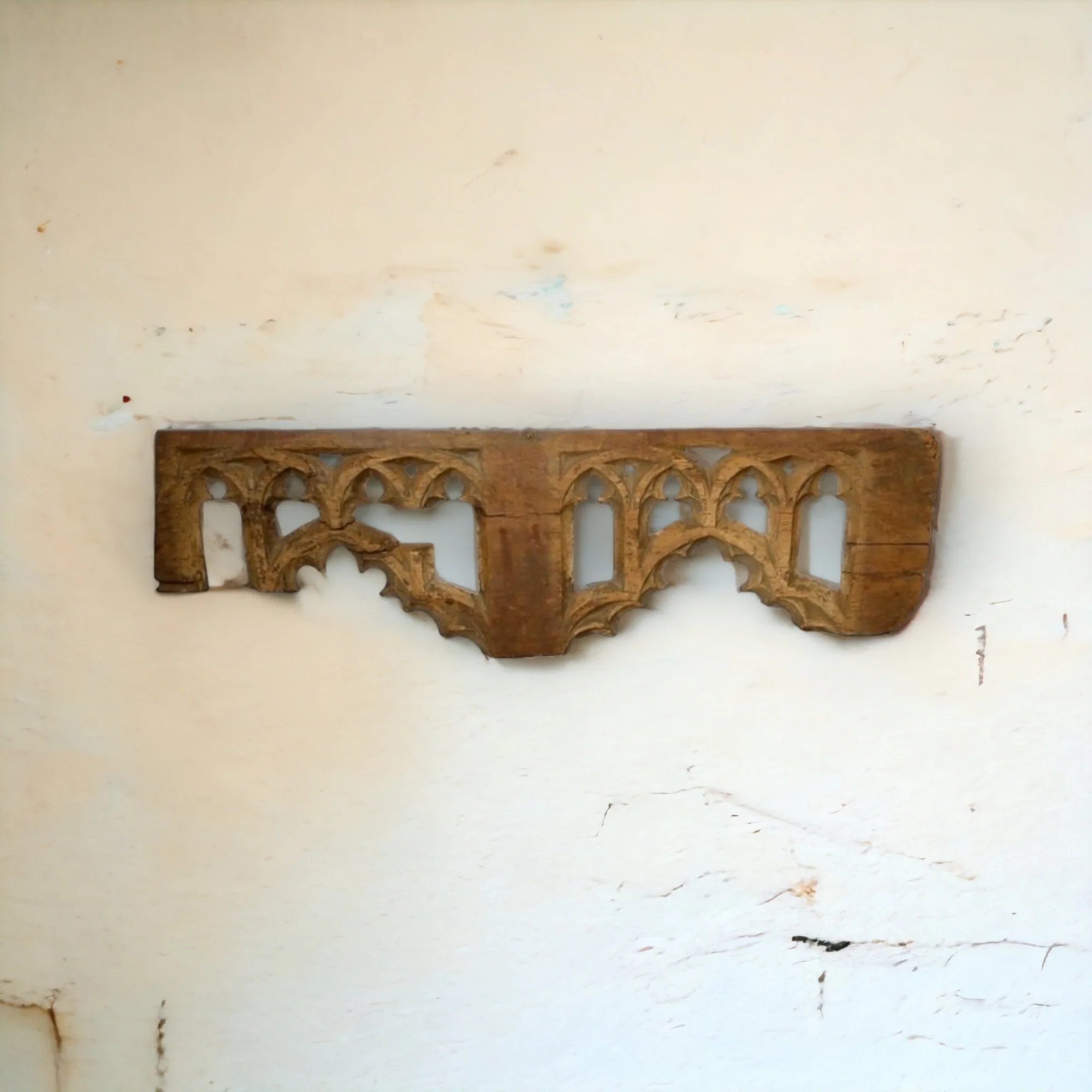
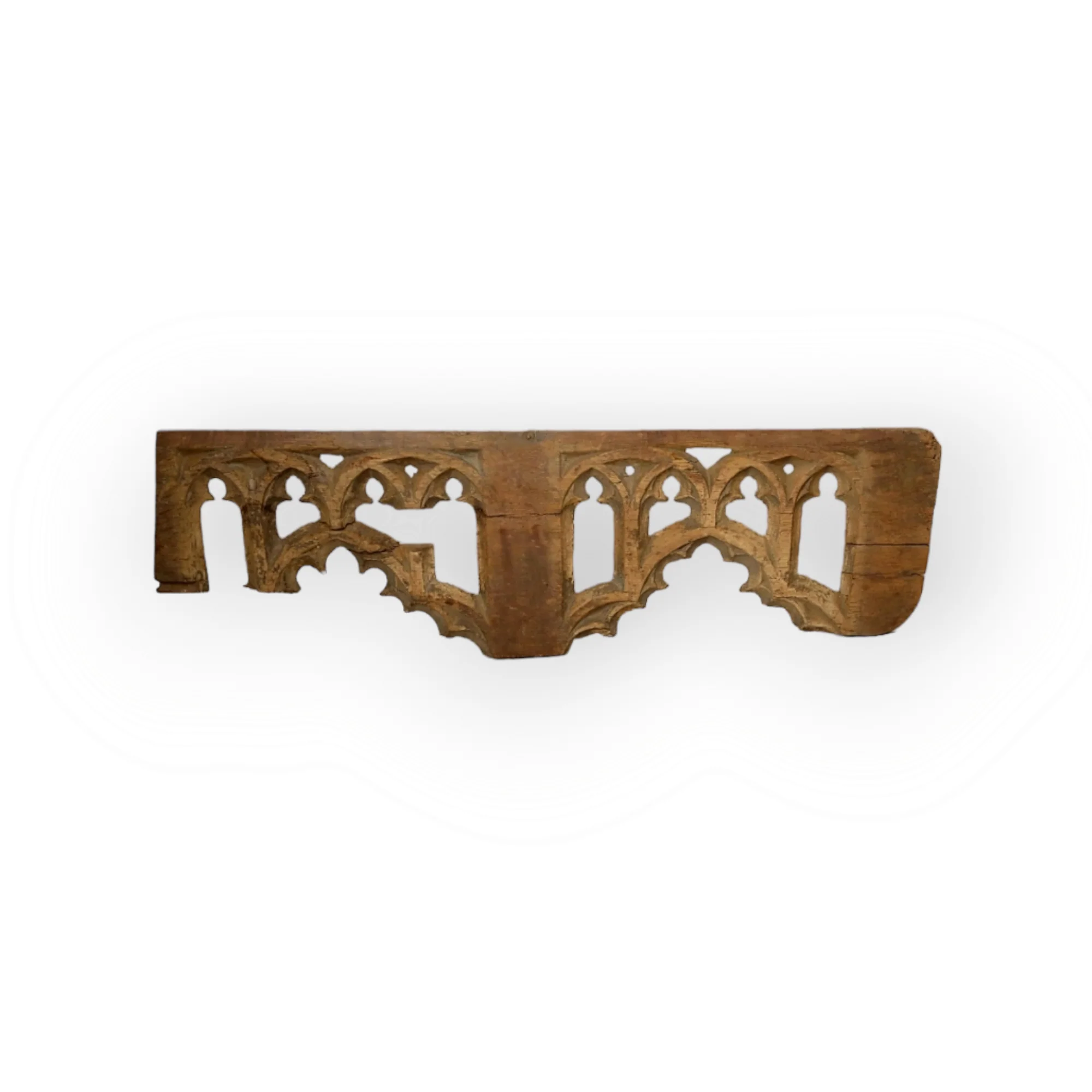
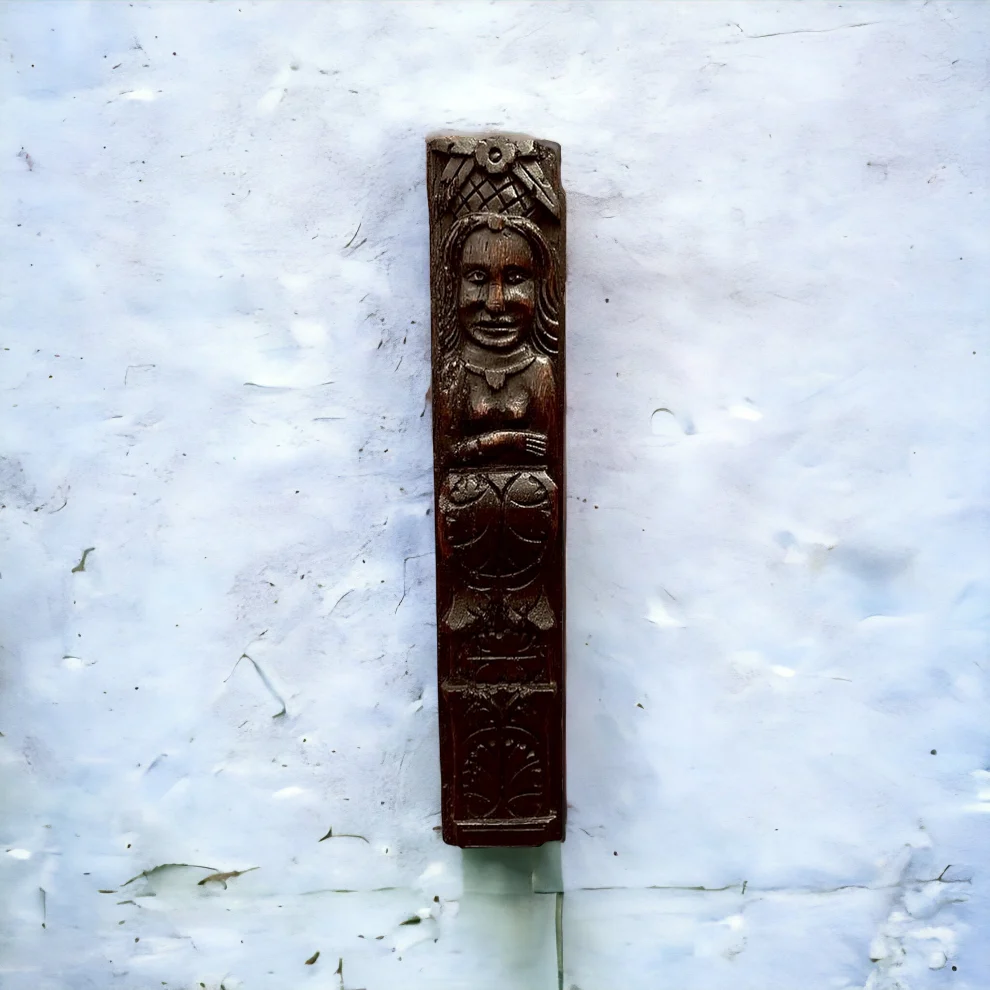
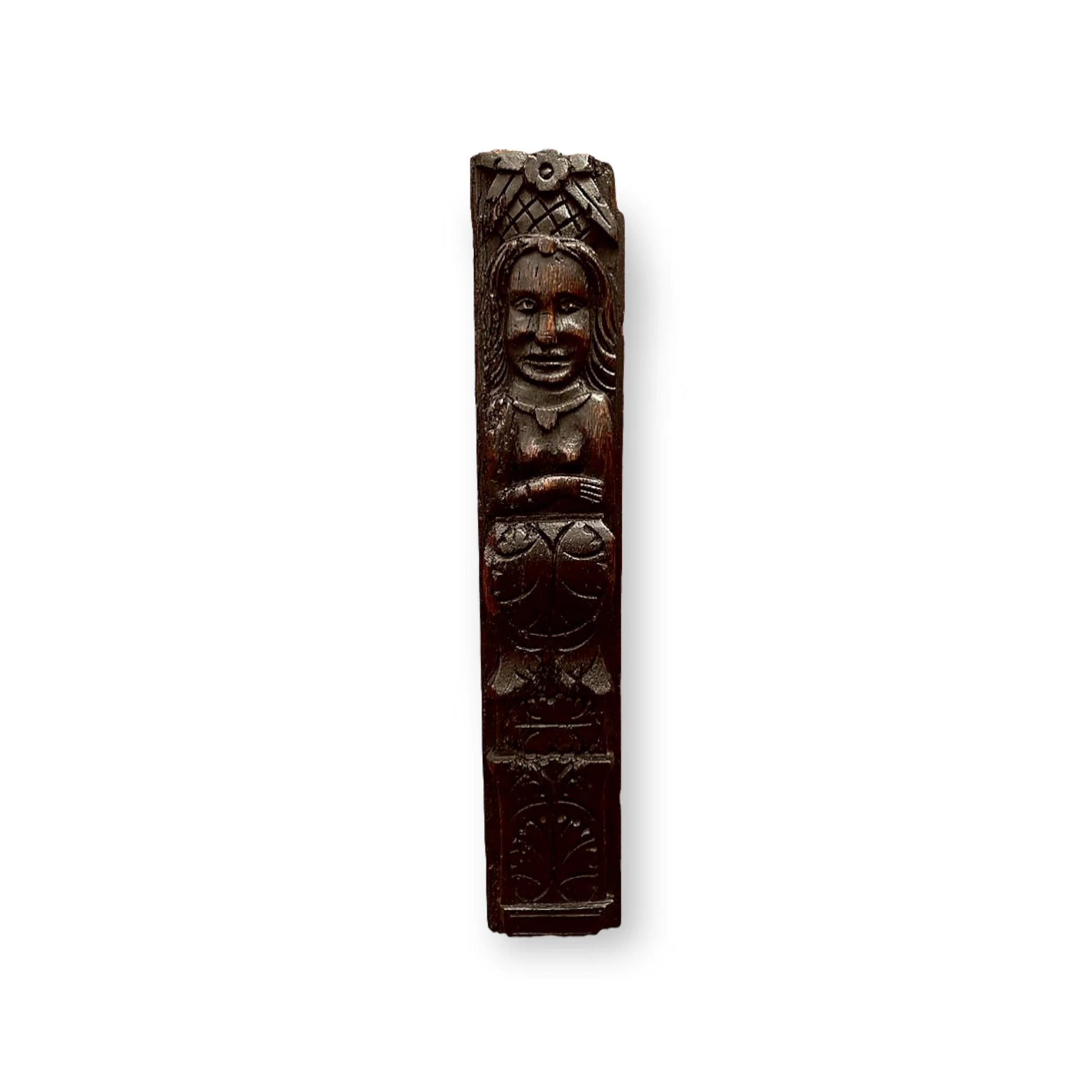
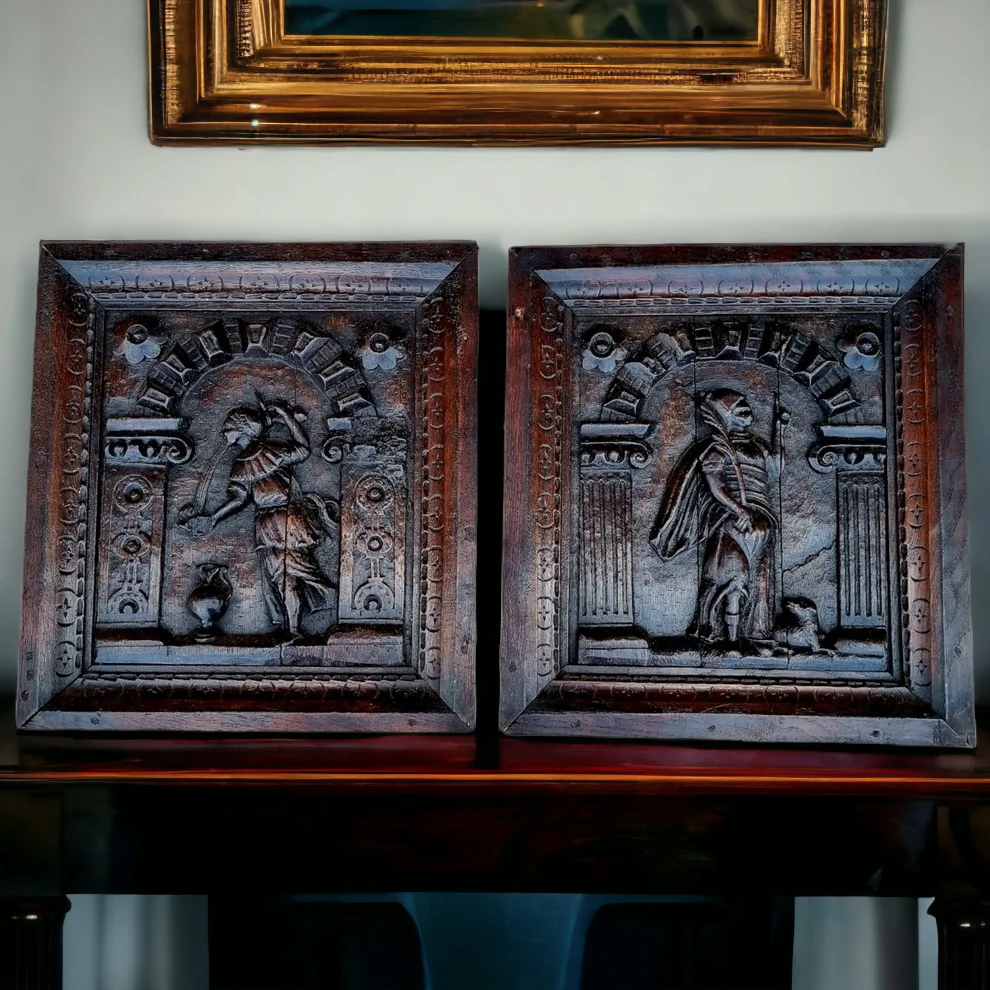
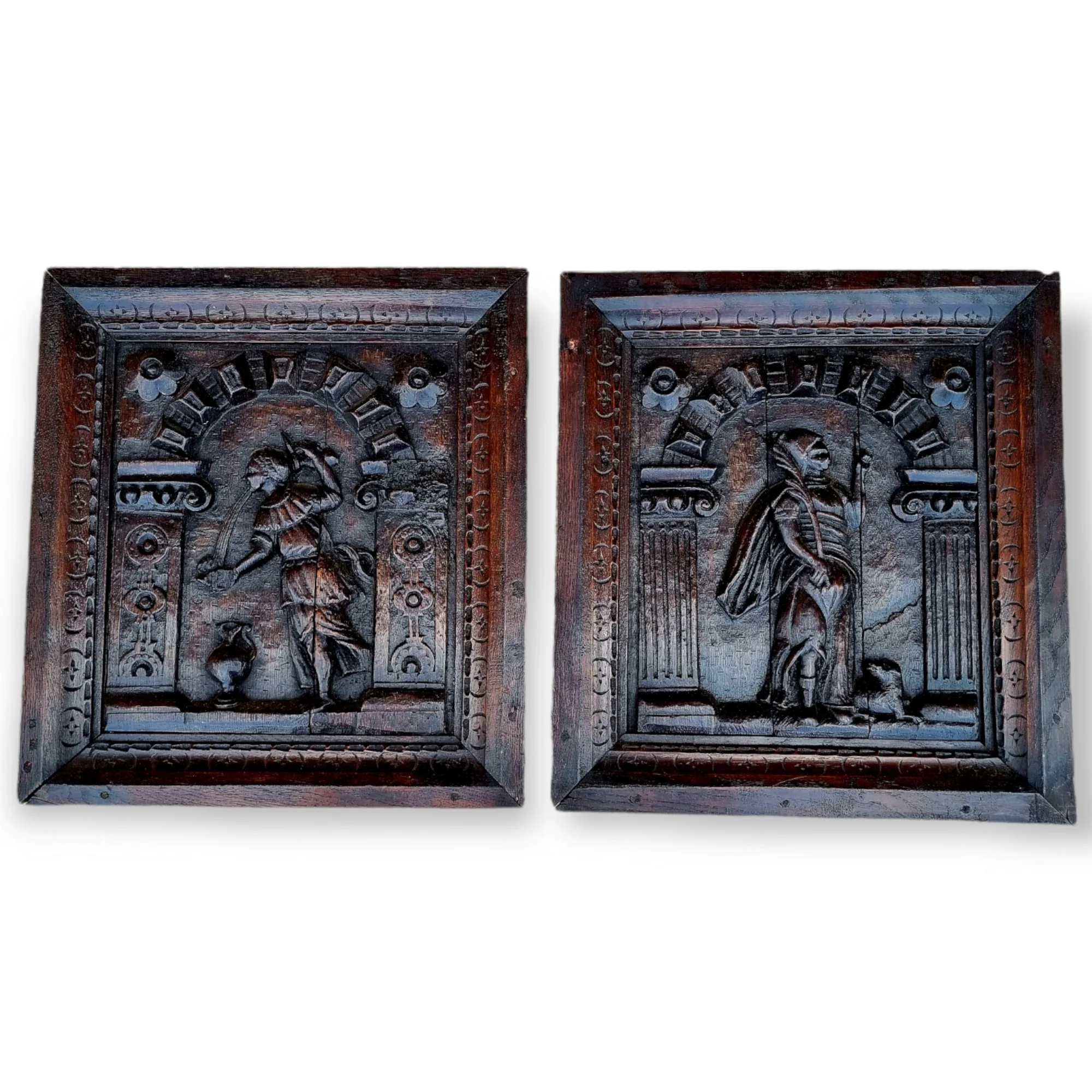
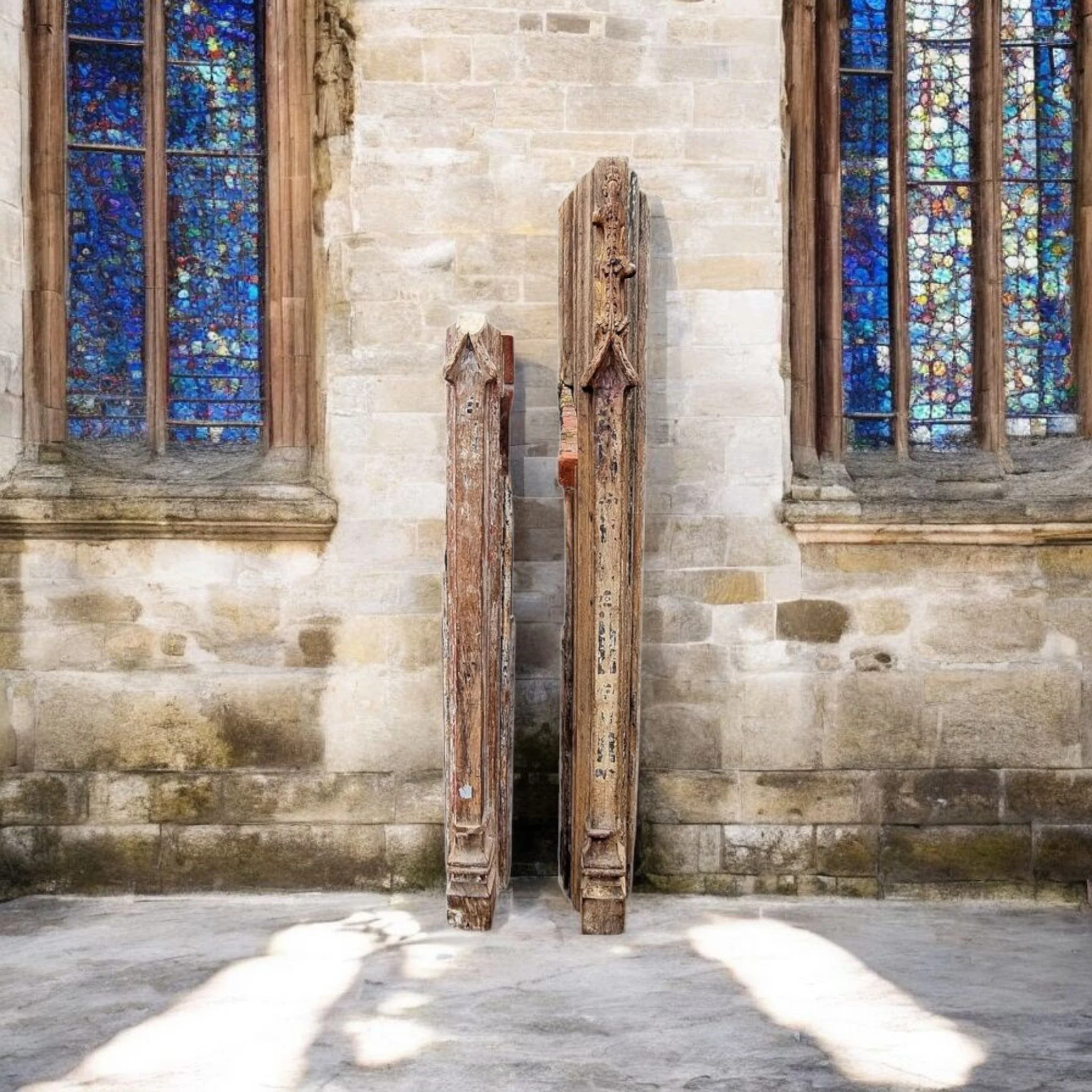
A rare and sculptural pair of late 15th-century English carved oak stanchions — once part of a medieval rood screen, now standing as evocative fragments of ecclesiastical heritage. With traces of original polychrome and Gothic detailing, they offer collectors and designers a chance to own a piece of sacred architecture. Ideal for display in historic interiors or as standalone sculptural statements.
The larger retains its original Gothic canopy above a shaped, elongated stem and shaped plinth base. The smaller one has lost its carved canopy. It does, however, retain its original carpenter's mark of "IIII" within the rebate, which once housed the transom. |Both retain elements of their original medieval polychrome, which includes red, white, black, and gilding.
Provenance: England. 15th century. Found in Cambridgeshire, England.
Condition: surface wear commensurate with age. Please refer to the images. A further detailed condition report is available upon request.
Dimensions: Height 135 cm (53") and 114 cm (45") respectively.
Historical Background:
Rood screens were integral to medieval church architecture, separating the chancel from the nave and often elaborately carved to reflect the spiritual grandeur of the space. These stanchions — vertical posts supporting the screen — were typically crafted from oak and adorned with religious motifs, polychrome paint, and Gothic detailing.
This rare pair, dating to the late 15th century, retains elements of its original polychrome, offering a vivid glimpse into the devotional artistry of pre-Reformation England. Such fragments are increasingly scarce, especially in matched pairs with intact carving and surface pigment. They speak to the craftsmanship of medieval woodworkers and the sacred spaces they helped define.
To summarise, a matched pair of medieval guardians — carved in oak, crowned in pigment, and steeped in centuries of sacred silence.
A rare and sculptural pair of late 15th-century English carved oak stanchions — once part of a medieval rood screen, now standing as evocative fragments of ecclesiastical heritage. With traces of original polychrome and Gothic detailing, they offer collectors and designers a chance to own a piece of sacred architecture. Ideal for display in historic interiors or as standalone sculptural statements.
The larger retains its original Gothic canopy above a shaped, elongated stem and shaped plinth base. The smaller one has lost its carved canopy. It does, however, retain its original carpenter's mark of "IIII" within the rebate, which once housed the transom. |Both retain elements of their original medieval polychrome, which includes red, white, black, and gilding.
Provenance: England. 15th century. Found in Cambridgeshire, England.
Condition: surface wear commensurate with age. Please refer to the images. A further detailed condition report is available upon request.
Dimensions: Height 135 cm (53") and 114 cm (45") respectively.
Historical Background:
Rood screens were integral to medieval church architecture, separating the chancel from the nave and often elaborately carved to reflect the spiritual grandeur of the space. These stanchions — vertical posts supporting the screen — were typically crafted from oak and adorned with religious motifs, polychrome paint, and Gothic detailing.
This rare pair, dating to the late 15th century, retains elements of its original polychrome, offering a vivid glimpse into the devotional artistry of pre-Reformation England. Such fragments are increasingly scarce, especially in matched pairs with intact carving and surface pigment. They speak to the craftsmanship of medieval woodworkers and the sacred spaces they helped define.
To summarise, a matched pair of medieval guardians — carved in oak, crowned in pigment, and steeped in centuries of sacred silence.
Original: $3,653.74
-70%$3,653.74
$1,096.12Description
A rare and sculptural pair of late 15th-century English carved oak stanchions — once part of a medieval rood screen, now standing as evocative fragments of ecclesiastical heritage. With traces of original polychrome and Gothic detailing, they offer collectors and designers a chance to own a piece of sacred architecture. Ideal for display in historic interiors or as standalone sculptural statements.
The larger retains its original Gothic canopy above a shaped, elongated stem and shaped plinth base. The smaller one has lost its carved canopy. It does, however, retain its original carpenter's mark of "IIII" within the rebate, which once housed the transom. |Both retain elements of their original medieval polychrome, which includes red, white, black, and gilding.
Provenance: England. 15th century. Found in Cambridgeshire, England.
Condition: surface wear commensurate with age. Please refer to the images. A further detailed condition report is available upon request.
Dimensions: Height 135 cm (53") and 114 cm (45") respectively.
Historical Background:
Rood screens were integral to medieval church architecture, separating the chancel from the nave and often elaborately carved to reflect the spiritual grandeur of the space. These stanchions — vertical posts supporting the screen — were typically crafted from oak and adorned with religious motifs, polychrome paint, and Gothic detailing.
This rare pair, dating to the late 15th century, retains elements of its original polychrome, offering a vivid glimpse into the devotional artistry of pre-Reformation England. Such fragments are increasingly scarce, especially in matched pairs with intact carving and surface pigment. They speak to the craftsmanship of medieval woodworkers and the sacred spaces they helped define.
To summarise, a matched pair of medieval guardians — carved in oak, crowned in pigment, and steeped in centuries of sacred silence.